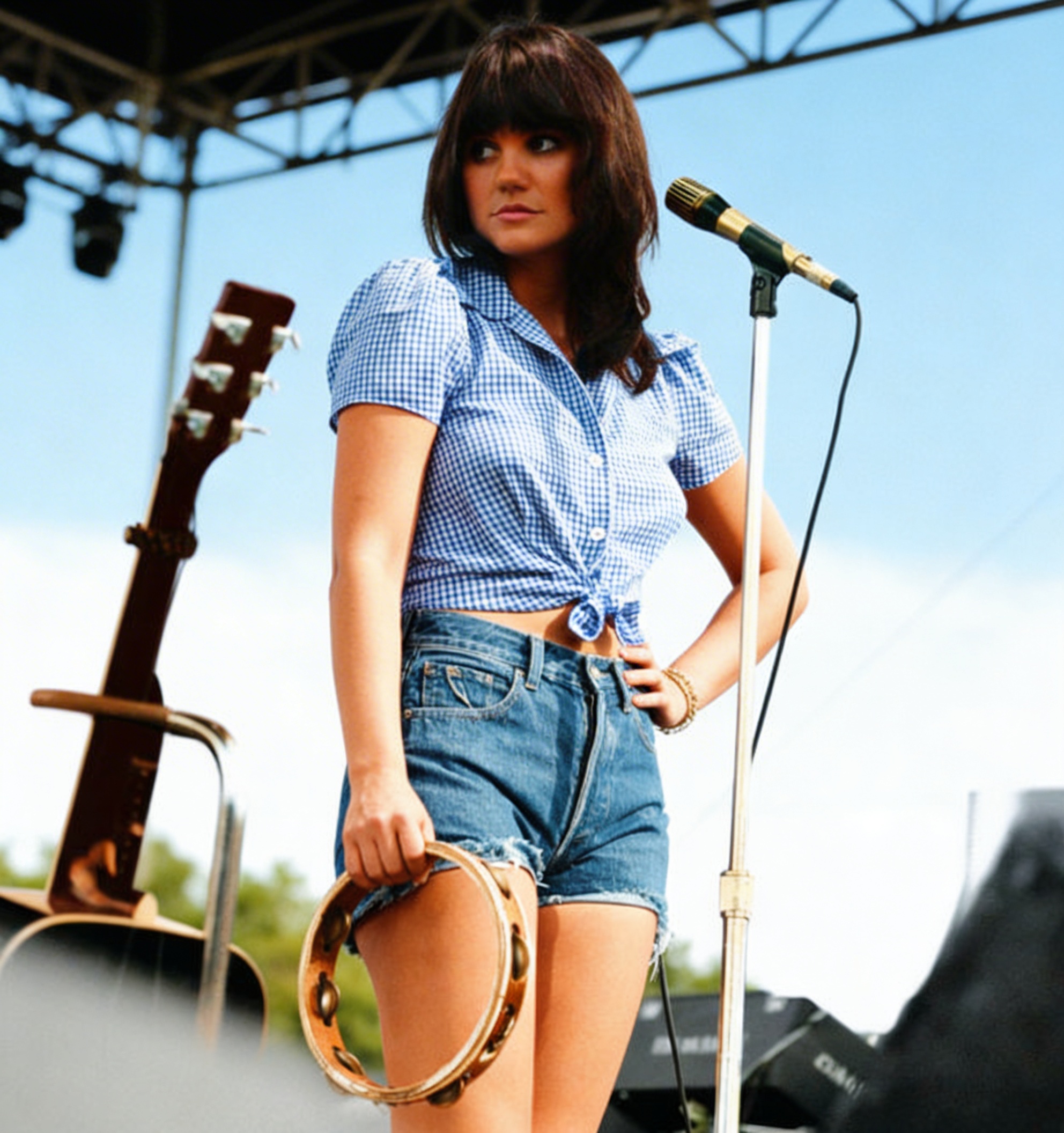
On Dedicated to the One I Love, Linda Ronstadt turned the grand romantic rush of Be My Baby into something close, quiet, and meant to be carried in the dark.
When Linda Ronstadt included Be My Baby on her 1996 album Dedicated to the One I Love, she was not simply covering a beloved old hit. She was placing one of the most instantly recognizable pop records of the 1960s into a new emotional room. The album was a children’s record, built around lullaby reinventions of familiar rock, pop, and soul-era songs, and its gentleness was not a gimmick. It asked what might happen if songs once aimed at radios, dance floors, and teenage longing were sung instead at bedtime, close to the ear, with the drama softened but not erased.
That choice becomes especially striking with Be My Baby. The original Ronettes single, released in 1963, was written by Jeff Barry, Ellie Greenwich, and Phil Spector, and produced by Spector in the full glow of the Wall of Sound era. It is famous from its first seconds: that commanding drum pattern, the sense of a curtain rising, the sudden arrival of desire made huge. In Ronnie Spector’s lead vocal, the song feels like a plea that has dressed itself as confidence. It is young love made cinematic, a private hope enlarged until it fills the whole room.
Ronstadt’s 1996 version could not compete with that force, and wisely, it does not try. Her reinvention on Dedicated to the One I Love changes the scale of the song. The famous pop urgency is drawn inward. The title phrase, once a romantic request cast into the bright noise of youth, becomes almost protective. Instead of hearing someone reaching across a crowded world and asking to be chosen, we hear a voice turning toward someone already near, offering steadiness, comfort, and devotion. The song’s central words remain simple, but the surrounding feeling has shifted.
That is the quiet surprise of the performance. Be My Baby is so strongly associated with its original arrangement that it can seem inseparable from its drumbeat, echo, and teenage grandeur. But Ronstadt’s recording reveals how durable the melody is when the spectacle is removed. The song still leans forward. It still carries longing. Yet the longing no longer feels like pursuit. It becomes tenderness. The emotional center moves from romantic anticipation to reassurance, from the thrill of being wanted to the deeper calm of being held.
By 1996, Ronstadt had already built one of the most adventurous catalogs in American popular music. She had sung country-rock, folk, pop standards, Mexican traditional music, operetta, and collaborations that ignored the usual borders around genre. So Dedicated to the One I Love did not arrive from nowhere. It belonged to a larger pattern in her work: the belief that a song can travel, that style is not a prison, and that a familiar melody may reveal a different truth when sung in another setting.
The album itself won the Grammy Award for Best Musical Album for Children, but its lasting interest is not only that it succeeded as a family record. It is that Ronstadt treated children’s music with the same seriousness she brought to every other form she touched. She did not sing down to the material. She did not turn these songs into novelty pieces. Instead, she trusted softness as an artistic decision. In her hands, a lullaby was not a smaller form of music. It was a test of whether a song could survive without armor.
With Be My Baby, that test is revealing. The Ronettes’ original remains one of pop’s great declarations, all lift and heartbeat and echoing promise. Ronstadt’s version does not replace it; it stands beside it like a lamp beside a neon sign. One belongs to the street outside, to radio memory, to the thrill of first hearing a voice burst open through speakers. The other belongs to a quieter hour, when the same words can mean safety rather than excitement, devotion rather than demand.
That is why the 1996 reinterpretation continues to feel more daring than it first appears. It takes a record remembered for its size and asks what remains when size is no longer the point. The answer is not less emotion, but a different kind of emotion: smaller in volume, perhaps, yet more intimate in shape. Linda Ronstadt found a lullaby inside The Ronettes’ Be My Baby, and in doing so, she reminded listeners that a great song does not always need to arrive like thunder. Sometimes it can return as a whisper and still reach the heart.
