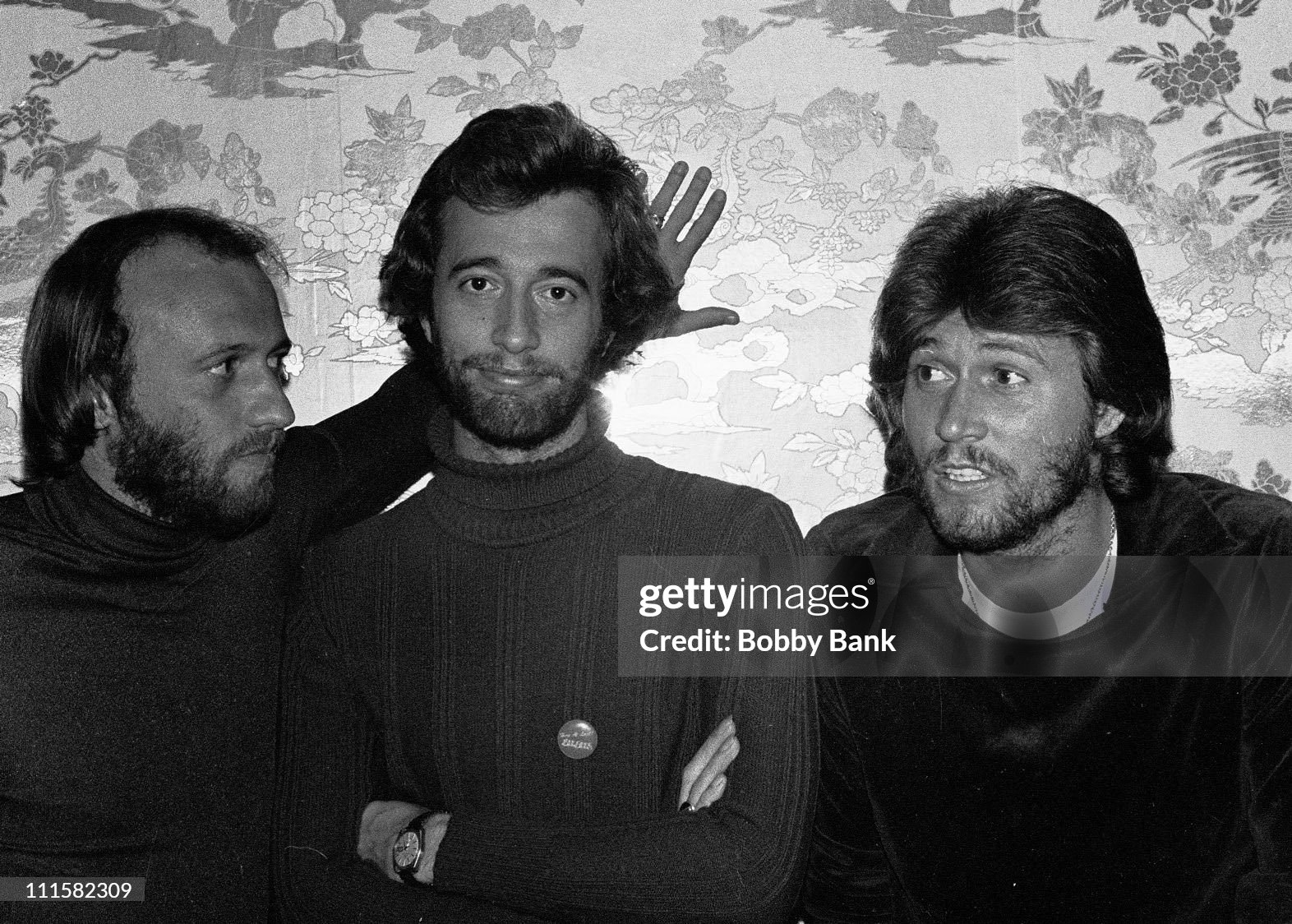
With “The Only Love,” the Bee Gees turned a 1991 ballad into a reminder that their deepest instrument was not studio polish, but brotherhood itself.
Released as a 1991 single from High Civilization, “The Only Love” belongs to a fascinating chapter in the long story of the Bee Gees. By then, Barry, Robin and Maurice Gibb had already lived several musical lives: young pop craftsmen of the 1960s, architects of grand ballads, world-conquering voices of the disco era, and respected songwriters whose work traveled far beyond their own records. High Civilization arrived in a changing pop landscape, one shaped by glossy production, programmed textures, adult-contemporary radio, and a public memory that too often reduced the brothers to only one period of their career. “The Only Love” quietly argued for something larger.
The song was written by the three Gibb brothers, and that fact matters. A Bee Gees ballad was rarely just a melody placed over chords; it was a family structure built in sound. Their voices did not merely harmonize in the technical sense. They seemed to know where the others would lean before the note arrived. On “The Only Love”, that familiar blend carries the emotional center of the recording. The arrangement may speak the language of the early 1990s, but the core is unmistakably older and more intimate: three brothers standing inside a song about devotion, loss, need, and endurance.
What makes the recording compelling is the way it climbs without losing its restraint. The ballad has a wide, open shape, the kind of melody that asks the singer to reach upward, but it does not feel like a display for its own sake. The Bee Gees understood drama, yet their best dramatic moments often came from control rather than excess. A phrase is allowed to stretch. A harmony arrives like a hand placed on a shoulder. The chorus rises with the kind of lift that had always separated their work from ordinary soft rock: not just a bigger sound, but a larger emotional room.
In the context of High Civilization, “The Only Love” reveals the brothers trying to move forward without abandoning the musical instincts that made them singular. The album’s production placed them in a modern frame, but the song’s lasting pull comes from the human grain inside the polish. The Bee Gees had always been unusually good at making vulnerability sound architectural. They could build a cathedral out of a romantic confession, and even when the surface changed from decade to decade, the foundation remained their vocal relationship.
That relationship is what gives this 1991 single its deeper resonance. Many groups harmonize beautifully; fewer harmonize with the strange inevitability of shared childhood, shared ambition, shared exhaustion, and shared survival. Barry’s melodic command, Robin’s emotional edge, and Maurice’s essential musical grounding formed more than a blend. They formed a language. On “The Only Love”, you can hear that language working beneath the production choices, as if the recording keeps returning to the same truth: the Bee Gees were never only a band of voices, but voices shaped by family history.
There is also a quiet dignity in hearing them make a ballad like this in 1991. Pop music had moved on in visible ways, and the Bee Gees had nothing left to prove in the usual sense. Their catalog already contained songs that had filled dance floors, soundtracked heartbreak, and become part of the global memory of popular music. Yet “The Only Love” does not sound like a group resting on reputation. It sounds like three artists still trusting the old risk of sincerity. The song asks to be taken seriously not because it shouts, but because it commits.
Its emotional power lies in that commitment. The lyric moves through the language of love as something singular and irreplaceable, but the performance gives the idea a second meaning. Coming from the Bee Gees, the phrase “The Only Love” becomes not only romantic. It also brushes against the lifelong bond that made their music possible. Even when one voice leads, the others seem present in the edges, waiting to support, answer, or lift. The song becomes a reminder that harmony can be a musical act and a human one at the same time.
Heard now, the single feels less like a minor stop in a vast discography and more like a late-career window into what the brothers still did better than almost anyone. They could take a polished ballad and give it blood. They could turn a chorus into a shared breath. They could make a love song feel as though it had been carried across decades by people who knew exactly what it cost to keep singing together. “The Only Love” endures because beneath its 1991 sheen is something no production style can manufacture: the sound of brothers finding one another again inside the same note.
