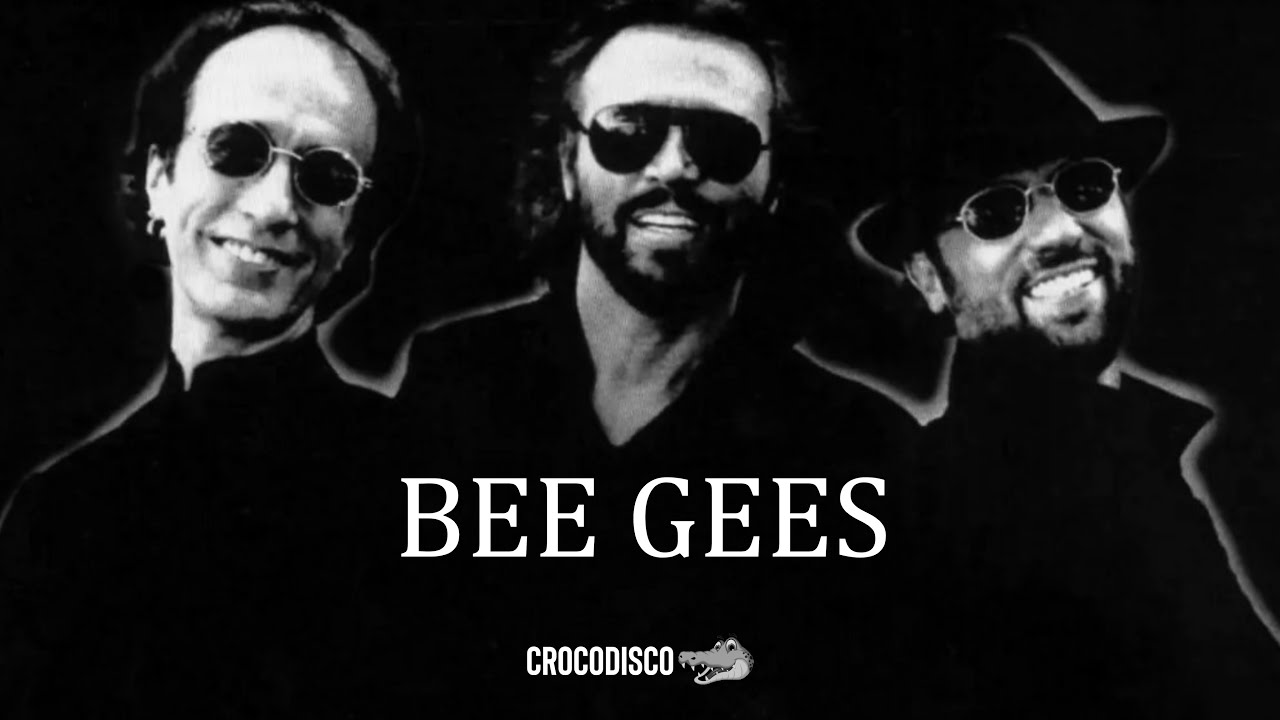
With “You Should Be Dancing,” the Bee Gees turned a restless groove into the sound of a band crossing into the disco era with absolute conviction.
Bee Gees released “You Should Be Dancing” in 1976 as a key single from their album Children of the World, and it quickly became more than another hit in a long career. It reached No. 1 on the Billboard Hot 100 in the United States, giving the group a driving, dance-floor-centered anthem that marked a decisive turn in their identity. The Bee Gees had already begun moving toward a sleeker rhythm-and-blues sound with songs like “Jive Talkin’” and “Nights on Broadway,” but this record felt different. It did not merely flirt with the dance floor. It lived there.
By the time Children of the World arrived, Barry, Robin, and Maurice Gibb were no longer the melancholy pop balladeers many listeners remembered from the late 1960s. Their harmonies remained unmistakable, but the setting had changed. The arrangements had grown leaner, brighter, and more physical. Miami had become an important creative base for them, and the atmosphere around Criteria Studios, with its mix of soul, funk, pop, Latin rhythm, and studio precision, helped shape the pulse of their mid-1970s transformation. “You Should Be Dancing” captured that transformation in a way that sounded both calculated and wildly alive.
The first thing the record does is move. It does not ease the listener in with a reflective verse or a patient introduction. The groove arrives with authority, built from percussion, bass, guitar, handclaps, and a rhythm section that feels designed to keep bodies in motion. The title itself is not a confession or a plea. It is a command, but one delivered with invitation rather than force. The Bee Gees were not asking whether the dance floor mattered. They were announcing that it had become the center of the conversation.
Barry Gibb’s voice is crucial to that shift. His falsetto had already emerged as one of the group’s most distinctive new weapons, but on “You Should Be Dancing” it becomes part of the machinery of the track. It cuts through the rhythm like a flash of white heat, less like a lead vocal floating above a band and more like another sharp instrument inside the groove. Robin and Maurice’s harmonies add pressure and lift, but the song’s power comes from how little it wastes. There is no ornate storytelling here, no elaborate emotional scene-setting. The feeling is carried in repetition, urgency, and release.
That directness is part of why the record still matters. Disco has often been misunderstood when reduced to fashion, glitter, or nightlife imagery, but its best records were built on discipline: locked-in rhythm, emotional efficiency, communal energy, and a sense that private strain could be converted into public movement. “You Should Be Dancing” understood that language. It gave the Bee Gees a new kind of authority, one based not only on melody and harmony but on momentum.
The song also stands at an important point in the group’s broader story. Before Saturday Night Fever made them inseparable from the global disco explosion, “You Should Be Dancing” had already drawn the line. It proved that the Bee Gees were not simply adapting to a popular style from the outside; they could help define its mainstream sound. The record’s later association with the disco boom only reinforced what was already present in 1976: this was a band finding a new body for its voice.
There is a fascinating contrast in hearing it now. The Bee Gees were masters of ache, longing, and romantic fragility, yet here they sound almost aerodynamic. The pain is not absent; it is simply transformed. Instead of sitting alone with a broken feeling, the song throws the body forward. The emotional logic is simple and surprisingly generous: whatever has been weighing on you, the rhythm offers a way through it. Not a solution, exactly, but a release.
As an era-defining hit, “You Should Be Dancing” did not just announce that the Bee Gees could make disco records. It showed that their musical instincts—tight harmony, melodic confidence, studio craft, and dramatic vocal contrast—could thrive inside a harder, more percussive frame. The result was a record that changed how many people heard them and set the stage for one of the most commercially powerful chapters in pop history.
Nearly five decades later, the song still sounds like a door being kicked open from the inside. It is not the sentimental Bee Gees, not the orchestral Bee Gees, not the wounded voices of earlier ballads. It is the moment the brothers found a beat strong enough to carry their reinvention, and they followed it all the way onto the floor.
