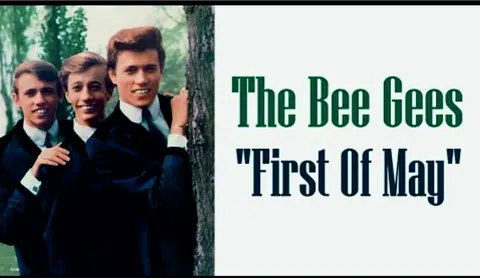
Before it belonged to To Whom It May Concern, Bee Gees’ We Lost the Road already carried the atmosphere of another album era, making its delay part of its emotional pull.
We Lost the Road appeared on the Bee Gees’ 1972 album To Whom It May Concern, but its history reaches back to the sessions for Trafalgar, the 1971 album that placed the group firmly back in the public ear with How Can You Mend a Broken Heart. The song was recorded during that earlier period and then held over, finally finding its official home on the next studio album. That may sound like a small discographical detail, the sort of note that lives in album credits and fan conversations, but with a song this inward and restrained, the timing changes the way it breathes.
The early 1970s were a fascinating middle chapter for the Bee Gees. They had already known the ornate pop triumphs of the late 1960s, already passed through separation and reunion, and had not yet stepped into the dance-floor reinvention that would later reshape their public identity. In this period, Barry Gibb, Robin Gibb, and Maurice Gibb were working in a language of carefully arranged ballads, soft drama, close harmonies, and songs that often sounded as if they were being sung from inside a private room. Trafalgar carried much of that mood: grand but wounded, melodic but shadowed, full of elegant melancholy. To Whom It May Concern, released the following year, felt broader and more restless, moving between polished pop, eccentric touches, and reflective pieces that did not always sit neatly in one emotional category.
That is where We Lost the Road becomes especially interesting. Because it was recorded during the Trafalgar sessions, it retains something of that album’s shaded atmosphere, even as it became part of To Whom It May Concern. It is not merely a track placed in a different running order; it is a song that seems to carry one emotional season into another. The title itself suggests disorientation rather than spectacle. There is no need for the arrangement to announce disaster. The ache comes from the feeling of people realizing, perhaps too late, that the path they believed they were following has quietly disappeared beneath them.
The Bee Gees were masters of making sorrow sound disciplined. In We Lost the Road, the drama is held in check. The vocal presence does not need to force feeling; it lets the melody move with a kind of tired grace. That restraint is important. Many of the group’s finest early-1970s recordings are not built on confession in the modern sense, but on formality: a melody that knows where it is going, harmonies that arrive like memory, and a lyric that leaves enough space for the listener to fill in the missing scene. The sadness is not shouted from the center of the room. It is folded carefully into the song’s shape.
Hearing the track as a Trafalgar-era recording also draws attention to how albums can preserve more than a release date. A song may be issued in 1972, but still carry the emotional vocabulary of 1971. Studio sessions do not always end cleanly when an album is finished; songs wait, get reconsidered, and sometimes reappear when their meaning has shifted simply because time has moved on. In the case of We Lost the Road, the holdover status gives the track a faint sense of displacement that matches its own subject. It belongs to To Whom It May Concern, but it seems to remember Trafalgar. That tension makes it feel less like an leftover and more like a bridge.
To Whom It May Concern is often approached through better-known songs such as Run to Me, one of the Bee Gees’ most graceful singles of the period, but album tracks like We Lost the Road reveal the deeper texture of the group at that moment. They were not simply writing hits; they were building a catalog of emotional miniatures, each one showing a slightly different angle of distance, devotion, regret, or uncertainty. Some songs arrive with open arms. This one seems to arrive after the conversation has gone quiet.
There is also something fitting about the song’s delayed release. The Bee Gees’ best ballads often understand that feeling does not always arrive on schedule. Sometimes a song becomes clearer after it has waited. Released immediately on Trafalgar, We Lost the Road might have sounded like one more piece of that album’s grand sadness. Placed on To Whom It May Concern, it stands a little apart, as if carrying an earlier weather system into a new landscape. The result is a track that rewards listeners who pay attention not just to melody, but to placement, timing, and the quiet life songs have before the public hears them.
In that sense, We Lost the Road is a reminder that version history is not only for collectors. It can deepen the emotional reading of a song. Knowing that it began during the Trafalgar sessions and waited until To Whom It May Concern gives the recording an added poignancy: a song about losing direction that itself took a delayed route into the world. The Bee Gees did not need to explain that irony. The track carries it gently, in the spaces between the voices, in the careful pace of the music, and in the feeling that some roads are only understood after they have already been missed.
