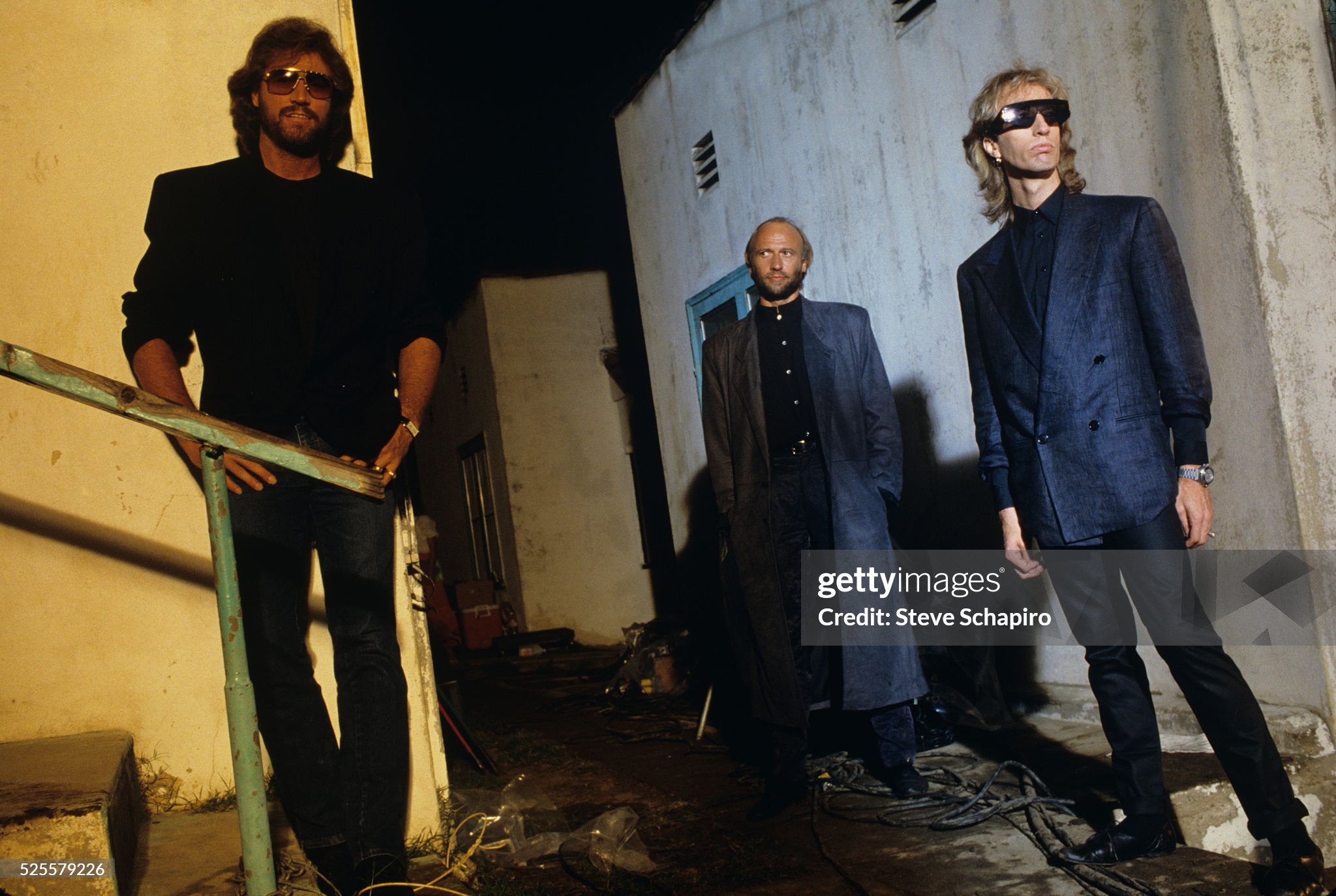
In “Please Don’t Turn Out the Lights”, the Bee Gees sound caught in a tender handoff, with Barry and Robin Gibb turning one plea into a portrait of a band between eras.
“Please Don’t Turn Out the Lights” appears on the Bee Gees’ 1972 album To Whom It May Concern, a record that sits in one of the group’s most revealing middle passages. It was not the late-1960s burst that made them international pop favorites, and it was not yet the sleek, rhythm-driven transformation that would later carry their name into a different cultural universe. This was the Bee Gees in a quieter state of motion: reunited after the tensions of the previous few years, seasoned by early success, still writing with a theatrical instinct for longing, but beginning to sound less like prodigies arriving from nowhere and more like adults measuring the cost of feeling.
The album is often remembered because it included “Run to Me”, one of the brothers’ graceful early-1970s singles, but its deeper interest is the way it captures the group testing its own reflection. The title To Whom It May Concern almost feels like a message placed in a bottle: formal, uncertain, addressed to anyone still listening. By 1972, the Bee Gees had already moved through chamber-pop textures, dramatic balladry, British Invasion afterglow, and the intense brotherly blend that made their records instantly recognizable. Yet the future had not fully announced itself. “Please Don’t Turn Out the Lights” belongs exactly to that threshold.
What makes the song especially telling is the way Barry Gibb and Robin Gibb trade lead vocals. A Bee Gees record often depends on the blend, that unmistakable family closeness where separate voices seem to fold into one another. Here, the exchange feels more exposed. Barry’s tone carries a measured warmth, a softness that can make a line feel almost conversational. Robin’s voice, with its tremulous edge and unmistakable color, brings a different kind of ache into the same room. The song becomes less like a single confession and more like a shared plea passed from one brother to another.
That vocal handoff is the emotional center of the recording. The title phrase itself is simple, almost domestic: please don’t turn out the lights. It does not need elaborate metaphor to work. It suggests a moment before separation, before sleep, before silence, before the room changes. In the Bee Gees’ hands, that ordinary request takes on the shape of early-1970s uncertainty. The group’s arrangement language at this point still leans toward the grand pop ballad tradition: careful melodic movement, a sense of structure, harmonies that arrive not as decoration but as emotional architecture. Yet there is also a restraint here that keeps the song from becoming merely ornate.
Placed within To Whom It May Concern, the track helps illuminate the album’s unsettled beauty. The record followed Trafalgar and came before Life in a Tin Can, both part of a period when the Bee Gees were searching for a durable adult identity after the first rush of their international fame. It is easy, looking back from the later success of Main Course and the disco-era explosion that followed, to treat these early-1970s recordings as a waiting room. But that would miss the quiet drama of the moment. The Bee Gees were not simply waiting to become something else. They were still discovering what their voices could carry when the innocence of their first fame had thinned.
“Please Don’t Turn Out the Lights” gains much of its power from that in-between quality. It is polished, but not sealed off. It is emotional, but not overly theatrical. It allows Barry and Robin to stand side by side without erasing the difference between them. In another band, two lead voices might suggest competition. In the Bee Gees, especially in this period, it often suggests a more complicated intimacy: different temperaments circling the same feeling, different shades of vulnerability placed inside one melody.
The song also reminds listeners that the Bee Gees’ story is not only a story of reinvention. It is a story of continuity under pressure. Long before the falsetto-led dance records made them unavoidable again, the brothers were already experts at writing about closeness, absence, and the fear of emotional distance. Their gift was not confined to one style. It lived in melody, in the placement of a harmony, in the way a phrase could sound formal on paper and deeply human when sung.
Heard now, “Please Don’t Turn Out the Lights” feels like a small but revealing chamber inside the Bee Gees’ catalog. It does not demand the spotlight the way their biggest songs do. Instead, it asks for attention in a more private way. The voices arrive, trade places, and leave behind the sense of a band standing at a doorway, not yet through it, not willing to go back. The lights are still on, but the room is changing.
