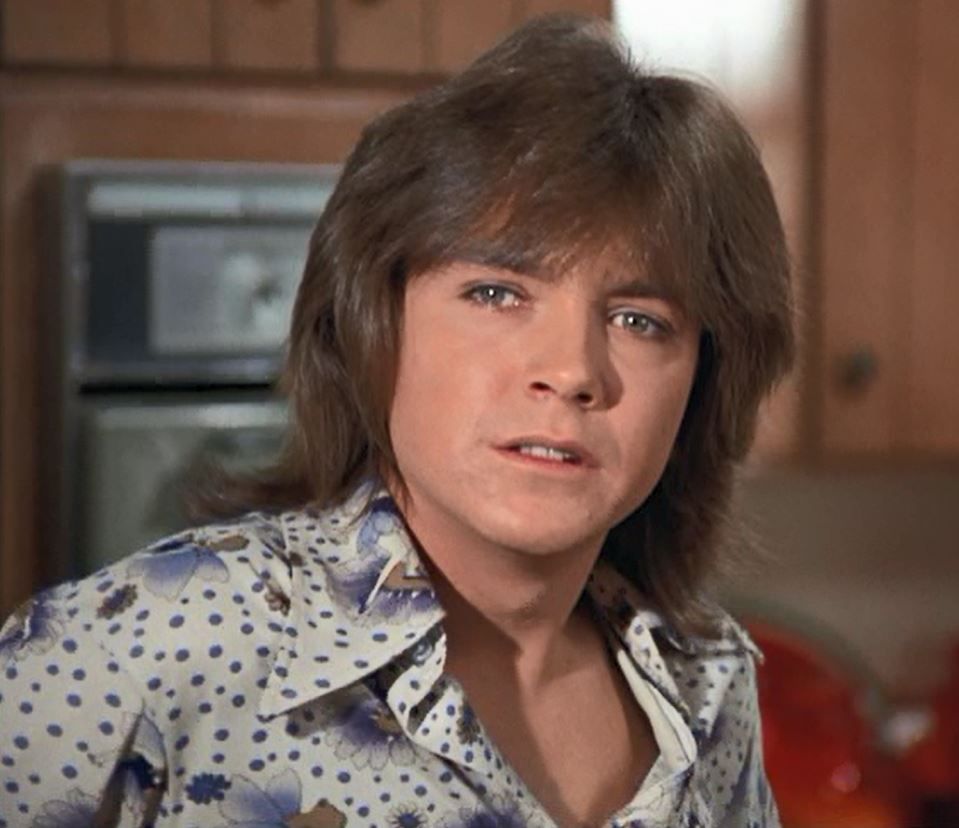
On “Raindrops,” David Cassidy begins a 1992 comeback not with bravado, but with the sound of someone stepping back into the weather.
In 1992, David Cassidy placed “Raindrops” at the very front of his album Didn’t You Used to Be…, and that choice matters. The song, co-written with Sue Shifrin, does more than open a record; it opens a conversation with a past that had followed Cassidy for decades. For an artist still strongly associated in public memory with The Partridge Family and the early-1970s rush of teen-idol fame, an opening track had to do more than sound polished. It had to announce tone, confidence, and direction without pretending the old story had disappeared.
The title of the album itself carries a dry sting: Didn’t You Used to Be…. It sounds like the beginning of a question asked in airports, restaurants, backstage corridors, and television studios — a half-finished sentence that reduces a complicated life to a remembered face. Cassidy knew that question better than most performers. He had been a household name while still young, and the enormity of that early fame often made it difficult for listeners to hear him as anything other than the image they already carried. By the early 1990s, after his 1990 self-titled album had brought him renewed radio attention with songs such as “Lyin’ to Myself”, Cassidy was not simply trying to return. He was trying to be heard in the present tense.
That is what gives “Raindrops” its emotional usefulness as an opener. Rain is a familiar pop image, but here the title feels especially suited to the comeback frame: not a storm staged for drama, not a grand curtain rising, but weather that gathers on the surface of memory. A comeback song can easily overstate itself. It can arrive with too much declaration, too much insistence that the artist has changed, survived, conquered, or answered every critic. “Raindrops” works in a more human register. It suggests exposure rather than victory, atmosphere rather than slogan.
The collaboration with Sue Shifrin also gives the track a meaningful place in Cassidy’s 1990s work. Shifrin, a songwriter and important creative presence in his life, helped shape material that allowed Cassidy to move away from the machinery of adolescent celebrity and toward a more adult pop language. It would be careless to claim that every line is autobiographical, but the setting is hard to ignore: a singer long defined by other people’s memories, beginning an album with a song that feels like it understands how emotion can fall quietly and still leave a mark.
Musically, the album belongs to the polished adult-pop and pop-rock climate of the early 1990s. Cassidy was working in an era when production often favored clean surfaces, radio-ready choruses, and a balance between personal feeling and commercial clarity. Within that frame, his mature voice carried a different kind of authority than the bright, boyish tone that had once filled television screens and pop charts. The point was no longer innocence. The point was interpretation — how much weight could be held back, how much history could be implied without being explained, how a familiar name could sound less like nostalgia and more like a working musician still searching for the right doorway into a song.
As the first track on Didn’t You Used to Be…, “Raindrops” frames the album as a careful act of reintroduction. It does not erase the David Cassidy people remembered; instead, it places that memory under new conditions. The old fame is not denied, but it is no longer allowed to be the whole room. That is the quiet tension of the record’s title and the strength of beginning with this song. Cassidy was acknowledging the public’s habit of looking backward while asking for the chance to sing from where he actually stood.
There is a particular vulnerability in a comeback by someone who was famous very young. The audience may greet the return with affection, but affection can be limiting. It can ask an artist to remain exactly as remembered. “Raindrops” carries the feeling of someone stepping outside that frame, not angrily, not theatrically, but with enough steadiness to let the weather touch him. The song’s importance lies not in being the loudest moment of Cassidy’s catalog, but in being a threshold — the first sound of an album built around recognition, resistance, and the uneasy grace of being seen again.
He did not need to pretend the past was gone. He needed to find a way to stand inside it without being trapped there. That is why “Raindrops” remains such an apt beginning: a comeback opener that does not pound on the door, but lets the first drops fall, one by one, until the listener understands that the return is not about spectacle. It is about presence.
