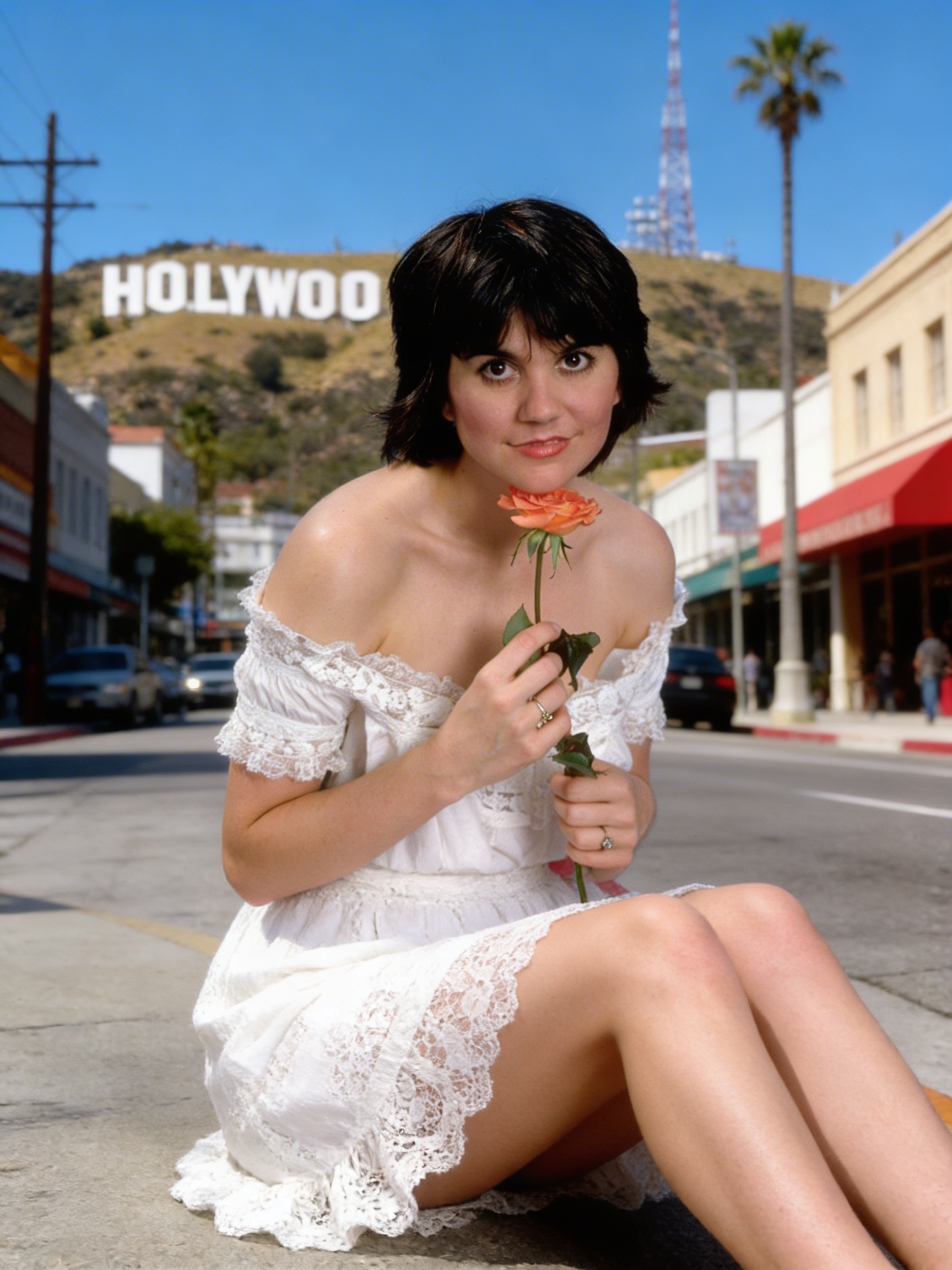
On Living in the USA, Linda Ronstadt took Little Feat’s loose, streetwise groove and made All That You Dream feel like a confession sung in full daylight.
Linda Ronstadt recorded her interpretation of All That You Dream for her 1978 album Living in the USA, a record that reached No. 1 on the Billboard album chart and captured her at one of the most visible peaks of her American pop career. The song itself had already belonged to a different musical world: Little Feat released All That You Dream on their 1975 album The Last Record Album, with the writing credited to Paul Barrere and Bill Payne. In Little Feat’s hands, it moved with the band’s familiar sideways grace — part rock, part funk, part Southern-California-by-way-of-New-Orleans looseness, a groove that seemed to smile while keeping its secrets.
Ronstadt did not approach a cover as a mere borrowing. By the late 1970s, she had become one of popular music’s most gifted interpreters, building albums from songs that had already lived elsewhere and then making them sound newly exposed under her voice. Living in the USA is full of that kind of transformation. Its title track reached back to Chuck Berry. Ooh Baby Baby honored the elegance of Smokey Robinson. Alison brought Elvis Costello into her orbit. And tucked within that wide-ranging map was All That You Dream, a song that allowed her to do something subtler than simply belt, decorate, or polish. She shifted the emotional temperature.
The Little Feat original has a wiry, muscular charm. It sounds like musicians listening hard to one another, leaning into syncopation, leaving room for little turns and sly accents. The song’s lyric carries a strange mix of desire, disappointment, and forward motion, but the band’s arrangement keeps it airborne. It is restless rather than wounded, conversational rather than declarative. The feeling is in the pocket as much as in the words.
Ronstadt’s version, shaped within the cleaner, radio-conscious environment of a Peter Asher-produced album, brings the song closer to the center of the frame. The groove remains, but it is less like a backroom jam and more like a carefully lit room where every phrase can be seen. Her voice does not try to imitate Little Feat’s feel. That is the point. She sings with the clarity and force that made her late-1970s records so commanding, but she also lets the song’s unsettled quality show. Where the original can feel sly and elastic, Ronstadt’s reading feels direct, almost startled by its own emotional candor.
That difference is what makes the cover matter. All That You Dream is not one of the most commonly singled-out tracks from Living in the USA, especially beside the album’s better-known hits and standards. Yet it reveals something central about Ronstadt’s artistry. She had a rare ability to step inside a song without erasing its first life. She respected the bones of the material, but she changed the posture. A song that once leaned back in a groove now stands upright, its uncertainties closer to the microphone.
In the context of 1978, that choice also says something about her range. Ronstadt was often discussed through the beauty and power of her singing, but her taste was just as important. She moved easily through rock and roll, country, soul, folk, pop standards, and the newer voices of singer-songwriters, treating the American songbook not as a museum but as a living conversation. Covering Little Feat on a No. 1 album placed a band beloved by musicians and serious listeners inside a broader pop setting, without flattening what made their music distinctive.
There is a quiet tension in hearing her sing this song. Ronstadt’s voice is bright enough to make the melody gleam, but she does not remove the ache beneath it. She brings order to the track without making it neat. That balance — polish with pressure still inside it — is where the recording finds its life. She does not make All That You Dream bigger in the usual show-business sense. She makes it more legible, more vulnerable, and perhaps more solitary.
That is the lasting fascination of her interpretation. It reminds us that a great cover is not always an argument with the original. Sometimes it is a change of light. Little Feat gave All That You Dream its supple, off-center heartbeat; Linda Ronstadt gave it a different kind of presence, one shaped by precision, longing, and the emotional confidence of a singer who knew that restraint could be as revealing as force. On Living in the USA, amid the shine of a chart-topping album, this track remains a small but vivid example of cover reinvention — the moment when a familiar groove becomes someone else’s truth.
