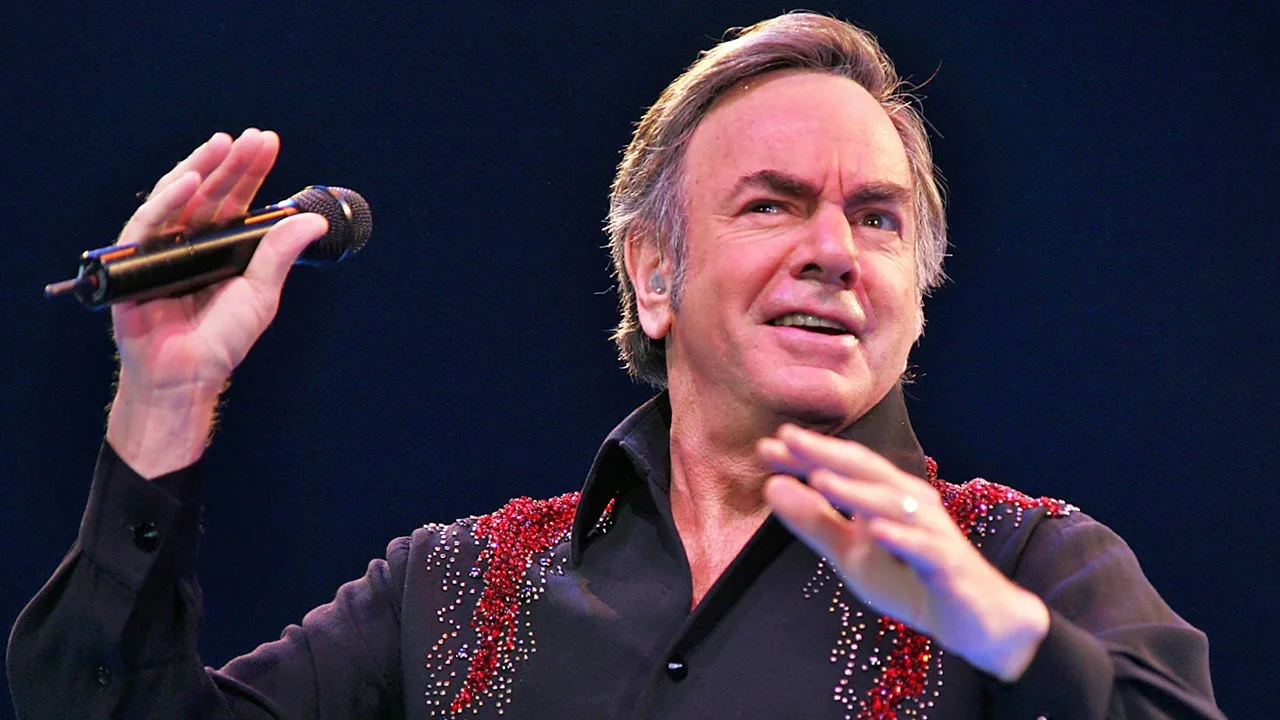
On the 1980 The Jazz Singer soundtrack, Neil Diamond let Acapulco sound like a vacation while quietly carrying the weight of escape.
Acapulco belongs to the 1980 soundtrack album for The Jazz Singer, the film in which Neil Diamond moved from the certainty of the concert stage into the more exposed role of a screen lead. The movie, a modern remake tied to the famous Jazz Singer story, placed Diamond inside a drama about a singer torn between family tradition, religious inheritance, and the pull of a broader popular audience. The soundtrack became the part of the project that traveled farthest, reaching listeners through major Diamond recordings such as Love on the Rocks, Hello Again, and America. But the quieter value of that album is found in the tracks that do not always carry the headline. Acapulco is one of those pieces: a bright, mobile song that helps give the record its sense of place, change, and restless forward motion.
The story surrounding The Jazz Singer gives every song on the soundtrack a slightly different pressure. Heard outside the film, Diamond’s voice can seem to arrive from a familiar place: commanding, intimate, brushed with theatrical confidence, able to turn a simple melodic phrase into a private declaration. Heard inside the film’s context, that same voice belongs to a character negotiating identity in public. He is not merely singing to entertain. He is singing while crossing from one life into another, and that makes even the lighter moments feel less simple than their surfaces suggest.
That is where Acapulco becomes more interesting than a casual glance might allow. The title points toward escape, sunlight, distance, and the fantasy of leaving one’s worries behind in a place where the air feels looser. Diamond had always understood the emotional pull of location in a song. Whether writing about America, a street, a room, or a remembered lover, he often used place as a way of measuring longing. In Acapulco, the place name does not need to carry a heavy speech. It works like a door left open. The listener senses movement, a shift of climate, a sudden change of scenery that might be pleasure, disguise, or postponement.
Musically, the track sits apart from the larger dramatic ballads that dominate public memory of the soundtrack. Love on the Rocks is built around damage and disillusionment. Hello Again turns reunion into something tender and suspended. America lifts the album into a bold communal statement. Acapulco, by contrast, feels like a side road in the narrative, a warmer interlude where the rhythm suggests travel rather than confession. It is not necessarily trying to be the emotional summit of the record. Its importance lies in how it keeps the album from becoming one continuous declaration. It gives the journey air.
That kind of album track matters, especially on a soundtrack. A film album is not only a collection of potential singles; it is also a sequence of emotional rooms. Some songs carry the plot directly. Others create the weather around it. Acapulco helps supply that weather. Its brightness is useful because the story of The Jazz Singer is full of division: old names and new names, duty and appetite, family voice and public applause. A sunny song in that setting does not erase the tension. It can make the tension more visible, because escape is never neutral when someone is trying to decide who he is allowed to become.
Diamond’s performance is central to that feeling. He does not sing as if he is throwing the song away. Even in a lighter frame, there is that unmistakable grain in his delivery, a kind of controlled urgency that keeps the track connected to the larger emotional map of the album. His voice has always carried a mixture of showmanship and solitude. It can fill a room, but it also sounds as though it is keeping one corner of itself guarded. On Acapulco, that quality gives the song a useful ambiguity. The surface may be bright, but the singer still sounds like someone moving with purpose.
The commercial story of The Jazz Singer also deepens the way this track is heard now. The film itself received a difficult critical response, but the soundtrack found a wide and lasting audience, becoming one of the most familiar album chapters in Diamond’s career. For many listeners, the songs outlived the screen narrative and became freestanding parts of his catalog. Yet returning to Acapulco with the soundtrack context in mind restores something important. It reminds us that the album was not built only from its grandest gestures. It was also built from transitions, detours, and pieces of atmosphere that helped Diamond’s character move through his complicated world.
That may be why Acapulco continues to feel quietly valuable. It is not asking to be treated as the defining statement of The Jazz Singer. It is asking to be heard as a moment of motion, a flash of warmth on a record shaped by pressure and self-invention. In the right light, the song is less about a destination than about the human urge to find one: somewhere outside the old expectations, somewhere beyond the familiar walls, somewhere the voice can test what freedom might sound like before it fully understands the cost.
