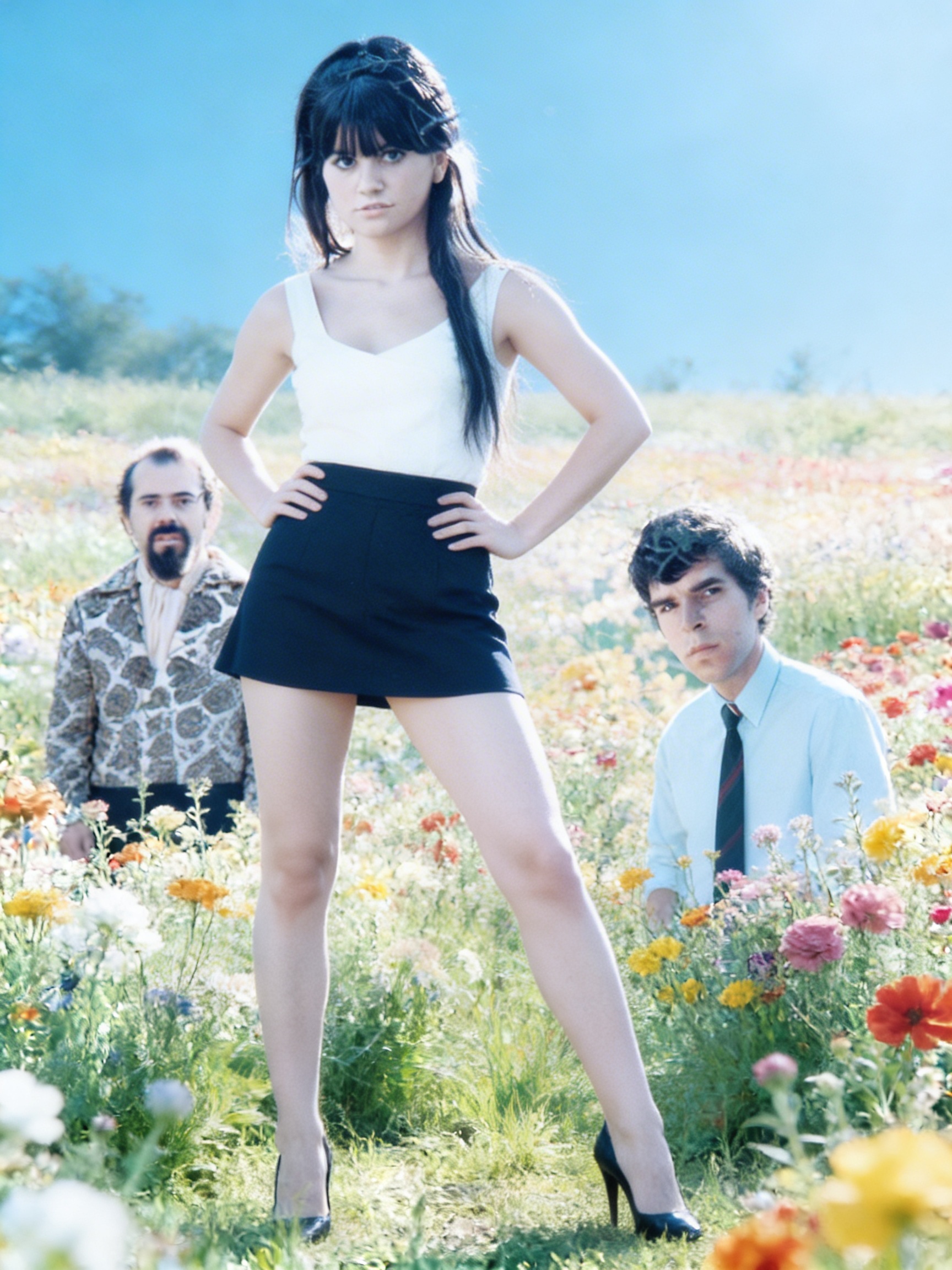
With “Y Andale”, Linda Ronstadt did not simply visit mariachi tradition — she stepped back into a family sound and let its joy ring with pride.
When Linda Ronstadt released Canciones de Mi Padre in 1987, she was already known to American audiences as one of the great voices of rock, country-rock, pop standards, and ballad singing. Yet the album did not feel like a side trip or a novelty. It was a return. Sung entirely in Spanish and built around traditional Mexican songs connected to her family background, Canciones de Mi Padre drew from the music Ronstadt had heard growing up in Tucson, Arizona, where Mexican song was not an exotic style but part of the air around the house. Within that album, “Y Andale” stands out for the way it catches the brightness, drive, humor, and communal lift of mariachi music without sanding away its cultural edges.
The song is not solemn about heritage. That is part of its strength. “Y Andale” moves with a festive urgency, the kind of pulse that seems made for raised voices, quick glances, and a room that cannot remain still. In Ronstadt’s hands, the performance carries polish, but not distance. The brass has bite, the strings sweep forward, and the rhythm keeps insisting that the body should answer before the mind has finished analyzing. It is music with social warmth built into its structure — meant to be heard among people, not sealed behind glass.
That quality mattered deeply in the context of Canciones de Mi Padre. By 1987, Ronstadt had spent years moving across musical borders with remarkable ease. She could sing a Lowell George song, a Buddy Holly number, a Motown hit, a Nelson Riddle arrangement, or a country lament and make each one feel inhabited rather than borrowed. But this album asked something different. It asked her to stand in front of a tradition tied to ancestry, language, memory, and community expectation. For a singer of her stature, the risk was not commercial uncertainty alone; it was emotional responsibility. She had to sing beautifully, but she also had to sing with belonging.
“Y Andale” helps explain why the album was received as more than a famous artist changing costumes. The track’s joy feels lived-in. Ronstadt does not treat mariachi as decorative color. She meets the style on its own terms — with open vowels, rhythmic alertness, and a respect for the dramatic lift that makes this music so powerful. Mariachi singing often balances elegance with force. A phrase may bloom, then sharpen; a voice may smile and command in the same breath. Ronstadt understood that balance. Her voice, known for its clarity and emotional directness, finds a new kind of radiance here: less confessional than her rock ballads, less intimate than her pop standards, but no less personal.
The title Canciones de Mi Padre translates as Songs of My Father, and that framing gives the entire album a tender gravity. Ronstadt’s father, Gilbert Ronstadt, came from a Mexican-German family rooted in the borderlands, and the music of Mexico was part of the family inheritance. The album gathered songs associated with that world and presented them with the care of a major studio production, supported by outstanding musicians and arrangements that honored the grandeur of traditional Mexican performance. The result became one of the most commercially successful Spanish-language albums in American music history and earned wide recognition, including a Grammy Award in the Mexican-American performance category.
But numbers and awards only explain part of its meaning. What makes “Y Andale” endure is the feeling that Ronstadt is not translating herself for the marketplace. She is allowing a part of herself, long present but less visible to mainstream pop audiences, to step forward. There is a particular pleasure in hearing a singer known for emotional precision surrender to a more public kind of joy. The song does not ask for hushed attention. It invites motion, response, and recognition. It carries the sound of celebration, but beneath that celebration is the seriousness of cultural memory being treated with love.
For many listeners, Canciones de Mi Padre opened a door. Some heard mariachi with new attention because Ronstadt’s name led them there. Others heard their own family music honored on a national stage without apology or dilution. That dual power is rare. The album could cross over precisely because it did not flatten itself to cross over. “Y Andale” is a perfect example: bright, accessible, and immediately inviting, yet rooted in a musical language older and deeper than the pop moment around it.
There is also something revealing in the contrast between Ronstadt’s better-known English-language heartbreak songs and the exuberance of “Y Andale”. Her greatest gift was never just sadness, though she could make sadness sound almost architectural in its strength. Her gift was truth of tone. On this track, that truth arrives as delight — not lightweight cheer, but the robust joy of a singer standing inside a tradition that helped form her. The performance lets heritage feel alive, not preserved. It moves, laughs, calls out, and shines.
Decades later, “Y Andale” still feels like one of the album’s clearest declarations of purpose. It says that returning to one’s roots does not always have to sound like mourning or reflection. Sometimes it sounds like trumpets cutting through the air, like a voice carried by memory, like a family song stepping out in public with its head high. In that sense, Linda Ronstadt’s performance remains a beautiful act of musical homecoming — full of craft, full of history, and full of the kind of joy that refuses to be small.
