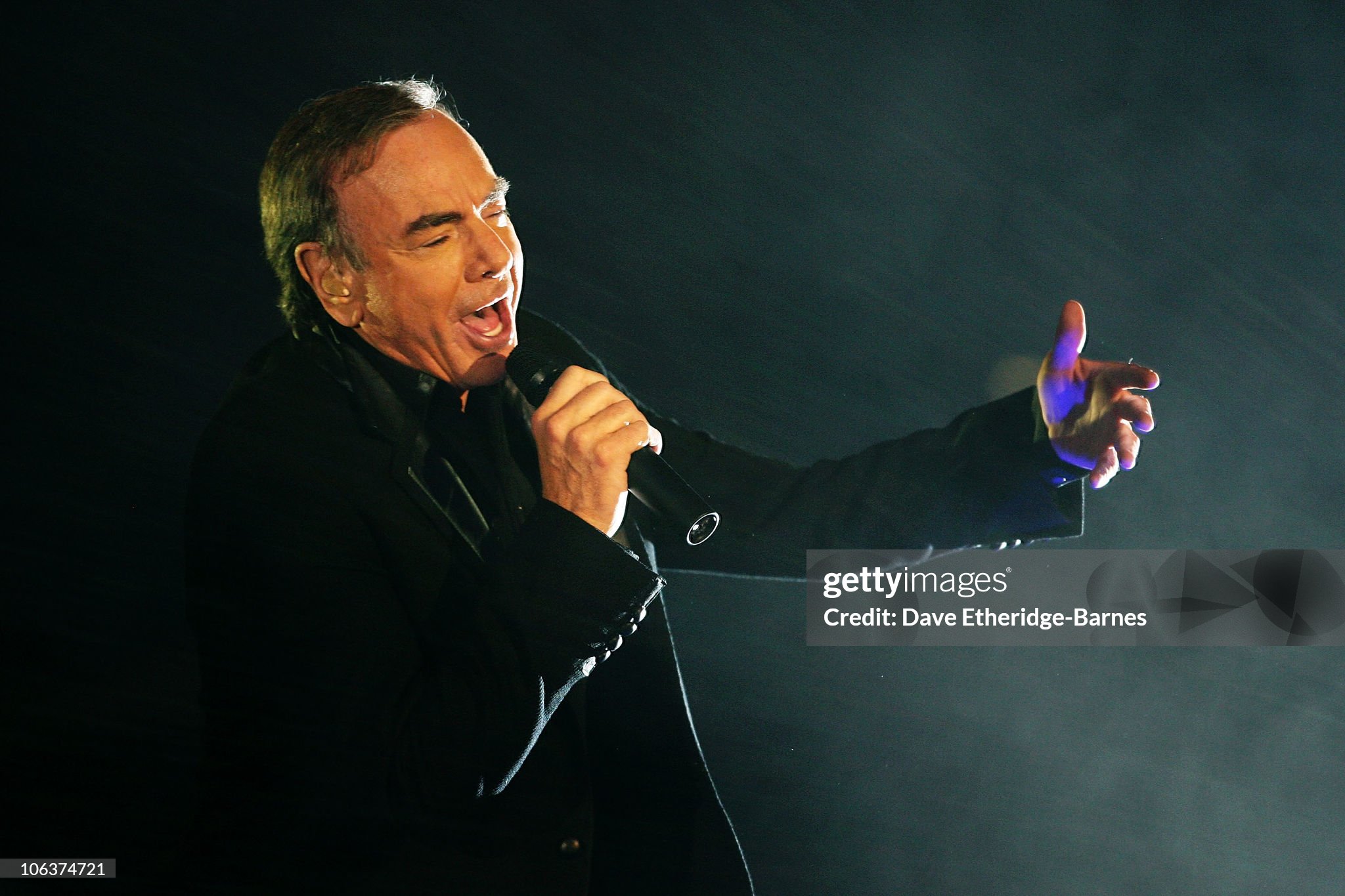
In 1996, Neil Diamond let a Nashville moon pull his big-city voice toward country music, and the result sounded less like a costume than a late-career conversation.
Neil Diamond released “Tennessee Moon” in 1996 as the title track of Tennessee Moon, a country-minded collaboration album shaped in and around the Nashville world. Issued by Columbia Records, the project brought Diamond into contact with country songwriters, session musicians, and guest performers at a moment when country music was enjoying enormous mainstream visibility. The title song, co-written by Diamond with respected Nashville songwriter Dennis Morgan, served as more than an album opener or radio doorway. It became the emotional compass of the whole record: a song about distance, memory, return, and the strange pull of a place that promises to make a restless heart sound a little more honest.
For listeners who knew Diamond through “Sweet Caroline”, “Cracklin’ Rosie”, “Song Sung Blue”, or the sweeping drama of The Jazz Singer era, Tennessee Moon might have seemed at first like an unexpected turn. Diamond was, after all, deeply associated with New York songwriting, pop theater, adult contemporary grandeur, and the kind of choruses that could fill an arena without losing their directness. Yet country music was not as foreign to his instincts as the album’s label might have suggested. His best songs had always carried strong narrative bones. They favored clear emotional stakes, durable melodies, plainspoken longing, and a sense that a singer could stand before a crowd and still sound like he was addressing one person across a kitchen table.
That is why “Tennessee Moon” works best when heard not as a genre experiment, but as a change of weather. The arrangement does not try to erase Diamond’s familiar presence. His voice remains unmistakable: grainy, deliberate, slightly theatrical, full of that careful weight he brings to a line when he wants the listener to feel the words settle. Around him, the musical setting leaves more open country air than many of his bigger pop productions. The song leans into a gentler pace, with a sense of acoustic space and melodic patience that suits its subject. Instead of chasing novelty, it allows Diamond’s voice to stand under a different sky.
The larger album carried that same idea further. Tennessee Moon was built as a collaboration with Nashville’s creative community, and its guest list helped frame Diamond’s visit as a genuine meeting rather than a passing flirtation. The record included country-connected voices and players, including a notable pairing with Waylon Jennings on “One Good Love”, and it drew on the craftsmanship of writers and musicians who understood the emotional economy of country music. The title track, however, remains the simplest statement of the project’s purpose. It does not need a duet partner to explain itself. It places Diamond alone in the center of the song, facing the idea of Tennessee as both a real place and a symbolic refuge.
The timing matters. In the mid-1990s, country music was not hidden on the margins of American popular culture. It was selling records in huge numbers, filling stadiums, and crossing into households that might once have separated country from pop. Nashville had become a capital of commercial force as well as musical craft. For an established pop songwriter like Diamond, entering that environment was a risk, because the move could easily have sounded calculated. But “Tennessee Moon” avoids the trap of overacting its country credentials. It succeeds because it does not ask Diamond to become someone else. Instead, it lets country music draw out an older quality already present in his writing: the lonely traveler, the open road, the belief that a melody can carry both pride and regret without spelling everything out.
There is also something revealing about hearing Diamond in this 1996 frame. By then, he was not a young hitmaker trying to define himself. He was an established artist with decades behind him, a voice already tied to countless personal memories for his audience. That history gives “Tennessee Moon” a particular resonance. The song sounds like a man looking not for reinvention in the flashy sense, but for renewal through humility. Nashville, in this reading, is not just a marketplace or a genre address. It is a room where the lights are lower, the language is simpler, and the singer has to trust the song without leaning too hard on grandeur.
The title itself carries much of the emotional work. A moon over Tennessee is a familiar country image, but in Diamond’s hands it becomes a kind of witness. It suggests distance from home, the ache of travel, and the possibility that another landscape might reflect something hidden in the self. The song does not have to announce a dramatic confession. Its power lies in restraint: a mature singer standing inside a melody that gives him room to sound reflective rather than triumphant. That restraint is what keeps the recording from feeling like a costume change. It feels instead like an artist stepping into a tradition with respect, bringing his own history along, and discovering that the country road can lead inward as much as outward.
Nearly three decades later, Neil Diamond’s “Tennessee Moon” remains a telling 1990s moment because it captures a bridge between worlds that were never as separate as they appeared. It is Brooklyn craft beneath a Nashville sky, pop memory filtered through country storytelling, and a title track that quietly explains why the album exists. The song does not ask to be the loudest entry in Diamond’s catalog. It asks to be heard as a late-night turn toward openness, where a familiar voice finds new shade in an old American moon.
