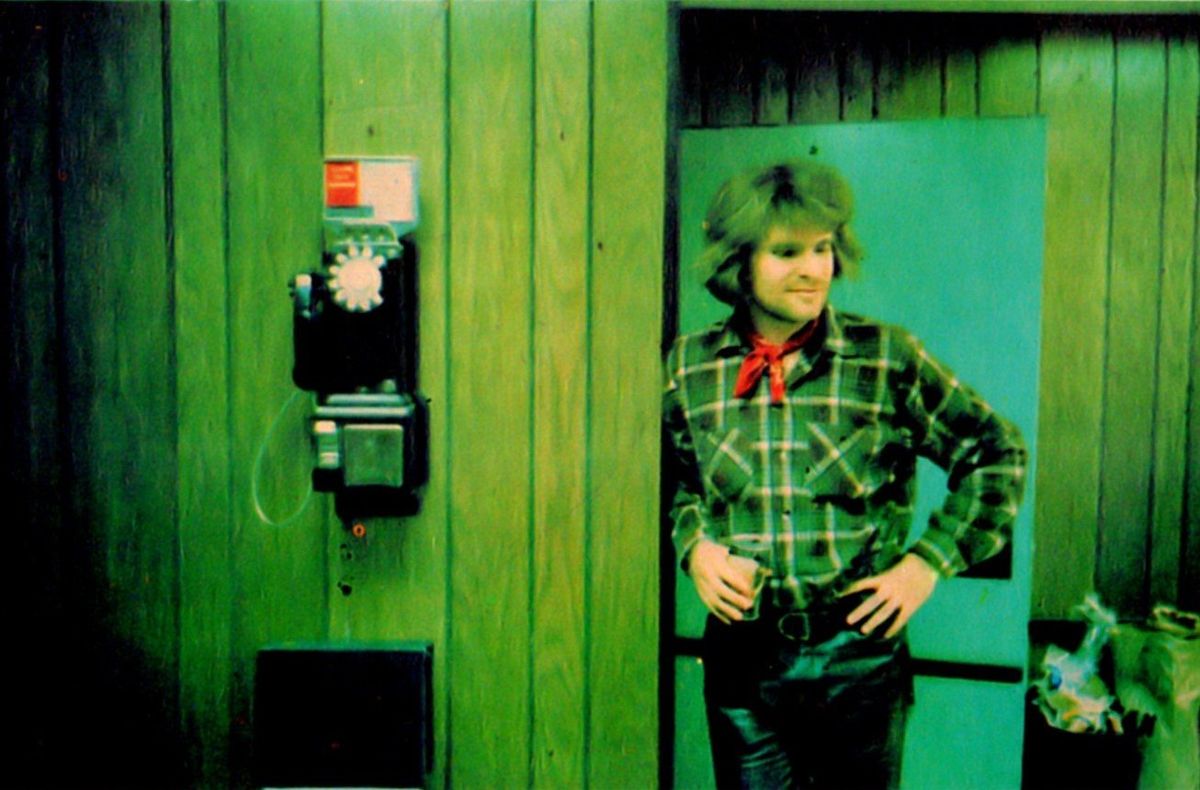
On Blue Moon Swamp, John Fogerty returned to the old American road with fresh dust on his boots, and Bring It Down to Jelly Roll catches him moving with the confidence of a man who still trusts the groove.
Released in 1997, Blue Moon Swamp marked John Fogerty’s first studio album in more than a decade, following 1986’s Eye of the Zombie. It arrived with a weight that was larger than any single track: the former Creedence Clearwater Revival voice was stepping back into the studio-album spotlight after years of complicated history, high expectations, and the long shadow of songs that had become part of American radio memory. The album went on to win the Grammy Award for Best Rock Album, and inside that victory sat a record full of river motion, guitar bite, country swing, and blues-rooted humor. Among its most spirited pieces, Bring It Down to Jelly Roll feels like a reminder that Fogerty’s music has always known how to make history dance.
The song is not a grand statement in the obvious sense. It does not need to announce its importance. Instead, it works the way much of the best roots rock works: with rhythm in the floorboards, with a guitar tone that seems to have traveled through roadside bars and county fairs, with a vocal that knows exactly where the pocket is. The title itself points toward an older American vocabulary, the kind of phrase that suggests New Orleans, early jazz, blues humor, and the body language of music before rock and roll had a name. Whether heard as a wink toward the past or simply as a phrase built for a chorus, Bring It Down to Jelly Roll connects Fogerty’s 1997 comeback to musical ground that was already old when he first became famous.
That connection matters because Blue Moon Swamp was never merely a nostalgia exercise. Fogerty had already written songs that sounded as if they came from some half-imagined stretch of the South, even though his own story began in California. With Creedence, he built an American musical landscape out of swamp rhythm, rockabilly urgency, country plainspokenness, and blues phrasing. Decades later, on Blue Moon Swamp, he did not simply copy that earlier language. He tightened it, polished it, and let it breathe as the work of an older musician who understood the difference between revisiting a sound and inhabiting it.
Bring It Down to Jelly Roll sits comfortably in that space. It has the feel of a band locking into something familiar without making it feel tame. Fogerty’s voice, still nasal, sharp-edged, and instantly recognizable, cuts through the track with the same kind of rhythmic authority that made his best recordings feel half-sung and half-driven. He never sounds as though he is performing roots music from a distance. He sounds as though he is speaking its language from muscle memory. The guitars do not simply decorate the song; they push it forward, giving the track its sense of motion, its small sparks of mischief, and its sturdy handshake with early rock and roll.
One of the pleasures of the track is how unforced it feels. On an album that also gave listeners the rolling speed of Southern Streamline, the easy warmth of Hot Rod Heart, and the tender domestic glow of Joy of My Life, this song adds a different shade: playful, percussive, a little sly, and deeply rooted in the idea that American music is a conversation across generations. You can hear echoes of barrelhouse energy and jukebox rock, but the recording belongs to 1997 because Fogerty makes it with the clarity and control of someone returning not to repeat himself, but to measure what still holds.
That is why the Grammy success of Blue Moon Swamp still feels meaningful. Awards often fade into footnotes, but this one recognized more than a comeback. It acknowledged an artist who had re-entered his own musical territory without being swallowed by it. For longtime listeners, Bring It Down to Jelly Roll offered a particular kind of satisfaction: not the drama of reinvention, but the quieter thrill of hearing a familiar engine start cleanly after years of silence. The track feels loose because Fogerty made it tight. It feels casual because the craft is so sure. It feels old-fashioned only in the best sense, like a hand-built instrument that still fits the present moment.
In the larger story of John Fogerty, the song may not be the one most often placed at the front of the parade, but it tells us something essential about his gift. He could take American musical fragments—shuffle rhythms, country twang, blues phrasing, rock and roll drive—and make them feel like one weathered, breathing thing. Bring It Down to Jelly Roll is the sound of that gift in motion on a record that restored him to full public force. It does not plead for reverence. It taps its foot, grins sideways, and trusts that the groove will carry the truth.
