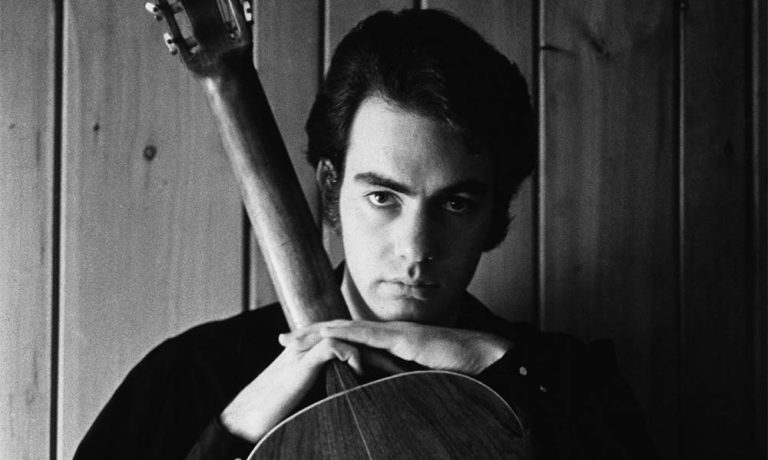
In Neil Diamond’s 1973 score for Jonathan Livingston Seagull, Anthem sounds less like a pop single than a vow: a voice rising toward freedom while the film searches the sky for meaning.
Neil Diamond’s Anthem belongs specifically to the 1973 Jonathan Livingston Seagull soundtrack, the album created for Hall Bartlett’s film adaptation of Richard Bach’s bestselling novella. That soundtrack context matters. Heard by itself, the track can feel like a solemn Diamond meditation, broad in gesture and serious in purpose. Heard within the world of Jonathan Livingston Seagull, it becomes part of a larger musical journey about flight, discipline, loneliness, and the stubborn refusal to accept a life that feels too small.
The film was an unusual project even for the early 1970s, a period when American popular culture was wide open to spiritual allegory, self-discovery, and ambitious experiments that would have seemed unlikely only a decade earlier. Bach’s book had become a phenomenon by turning the story of a seagull into a fable about transcendence and personal awakening. Bartlett’s film tried to bring that interior parable to the screen through images of gulls, open skies, water, and narration rather than conventional human drama. It was a bold idea, and also a difficult one. The movie divided critics and viewers, but Diamond’s music gave many listeners a way into its emotional landscape.
By 1973, Diamond was already far more than the writer of bright, durable hits. Songs such as Sweet Caroline, Cracklin’ Rosie, and Song Sung Blue had made him a familiar presence on radio, while Hot August Night had captured the scale and electricity of his stage persona. Yet the Jonathan Livingston Seagull soundtrack showed another side of him: dramatic, searching, and willing to write for an imagined sky rather than a three-minute radio format. The album was released during his early Columbia Records era, with orchestral arrangements by Lee Holdridge helping to place Diamond’s voice inside a larger cinematic frame. The soundtrack later earned major recognition, including a Grammy Award for Diamond’s original score, but its lasting value is not merely in the honors attached to it. Its value lies in the way the music remembers the film’s yearning more clearly than the film’s reputation does.
Anthem is especially revealing because it does not behave like the easy centerpiece of a commercial soundtrack. It feels ceremonial, almost processional, as if it is gathering the themes of the project and lifting them into one final statement of belief. Diamond’s vocal presence is crucial. He does not sing the piece as a casual observer of the story. He sings as if the questions in the film have passed through him: What is freedom worth if it leaves you alone? What does it mean to keep climbing when the flock has turned away? How much of life is comfort, and how much is calling?
The arrangement gives the song its sense of height. Rather than rushing toward a dramatic payoff, it opens space around the voice, allowing the music to feel broad and wind-carried. Diamond’s phrasing has that familiar grain, the mixture of strength and vulnerability that made his best 1970s work feel both public and private. In Anthem, that quality becomes especially important. The song is not about romance in the ordinary sense, nor is it built for the warm communal release of a concert favorite. It is about aspiration, but not the simple kind. There is a strain in it, a sense that reaching higher costs something.
That is why the soundtrack setting changes the way the song is heard. On a regular pop album, Anthem might stand as one of Diamond’s grander spiritual statements. Within Jonathan Livingston Seagull, surrounded by pieces such as Be, Dear Father, Lonely Looking Sky, and Skybird, it becomes part of an arc. The earlier songs and themes sketch solitude, questioning, flight, and return; Anthem gathers those ideas into something closer to declaration. It is not simply saying that freedom is beautiful. It is suggesting that freedom demands a kind of inner allegiance.
For listeners who came to Diamond through his more familiar radio songs, this soundtrack can still feel like a surprising doorway. It belongs to a moment when popular artists were often willing to take large risks with form and subject. A major singer-songwriter could attach his name to a philosophical film about a gull, write music that leaned toward symphonic storytelling, and ask his audience to follow him into a place with fewer hooks and more horizon. That kind of ambition did not always produce perfect results, but it left behind recordings with a distinctive emotional weather.
Decades later, Neil Diamond’s Anthem remains most powerful when it is not separated from the sky it was written for. The song carries the earnestness of its era, but also something more durable: the sound of an artist trying to turn longing into architecture. It is the moment when the soundtrack stops merely accompanying flight and begins to resemble flight itself. The film may still invite debate, but the music continues to rise in its own way, patient and unembarrassed, as if it knows that some dreams are measured not by how far they travel, but by how deeply they keep calling upward.
