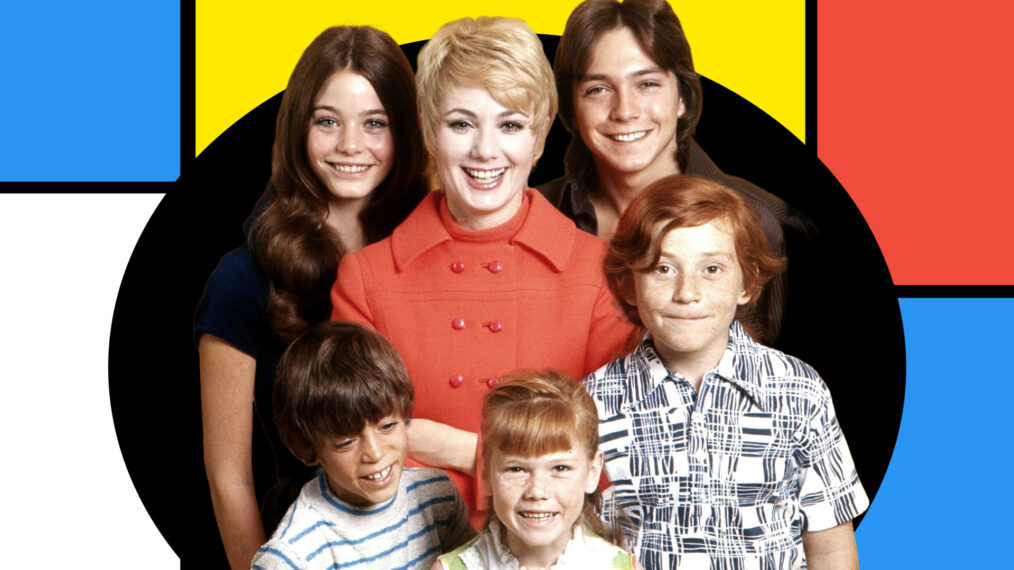
In one of The Partridge Family‘s last American pop turns, “Lookin’ For a Good Time” opens a darker corridor than fans might expect, with David Cassidy singing less like a TV dream and more like a young man moving through a real story.
Released in 1973 as The Partridge Family‘s final U.S. single, “Lookin’ For a Good Time” arrived at a curious moment in the group’s history. The cheerful television phenomenon that had once seemed to run on pure bright color and easy momentum was nearing its close, and the music was changing with it. Drawn from the album Bulletin Board, the single still carried the polished pop craft associated with the group’s Bell Records years, but the emotional weather had shifted. What makes the record especially interesting now is not just its place in the timeline. It is the way David Cassidy sounds inside it: more inward, more dramatic, and more aware of the night around the song than the group’s earlier hits usually allowed.
That matters because The Partridge Family had always lived in a delicate space between television fantasy and real pop success. Their biggest records were expertly made, catchy, and often irresistibly buoyant, yet the image attached to them was one of family-safe optimism, a kind of musical sunlight. By 1973, however, that sunlight was no longer the whole story. Cassidy had already become far more than a smiling face at the center of a TV bus. He was carrying the pressures of fame, moving deeper into adult pop, and developing a phrasing style that could suggest weariness, desire, impatience, or distance without ever overplaying the moment. “Lookin’ For a Good Time” catches some of that growth in a surprisingly compact form.
On paper, the title sounds casual, even carefree, as if the song might simply offer another rush of radio-friendly fun. But the performance gives it a different shape. Cassidy does not attack the lyric with uncomplicated excitement. He leans into it like a narrator stepping into a scene already underway. There is movement in the vocal, but also a shadow behind it, a sense that the search in the song is not entirely innocent and not entirely easy. That is where the record gains its bittersweet edge. Instead of selling a bright slogan, he gives the impression of a character looking for connection in a world that feels a little more exposed, a little less protected than the familiar television frame.
The arrangement helps create that mood. It remains firmly in the architecture of early-1970s pop: tight rhythm, sleek studio finish, carefully placed harmonies, and a melodic flow designed for radio. Yet the record does not bounce in quite the same carefree way as the group’s most famous singles. There is a faint late-hour quality to it, as though the song belongs not to a family sitcom afternoon but to the quieter stretch after the lights have softened and the room has thinned out. In that sense, the single is one of those fascinating transitional recordings that tell a larger story than their chart footprint ever could. It shows a manufactured pop institution trying, however subtly, to admit more adult feeling into its sound.
And that is where Cassidy becomes the key to the whole record. His voice had always had a natural clarity, but one of his underrated gifts was his ability to shade a line without breaking the song’s surface. In “Lookin’ For a Good Time”, he brings a more story-driven intelligence to the lead than many people associate with The Partridge Family catalog. He sounds as if he understands that the song’s real hook is not just the melody but the tension inside the title itself. Looking for a good time can mean freedom, escape, performance, loneliness, or simply motion for its own sake. Cassidy leaves room for all of that. He does not over-explain the feeling; he lets the ambiguity ride in the phrasing.
There is also something quietly moving about hearing this kind of performance under the Partridge Family name so late in the run. By then, audiences could sense that the culture was shifting. Early-1970s pop was growing more self-conscious, more textured, sometimes rougher around the edges. The innocence of the first wave was giving way to a more complicated emotional register across radio. In that environment, “Lookin’ For a Good Time” feels almost like a small hinge between identities: part teen-pop artifact, part sign of an artist pushing against the limits of a role that had once made everything look simple.
That may be why the single holds up in such an interesting way. It is not merely a closing footnote or a trivia answer about a final 1973 U.S. release. It is a record where image and voice stop matching quite so neatly, and the slight mismatch is exactly what gives it life. The group still sounds polished. The melody still does its work. But Cassidy brings in a trace of real-world unease, and suddenly the song has depth that its title alone does not promise.
In the end, “Lookin’ For a Good Time” lingers because it sounds like the end of one story and the beginning of another. The pop surface is still there, bright enough to recognize in an instant. Beneath it, though, David Cassidy is already singing from a more complicated place, and that complication gives the record its afterglow. It is the sound of a familiar musical world dimming just enough for new feelings to appear.
