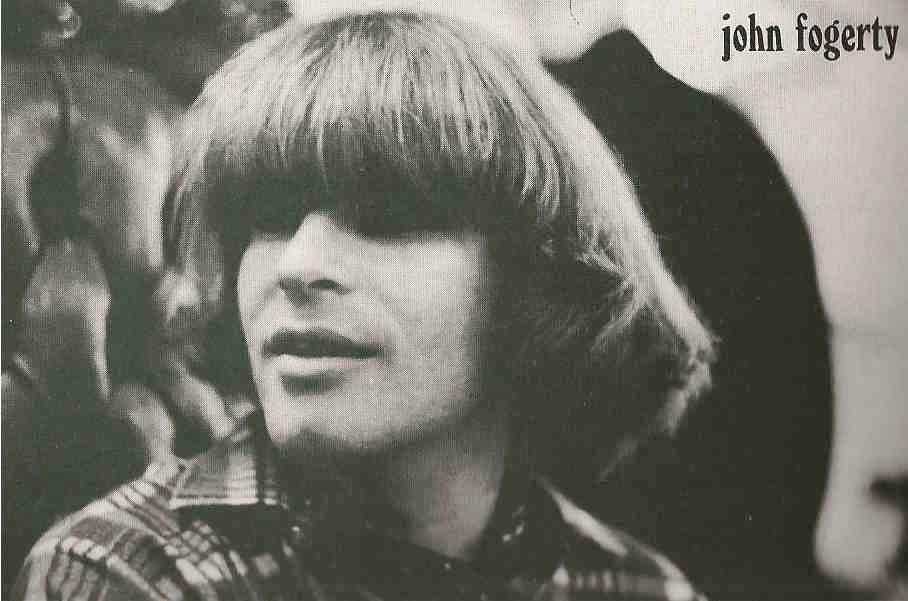
On ‘Workin’ on a Building’, John Fogerty stepped away from rock stardom and into older American ground, where gospel rhythm, handmade sound, and personal reset became the same thing.
When John Fogerty released The Blue Ridge Rangers in 1973, he was not simply introducing himself as a solo artist after the end of Creedence Clearwater Revival. He was doing something more inward than that. The album, his debut solo project, was credited to The Blue Ridge Rangers rather than to his own name, and he played every instrument and sang every vocal himself. Instead of using that moment to announce a new rock persona, Fogerty turned toward country, gospel, and roots material that had shaped him long before fame did. In that setting, ‘Workin’ on a Building’ becomes one of the clearest statements on the record: not flashy, not self-conscious, just direct, sturdy, and deeply connected to the music that lived underneath his songwriting all along.
‘Workin’ on a Building’ is a traditional gospel song, and that matters. Fogerty was not reaching for something fashionable or trying to prove range through novelty. He was stepping into a piece of communal American music that had already traveled through churches, porches, harmonies, and memory long before it reached a 1973 studio. That gives his version a different kind of power. It does not behave like a comeback single or a reinvention campaign. It feels more like a man taking his bearings through songs older than the spotlight.
What makes the performance so compelling is the way it balances solitude and fellowship. This was a one-man recording, but the song itself comes from a tradition built on shared voices and shared conviction. Fogerty solves that tension by making the track feel handmade rather than isolated. The rhythm has motion, the vocal has grain, and the arrangement carries the unvarnished pleasure of someone playing music because he believes in its bones. Even without a full band in the usual sense, the song moves with the kind of lift that suggests bodies in a room, feet on a floor, and a melody that has been passed from one set of hands to another.
That is part of why the track matters in the larger story of John Fogerty. For many listeners, his name is attached first to the force of Creedence Clearwater Revival: the compact singles, the swampy drive, the hard edge in the voice, the feeling that every song was built to cut straight through the radio. But The Blue Ridge Rangers shows that the roots of that sound ran deeper than rock success. On ‘Workin’ on a Building’, you can hear the older framework beneath the hits: gospel insistence, country plainness, string-band momentum, and the deep American habit of turning struggle into rhythm. The record does not reject his past. It reveals where much of that past came from.
The timing of the album gives the song extra resonance. In 1973, Fogerty had already lived through the pressure and visibility that came with leading one of the defining American bands of the late 1960s and early 1970s. A more obvious move might have been to answer that history with a grand personal statement. Instead, he made a record that sounded like a return to first principles. That restraint tells its own story. ‘Workin’ on a Building’ is not autobiographical in a literal way, but in the context of The Blue Ridge Rangers, it feels revealing all the same. Here is an artist choosing craft over spectacle, roots over rhetoric, and older songs over self-mythology.
There is also something quietly moving about the title itself in this moment of Fogerty’s career. A building is never finished all at once. It rises through repetition, labor, patience, and faith in the structure taking shape. Heard in 1973, that idea lands with unusual weight. Fogerty sings the song with energy, but also with the sense that he is rebuilding a musical home from the ground up. Not abandoning what came before, but rediscovering the foundation beneath it.
That is why this track remains so rewarding for listeners who go beyond the familiar singles and look deeper into his catalog. It may not be the most discussed recording from The Blue Ridge Rangers, but it is one of the album’s purest expressions of purpose. The record’s better-known moments show its charm; ‘Workin’ on a Building’ shows its center. It reminds us that before image, before industry, before the next chapter had a name, John Fogerty trusted the old songs. And in that trust, he found a way to sound not smaller than before, but closer to the source.
Listen to it now, and the performance still carries that feeling of return: a voice with history in it, a song with communal memory in it, and a musician standing alone only so he can get nearer to the music that made him in the first place.
