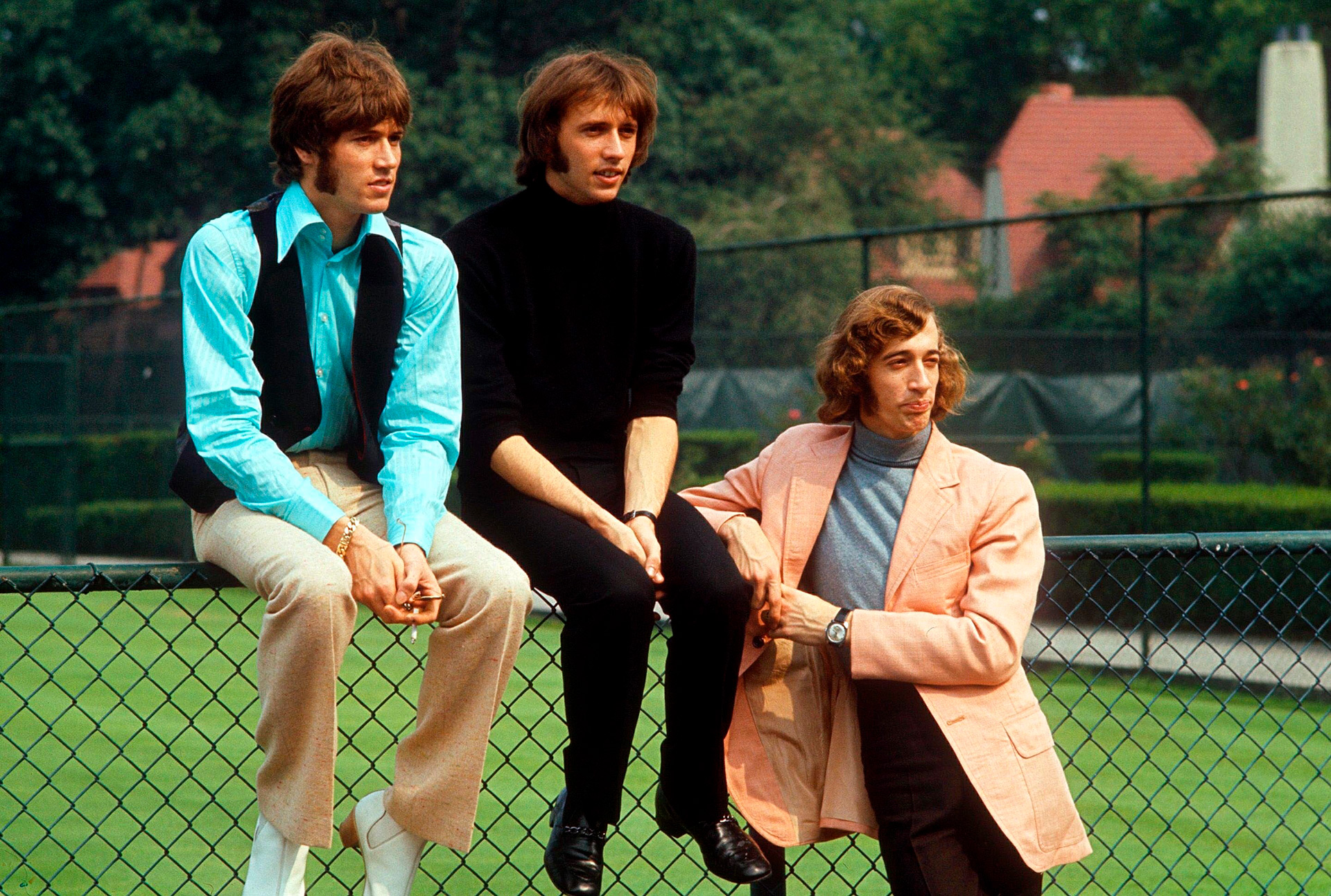
Long before the Bee Gees became pop royalty, Turn of the Century opened their 1967 debut with a curious little promise: that imagination, melody, and a touch of antique mischief could remake time itself.
When Bee Gees began Bee Gees’ 1st in 1967 with Turn of the Century, they were not introducing themselves through grand drama or sheer volume. They chose something stranger and more inviting: a harpsichord-driven piece of psychedelic pop that feels as if it has stepped out of a music box, blinked in the daylight, and started telling a story about buying a time machine. As an opening track, it matters. This was the first doorway into the group’s first internationally released album, and it immediately announced a world of ornate melodies, playful surrealism, and young songwriters already fascinated by memory, fantasy, and emotional atmosphere.
That setting is important. Bee Gees’ 1st arrived in one of pop’s most imaginative years, when British and Australian-connected acts moving through London were stretching the boundaries of what a pop record could contain. Harpsichords, chamber textures, music-hall echoes, and dreamlike lyrics were everywhere in the air, but Bee Gees did not sound like mere followers. Even at this early stage, the Gibb brothers had a distinct instinct for combining elegance with oddness, sweetness with a slight shadow. Turn of the Century captures that balance beautifully. It is whimsical, yes, but it is not weightless. Beneath the bright surfaces, there is already the sense that these writers were interested in how time changes people, and how songs can preserve a mood long after the moment itself has passed.
The harpsichord does much of the first work. It gives the song a clipped, decorative sparkle, placing it close to the baroque-pop and psychedelic currents of the era, yet the arrangement never feels overloaded. Instead, it creates a teasing kind of movement, as if the song is winding itself forward one ornate phrase at a time. Then come the lyrics, with their whimsical notion of purchasing a time machine. In another band’s hands, that idea might have turned into novelty. Here, it feels almost innocent, like a child’s impossible plan told with a poet’s wink. The image is playful, but also revealing. In 1967, to sing about stepping outside ordinary time was to share in the period’s larger imaginative hunger. Pop was no longer content to describe the everyday in straight lines. It wanted to bend the clock, rearrange perspective, and turn fantasy into atmosphere.
What makes Turn of the Century especially rewarding in the album-era context is how naturally it sets the emotional temperature for everything that follows. Bee Gees’ 1st would go on to hold some of the most memorable songs of the group’s early period, but this opener performs a quieter task. It invites the listener into the album’s interior world. Before the deeper melancholy of other songs takes hold, this track establishes the band’s gift for theatrical detail and melodic charm. It says, in effect, that this record will not be limited to one emotional color. There will be wonder here, and wit, and period touches, and a slightly tilted view of reality. That is a sophisticated thing for an opening track to accomplish.
Listening now, it is hard not to hear the young Bee Gees at a fascinating point of formation. The later public image of the group became so massive, so tied to a different sound and a different decade, that songs like Turn of the Century can still come as a small shock. Before the sleek rhythm tracks, before the fevered dance-floor association, they were building songs with carved edges and old-world color. They sounded like craftsmen as much as pop stars. Their harmonies carried tenderness, but also a literary quality, as though the songs were peering at ordinary life through antique glass. This track is not simply an early curiosity. It is evidence of the breadth that was already present from the beginning.
There is also something touching about how lightly the song wears its imagination. The idea of a time machine is introduced not as bombast, not as science fiction spectacle, but as a whimsical object one might almost pick up during an afternoon stroll. That choice keeps the song human-sized. It is dreamlike, yet domestic. It feels close enough to touch. In that sense, it mirrors one of the finest qualities of late-1960s pop: the ability to make fantasy feel intimate. The world inside Turn of the Century is not vast and cosmic. It is clever, melodic, and gently tilted, a place where youthful curiosity still believes impossible things might be bought, wound up, and taken home.
As the opening cut on Bee Gees’ 1st, the song now feels almost prophetic in a different way. It is itself a kind of time machine. Drop the needle, or start the track, and you are returned not only to 1967 but to a version of Bee Gees still in the act of becoming. You hear ambition without heaviness, sophistication without stiffness, and a band willing to begin its big statement with something delicate and sly instead of obvious. That may be why Turn of the Century lingers. It does not demand attention with force. It earns it through atmosphere. And in the long story of the Bee Gees, that makes it one of the most revealing first steps they ever put on record.
