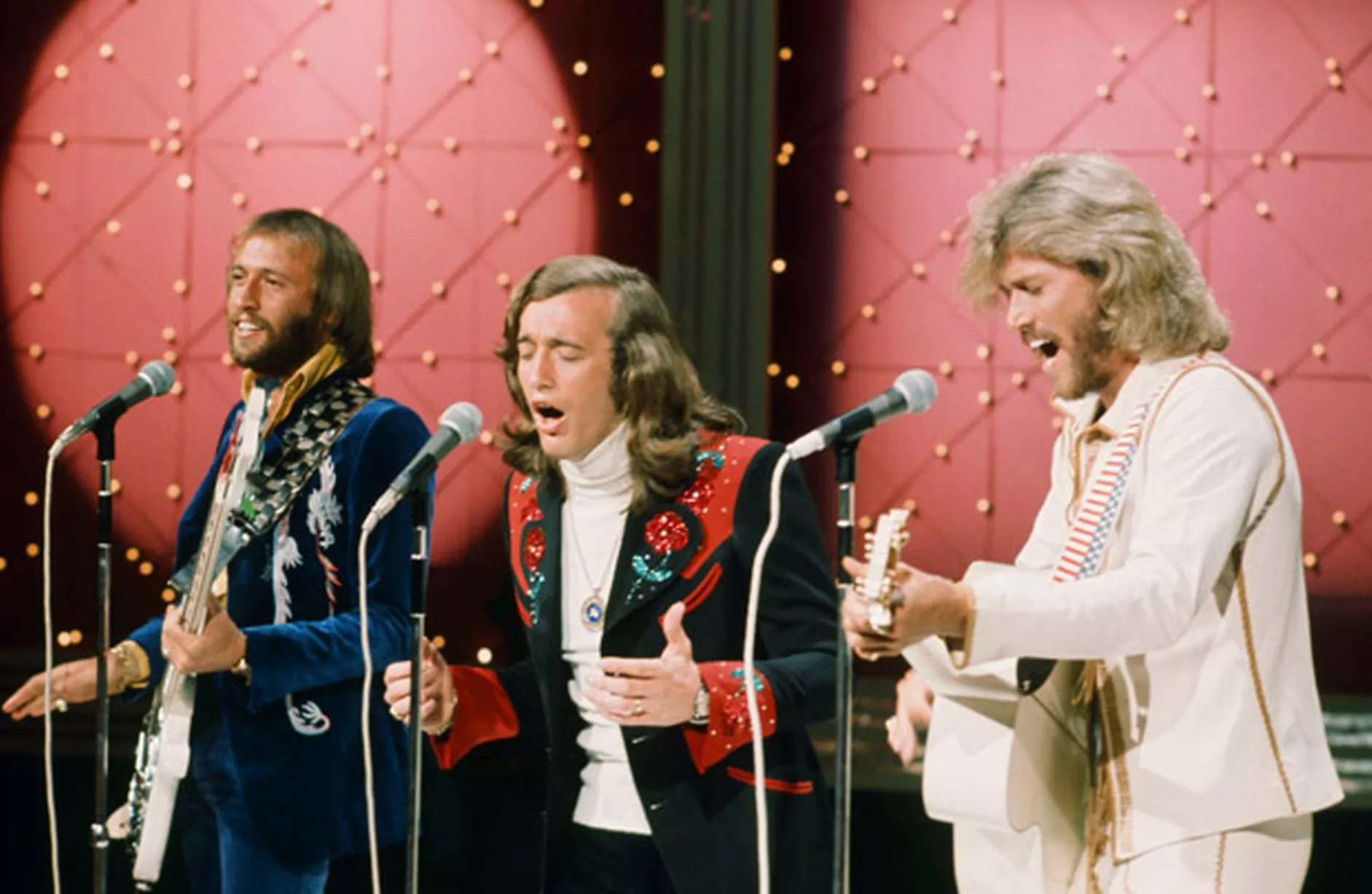
Long before the comeback years, My Life Has Been a Song captured the Bee Gees in a tender in-between season, when quiet acoustic reflection said more than any chart triumph could.
If you want to hear the Bee Gees at one of the most revealing crossroads of their career, My Life Has Been a Song is an extraordinary place to begin. The track appears on Life in a Tin Can, the group’s 1973 album, a record born during what many listeners now recognize as the brothers’ transitional acoustic era. This was not the glittering, rhythm-driven Bee Gees that would soon dominate the second half of the decade. Nor was it exactly the ornate late-1960s group that first gave the world such aching, melodic elegance. Instead, this was a more vulnerable version of Barry Gibb, Robin Gibb, and Maurice Gibb: searching, refining, and listening for the next chapter.
One important fact should be stated early. My Life Has Been a Song was not released as a major standalone single, so it did not earn its own separate chart placing on the main singles charts. That absence is not a flaw in its story; it is part of the story. By 1973, the Bee Gees were in a commercially uncertain period. Life in a Tin Can did not arrive as a triumphant chart event on the scale of their biggest earlier successes, and its modest reception reflected a band momentarily out of step with the market, even while their songwriting remained deeply sophisticated. In hindsight, that makes the song even more moving. It is not the sound of a group performing certainty. It is the sound of artists living through transition in real time.
Musically, My Life Has Been a Song carries the warmth and restraint that define this era so beautifully. The arrangement leans into acoustic texture rather than spectacle. There is a sense of room around the voices, a tenderness in the phrasing, and an unforced intimacy in the melody. The Bee Gees had always known how to make harmony feel emotional rather than decorative, and here that gift becomes almost confessional. Nothing is overplayed. Nothing is pushed too hard. The song breathes in a way that suits its title, as if music itself has become diary, memory, and self-portrait all at once.
Lyrically, the title says almost everything: My Life Has Been a Song is about identity being inseparable from music. That idea can sound grand on paper, but in the hands of the Bee Gees, it feels humble and bruised rather than boastful. This is not a self-mythologizing anthem. It feels more like an admission that a life spent singing also means a life spent carrying longing, change, and disappointment in public. For a group made up of brothers who had already known massive success, periods of misunderstanding, and shifting critical fortunes, the song can be heard as quietly autobiographical. It suggests that melody is not simply a profession. It is the way the heart survives what it cannot fully explain.
That is why the track fits Life in a Tin Can so well. The album has often been overshadowed in the larger Bee Gees story, especially because it sits between more famous chapters. But its very position in the catalog is what gives it emotional power. Recorded in a period when the brothers were recalibrating their sound and working through a softer, more organic approach, the album reveals a band pulling inward before the next outward leap. Industry stories have long suggested that the project worried people around them because it lacked an obvious smash hit. Whether one hears that as commercial hesitation or simply bad timing, the result is the same: a beautifully made album full of understatement, and a song like My Life Has Been a Song becomes one of its most honest centerpieces.
There is also something deeply affecting about hearing this track with the knowledge of what came later. Within a relatively short stretch, the Bee Gees would reshape themselves again and enter one of the most remarkable second acts in popular music. But in 1973, that future had not yet announced itself. What we hear instead is a trio still grounded in craftsmanship, still trusting melody, still leaning on acoustic color and emotional precision. In that sense, My Life Has Been a Song stands as a bridge between identities: part late-classic Bee Gees, part prelude to reinvention, and wholly sincere.
For listeners who know the brothers only through the huge singles that later defined their legend, this song can come as a revelation. It reminds us that the Bee Gees were never just trend-makers. They were songwriters of unusual sensitivity, capable of turning uncertainty into atmosphere and reflection into melody. The track does not shout for attention. It wins you over slowly, with grace. That may be one reason it remains so cherished by listeners who have spent time with the deeper corners of the catalog. Some songs arrive like headlines. Others stay like memories. My Life Has Been a Song belongs to the second kind.
And perhaps that is the most lasting meaning of the piece. During a period when the world was not fully sure what the Bee Gees would become next, the brothers answered not with noise, but with quiet conviction. They made room for vulnerability. They let the acoustic setting carry the emotional weight. They trusted that sincerity would outlive fashion. Listening now, that choice feels not minor, but profound. In the long story of the Bee Gees, My Life Has Been a Song is one of those understated recordings that tells you exactly who they were when the spotlight dimmed a little and the truth came through more clearly.
