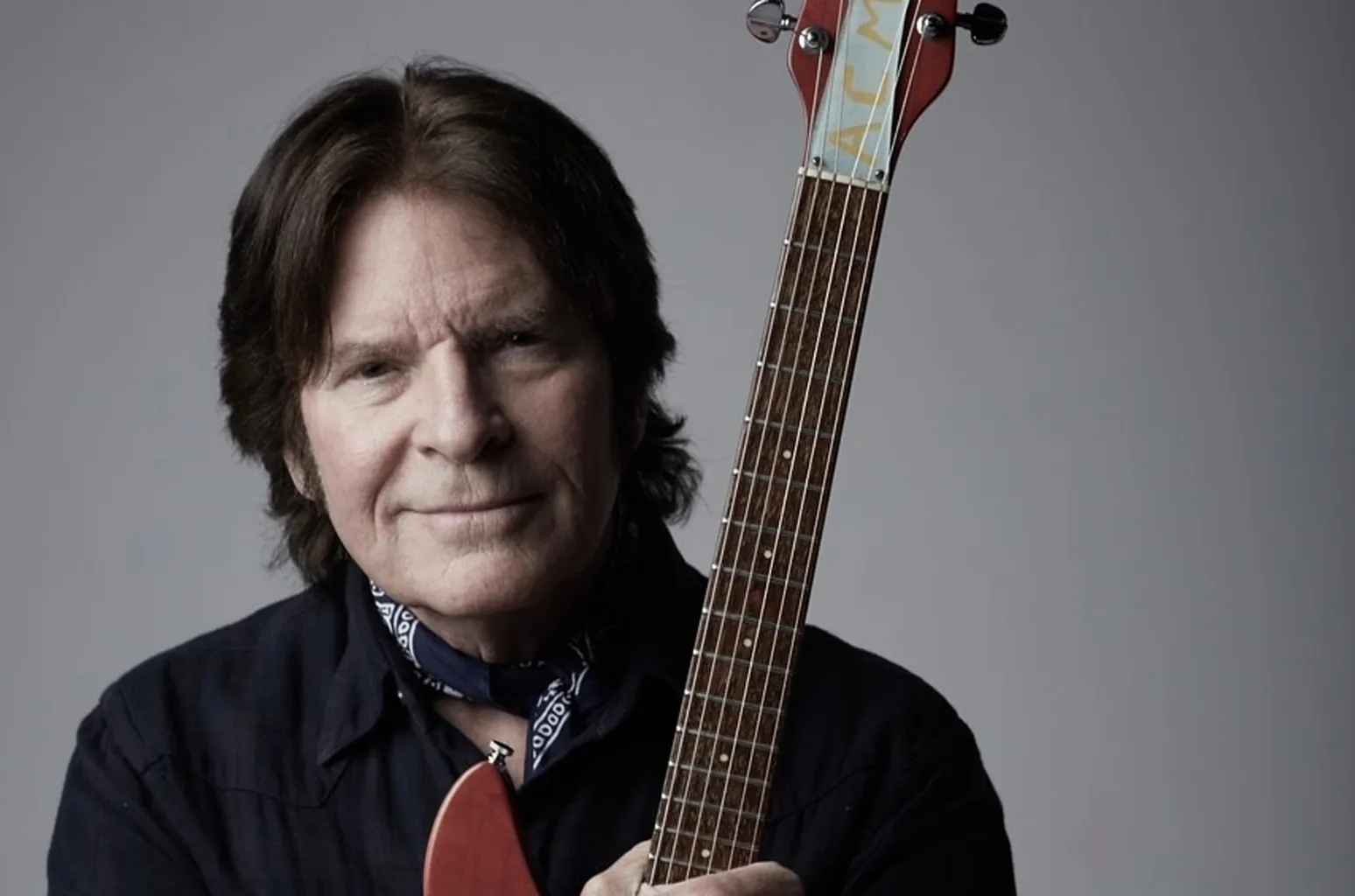
Before Creedence Clearwater Revival found its swamp-rock certainty, “Fragile Child” revealed a younger John Fogerty—earnest, restrained, and already reaching for the voice that would soon define an era.
When The Golliwogs released “Fragile Child” in 1966, the record did not enter the national Billboard Hot 100. On paper, that might make it look like a footnote. In truth, it is one of those rare early singles that means more with time than it did at the moment of release. Heard now, with the full arc of John Fogerty’s career in mind, the song feels less like a commercial miss and more like a private preview of what was coming. This was before Creedence Clearwater Revival became a name known around the world, before the riverbank imagery, before the hard, lean authority of records like “Proud Mary” or “Born on the Bayou.” Here, the voice is still developing, but the identity is already beginning to show.
That is what makes “Fragile Child” so fascinating. It belongs to the transitional years when the group that would become CCR was still recording under the name The Golliwogs, a label-imposed name that now sits uneasily in music history. The musicians were the familiar core: John Fogerty, Tom Fogerty, Stu Cook, and Doug Clifford. They had already spent years learning how to play together, how to survive changing trends, and how to keep faith with each other while the industry kept asking them to be something slightly different. In that sense, “Fragile Child” is more than a song. It is a document from the years of searching.
Musically, the record still carries the scent of mid-1960s pop and garage rock rather than the stripped-down, swampy attack that later made Creedence Clearwater Revival unmistakable. There is a certain delicacy in the arrangement and a stronger sense of youthful pleading than of command. That is where John Fogerty becomes the story. On later classics, his singing would sound elemental—gravelly, urgent, almost weather-beaten. On “Fragile Child”, he sounds younger and more exposed. The phrasing is careful, the tone more openly vulnerable, and the performance carries a kind of emotional concentration that points toward the artist he was still becoming. You can hear him testing how much feeling he can press into a line without overplaying it. For listeners who know only the tougher, tougher-than-life side of his voice, this early single can come as a small revelation.
The title itself suggests tenderness and instability, and that emotional center matters. “Fragile Child” is not remembered because it announced a finished masterpiece. It is remembered because it catches a young songwriter and singer leaning toward themes of vulnerability, care, and emotional uncertainty. Even if the lyrics do not yet carry the clean, mythic simplicity of later Fogerty songs, the instinct is there: he already understood that a record could feel intimate without becoming sentimental. That balance would become one of his great strengths. He could sing with force, but he could also hold something back, and that restraint often made the emotion stronger.
There is also something moving about where the band stood in 1966. They were not newcomers, exactly, but they were still waiting for the larger breakthrough that had not yet arrived. They had worked under earlier names, endured false starts, and recorded songs that today are mainly treasured by collectors, historians, and devoted fans tracing the road to CCR. “Fragile Child” came from that in-between chapter—the chapter when talent was clear, but destiny had not yet settled into focus. Many groups never survive that period. The Golliwogs did, and because they did, recordings like this now carry extra emotional weight. We are hearing not just a band playing a song, but a future classic lineup still trying to discover its truest form.
It is important, too, that “Fragile Child” was not a major chart event. Its failure to break nationally is part of its meaning. The silence around it at the time reminds us that musical history is rarely obvious in the moment. The records that later seem inevitable often arrive quietly, without fanfare, without chart glory, without any sign that they are preserving the earliest outlines of something lasting. In that way, this single belongs to a special category of rock history: the overlooked record that becomes more valuable once the artist’s later voice gives it context.
Listening now, one can hear several futures at once. There is the young singer still carrying traces of the era’s pop conventions. There is the band chemistry that would soon harden into something far more direct and confident. And there is the unmistakable sense that John Fogerty was already learning how to make emotion sound plainspoken rather than decorative. That would become central to the power of Creedence Clearwater Revival. Their greatest records never sounded fussy. They sounded lived-in, inevitable, and true. “Fragile Child” is compelling precisely because it shows how far that truth had already begun to form, even before the world had a name for it.
Today, the song survives less as a hit than as a mirror held up to the past. For longtime listeners, it offers that peculiar thrill of hearing a familiar artist before the full legend arrives. Not unfinished in a dismissive sense, but unfinished in the most human sense—still opening, still testing, still becoming. That is why this rare 1966 single matters. The Golliwogs may have been the name on the label, but the deeper story is the emergence of John Fogerty. In “Fragile Child,” you can hear the young singer reaching toward the voice that would soon shake radios, jukeboxes, and memory itself.
