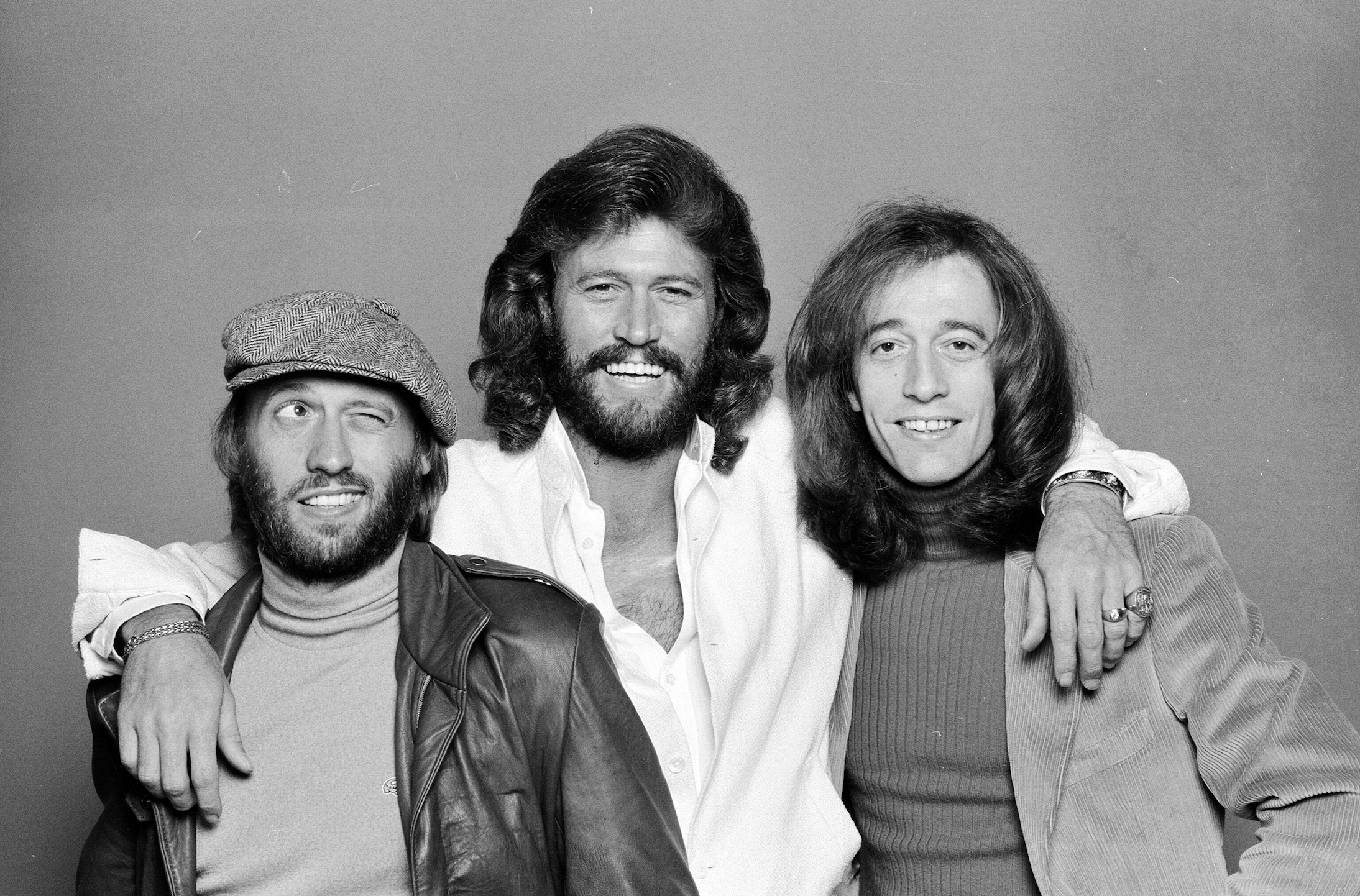
A silky, intimate hit from 1979, “Love You Inside Out” gave the Bee Gees their sixth consecutive U.S. No. 1 and placed them beside The Beatles in pop-chart history.
When “Love You Inside Out” climbed to No. 1 on the Billboard Hot 100 in June 1979, it was more than another hit for the Bee Gees. It was a moment of arrival, proof that the group’s astonishing late-1970s run had reached a place reserved for only the rarest names in popular music. With that single from Spirits Having Flown, Barry, Robin, and Maurice Gibb scored their sixth consecutive U.S. chart-topper, tying the American record long associated with The Beatles. For a group that had already conquered radio, dance floors, and movie soundtracks, this was the kind of milestone that turned success into history.
The chart facts still have a certain breathtaking force. “Love You Inside Out” followed a dazzling chain of No. 1 singles: “How Deep Is Your Love,” “Stayin’ Alive,” “Night Fever,” “Too Much Heaven,” and “Tragedy.” By the time this song reached the summit, the Bee Gees were not merely riding the era — they were defining it. In the U.S., few groups had ever controlled the pop conversation with such consistency. And what makes this even more remarkable is that “Love You Inside Out” was not their most thunderous anthem or their most obvious cultural event. It was a smoother, more private kind of hit, sensual and polished, almost understated by comparison. Yet it was this record that carried them into one of the most elite chart clubs in American music.
Released as a single from the 1979 album Spirits Having Flown, the song became the album’s third U.S. No. 1, after “Too Much Heaven” and “Tragedy.” That alone says something important about the album’s strength. Coming after the tidal wave of Saturday Night Fever, the Bee Gees could easily have repeated themselves or leaned too heavily on a formula the world already expected from them. Instead, Spirits Having Flown broadened their sound. It still had rhythm, gloss, and the unmistakable signature of the Gibb brothers, but it also carried more emotional shading, more melodic patience, and at times a deeper sense of maturity. “Love You Inside Out” fits that mood beautifully.
Written by Barry, Robin, and Maurice Gibb, the song turns desire into something velvety and controlled rather than explosive. Its title suggests complete devotion — loving someone with nothing hidden, nothing withheld, from the deepest inward feeling to the outward expression of it. The phrase itself has a curious tenderness. It is passionate, certainly, but not reckless. There is a sense of closeness in the lyric, a kind of grown-up intimacy that feels very different from the youthful rush of many pop hits. That may be one reason the song has aged so gracefully. Beneath the sheen, it is built on a very human idea: wanting love to be total, honest, and all-encompassing.
Musically, the record is a fine example of why the Bee Gees were so much more than a disco label ever allowed. Yes, the groove is sleek. Yes, the rhythm section is tight and dance-friendly. But listen closely and what truly carries the song is craftsmanship — the layered harmonies, the subtle tension between falsetto lightness and rhythmic bite, the way the melody glides instead of pushes. Barry’s voice, so central to the group’s late-1970s identity, gives the song its sensual edge, while the arrangement wraps everything in a warm, expensive glow. It sounds effortless, but records like this are never effortless. They come from discipline, instinct, and extraordinary melodic intelligence.
There is also a touch of poignancy in the story now, one that could not fully be seen at the time. Because while “Love You Inside Out” tied The Beatles with six consecutive U.S. No. 1 hits, it also became the Bee Gees’ last American No. 1 single. That fact gives the song a different emotional color in retrospect. What felt then like another victory in an endless run now feels like a final glittering crown on an era that could not last forever. Pop music was changing. Tastes were shifting. The backlash against disco was beginning to reshape the conversation in ways both simplistic and unfair. But in that brief window, none of that had yet erased what the Bee Gees had accomplished.
And what they accomplished was extraordinary. The brothers were not just hitmakers; they were architects of atmosphere. They understood how to make a record feel elegant, immediate, and unforgettable all at once. “Love You Inside Out” may not always be the first song named when people discuss the Bee Gees, but that is part of what makes its chart milestone so fascinating. It was not a novelty of timing. It was not a fluke. It was the product of a sustained creative peak, a period when they seemed able to turn almost every emotional shade into a memorable single.
For listeners returning to Spirits Having Flown now, the song stands as both a triumph and a quiet farewell to the group’s most dominant American chapter. It is lush without being heavy, romantic without being sentimental, and historically important without ever sounding self-important. In just a few minutes, it captured what the Bee Gees did better than almost anyone: they made sophistication sound natural, they made vulnerability danceable, and they made a chart milestone feel like a song you could still live inside.
That is why “Love You Inside Out” still matters. Not simply because it reached No. 1, and not simply because it tied a record held by The Beatles, but because it preserved the sound of a group at full command of its gifts. In the long story of pop music, some songs arrive like headlines. Others arrive like a last warm light before evening. This one, somehow, was both.
