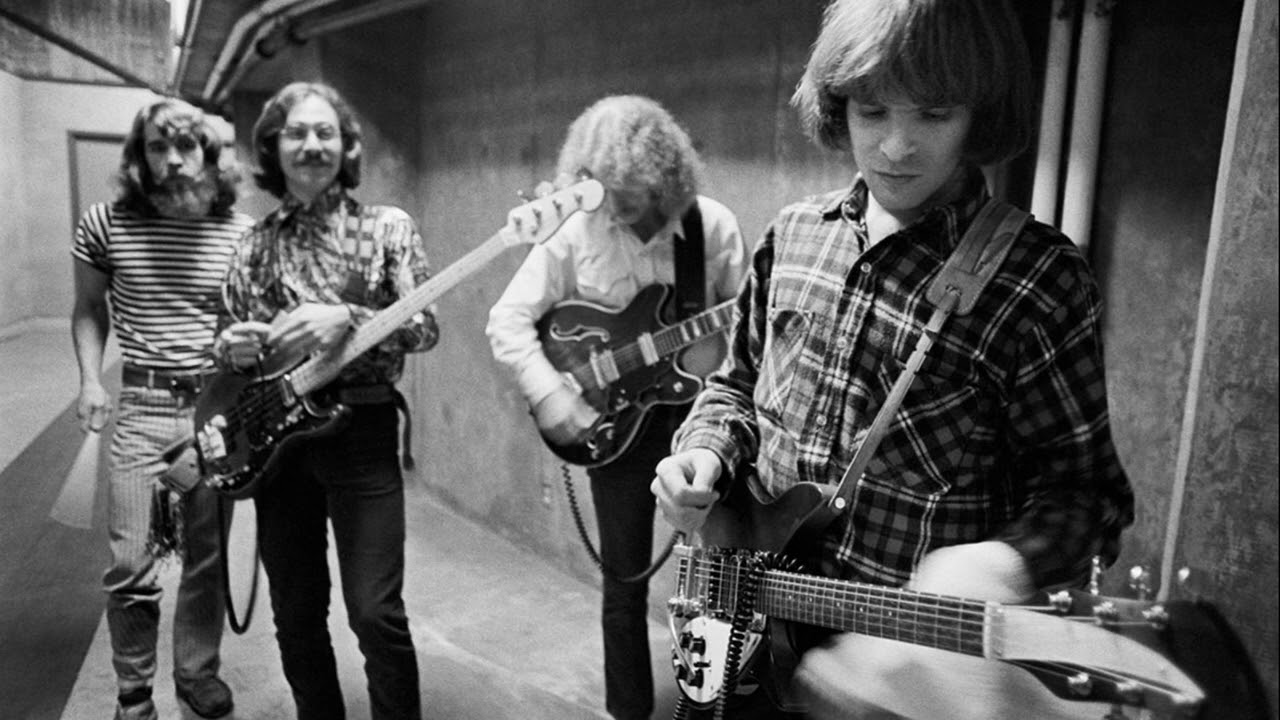
On the real Royal Albert Hall recording, Born on the Bayou is more than an opening song—it is the instant Creedence Clearwater Revival turns a grand London room into something dark, earthy, and unmistakably American.
There is something deeply satisfying about hearing history corrected and then hearing it roar to life. When Creedence Clearwater Revival opened their April 14, 1970 London concert with “Born on the Bayou”, they were not easing into the evening. They were announcing it. And when that performance was finally issued in 2022 on At The Royal Albert Hall, it gave listeners more than a newly polished live album. It restored one of rock’s most famous archival mix-ups and let this tremendous opening number be heard in its proper place.
That backstory matters. For years, many fans knew the 1980 live album The Concert, which had been presented as a Royal Albert Hall recording. It was later discovered that the music on that release actually came from Oakland, not London. So when At The Royal Albert Hall arrived in 2022, it was not just another archival issue. It was the real document at last, the actual April 1970 performance, officially released and finally matched to the legendary venue named on the cover. That gives the opening track an added electricity. You are not merely hearing CCR start a show. You are hearing a missing piece of the band’s story click into place.
And what an opening it is. “Born on the Bayou” begins with that familiar, ominous pulse, then spreads across the hall like low fog. The contrast is part of the thrill: one of England’s most elegant concert spaces suddenly filled with the mood of swamp rock. John Fogerty sounds focused, urgent, and lean, driving the song with the same fierce control that made the band such a formidable live act. There is very little excess in this performance. No wasted gesture, no indulgence, no attempt to decorate what already hits hard enough. The band simply locks in and pushes forward.
The song itself first appeared in January 1969 on Bayou Country, the album that helped establish Creedence Clearwater Revival as far more than a promising American rock band. Bayou Country reached No. 7 on the Billboard 200, and while “Born on the Bayou” was not a major standalone A-side hit in the United States, it quickly became one of the group’s defining tracks. The album’s breakthrough single, “Proud Mary”, climbed to No. 2 on the Billboard Hot 100, bringing wider attention to a band whose sound already felt fully formed. In that context, “Born on the Bayou” became something even more durable than a chart statistic: a signature mood, a doorway into the world CCR had built.
That world was always fascinating because it was never simple autobiography. John Fogerty was a California musician, not a Louisiana native, and yet he wrote “Born on the Bayou” with such conviction that generations of listeners felt they could smell the river air in it. The song’s power comes from imagination sharpened into myth. Fogerty drew on American roots music, Southern imagery, old movies, and the feeling of a country half-remembered and half-invented. The bayou in the song is emotional before it is geographic. It is a place of memory, danger, heat, freedom, and longing—a landscape that feels real because the music believes in it completely.
That is why it works so brilliantly as the first song of the Royal Albert Hall set. An opening track has a special job. It must define the room, the stakes, and the voice of the night. “Born on the Bayou” does all of that within moments. It tells the audience they are not here for polish alone; they are here for atmosphere, tension, groove, and force. By April 1970, Creedence Clearwater Revival were already at an astonishing peak. In a relatively short span, they had released Bayou Country, Green River, and Willy and the Poor Boys, and they had just issued the massive single “Travelin’ Band” backed with “Who’ll Stop the Rain”. They were moving fast, making enduring records, and playing with the confidence of a band that knew exactly what it could do.
You can hear that confidence all through this live version. The rhythm section keeps the song taut and heavy without ever making it sluggish. The guitars bite, but they also breathe. Fogerty’s vocal carries that familiar rough-edged authority, the sound of someone testifying and commanding at the same time. There is no sense of nostalgia in it because, in 1970, none was needed. This was present tense music—hard, direct, and alive in the room.
Listening now, the 2022 release adds another layer of feeling. It reminds us that live recordings do more than preserve songs. They preserve temperature, timing, and intent. Studio versions tell us what a band created; great concert tapes tell us how that creation stood up in front of people, under lights, in a particular hour of a particular year. On At The Royal Albert Hall, “Born on the Bayou” feels like a statement of identity. Before the set moves on to the hits and the momentum deepens, this opening number says everything essential about Creedence Clearwater Revival: economy, atmosphere, authority, and an uncanny gift for turning American imagery into something universal.
That may be why this performance lingers so strongly. It is not only a fine live rendition of a classic song. It is the sound of the record being set straight, and of a legendary band entering a legendary hall with zero hesitation. In the first minutes of the real Royal Albert Hall tape, “Born on the Bayou” does exactly what the best opening tracks are meant to do. It makes the whole night feel inevitable.
