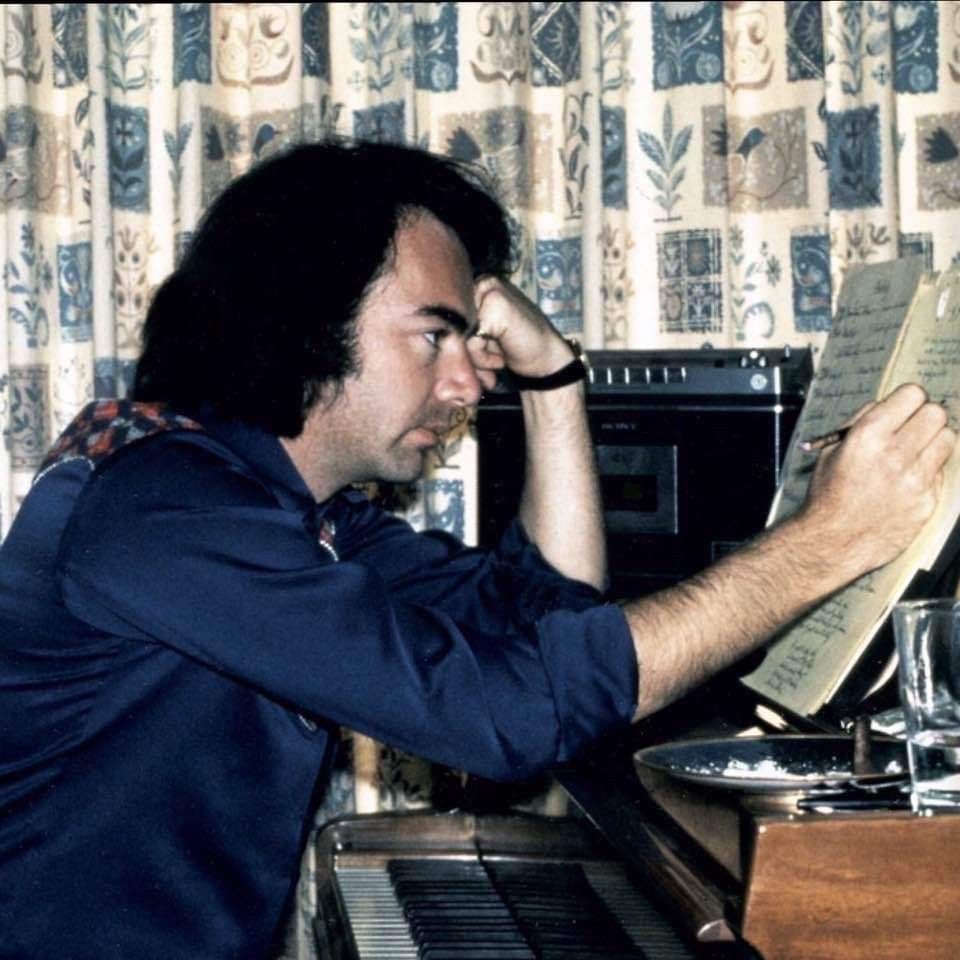
With “Cracklin’ Rosie”, Neil Diamond made a song about loneliness sound like a celebration, and in 1970 that strange, irresistible magic carried it to No. 3 on the UK Singles Chart.
Some hit records arrive with a roar. Others slip into the public heart with a smile, a shuffle, and a chorus so easy to sing that people hardly notice how much feeling is hidden inside it. “Cracklin’ Rosie” belongs to that second kind. Released in 1970, the single became one of the defining moments of Neil Diamond’s career, climbing to No. 3 on the UK Singles Chart and, just as importantly in the larger story of his success, becoming his first No. 1 hit on the Billboard Hot 100 in the United States. For a songwriter who had already proven he could write songs the whole world wanted to sing, it was the moment when popularity, personality, and emotional instinct all seemed to meet in one place.
That chart milestone matters because “Cracklin’ Rosie” was never just a straightforward pop single. It had a loose, good-timed swagger, a bright singalong chorus, and a rhythm that felt almost communal, as if the song were being carried forward by voices gathered close together. Yet underneath that cheerful surface there was something more tender, even a little bruised. Like many of Neil Diamond’s best records, it knew how to stand in the light while keeping one foot in the shadows.
Written by Neil Diamond and later included on the album Tap Root Manuscript, the song has one of the most unusual backstories in popular music. Diamond explained that the idea came from a story he heard about men in a Canadian Indigenous community who, lacking female company on Saturday nights, would share a bottle of sparkling rosé wine and jokingly treat it as their companion for the evening. From that image came the title “Cracklin’ Rosie”, which sounds playful at first, but in Diamond’s hands became something richer than a novelty. He did not turn it into a joke song. He turned it into a song about making do, about longing softened by humor, about reaching for warmth wherever one can find it.
That is one reason the record has lasted. A lesser singer might have leaned too hard into the comic side of the lyric. Neil Diamond did something smarter. He sang it with enthusiasm, yes, but also with the openhearted conviction that always set him apart. His voice gave the song lift, but it also gave it a human ache. When he sings, “Cracklin’ Rosie, get on board,” it sounds less like a punchline than an invitation to survive another lonely night with music, motion, and maybe just enough hope.
Musically, the record is a wonderful example of how accessible early-1970s pop could still feel handcrafted. There is a folk-pop ease to it, a touch of country flavor in the bounce, and a full-bodied studio sound that never loses its directness. The groove feels casual, but the construction is sharp. The chorus arrives exactly when it should, and once it does, it stays with you. That was one of Neil Diamond’s great gifts as a writer: he knew how to build songs that sounded immediate on the radio but revealed more feeling with every replay.
Its success in Britain is especially telling. Reaching No. 3 in the UK in 1970, “Cracklin’ Rosie” connected far beyond American pop radio. British listeners, who had already shown affection for strong singer-songwriters and emotionally direct records, heard something in Diamond that felt both polished and personal. He was never a distant stylist. Even when his songs were big, they still felt close. That quality helped him become not merely successful, but deeply familiar—one of those artists whose records seemed to live inside ordinary life.
It is also worth remembering where “Cracklin’ Rosie” sits in the arc of Neil Diamond’s career. By 1970 he was already established, with major songwriting credentials and a growing catalog of hits, but this single represented a new level of mainstream command. It was proof that his voice itself—his phrasing, his emotional weight, his unmistakable presence—could carry a record to the very top. That matters because Neil Diamond was never just selling hooks. He was selling emotional recognition. Listeners believed him, even in a song as quirky as this one.
And perhaps that is the secret of the record’s enduring charm. The title is unusual. The story behind it is stranger still. But the feeling at the center is universal. “Cracklin’ Rosie” is about companionship imagined, borrowed, improvised, or half-invented. It is about turning absence into melody. It is about the way people laugh, sing, and raise a glass not because life is perfect, but because music helps make it bearable.
More than half a century later, the single still sounds like one of those records that can fill a room in seconds. It carries the warmth of radio’s golden years, the craftsmanship of classic pop, and the unmistakable emotional thumbprint of Neil Diamond. Its UK No. 3 finish in 1970 was not just a chart fact. It was a sign that this odd little masterpiece had crossed borders and moods and become something larger than itself: a song people could smile through, sing along with, and quietly feel in places they did not always talk about.
That is why “Cracklin’ Rosie” still matters. Not because it was clever, though it was. Not simply because it was catchy, though it certainly was. It matters because Neil Diamond found a way to turn a curious idea into a record full of life, and in doing so, he gave 1970 one of its most memorable singalongs—one with loneliness hiding just beneath the grin.
