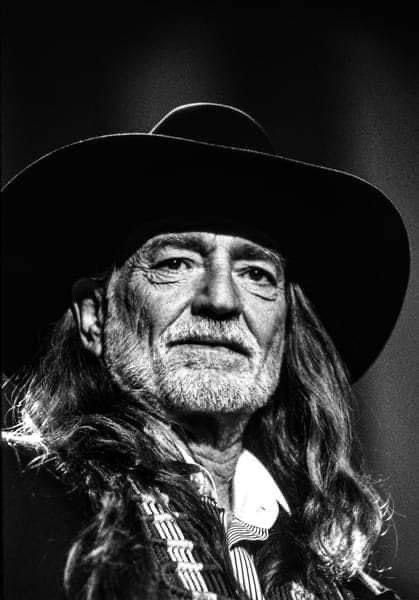
Willie Nelson turned motion into a way of life in “On the Road Again,” a song that sounds as easy as a bus rolling toward the next town.
“On the Road Again” arrived in 1980 as part of the soundtrack to the film Honeysuckle Rose, and it quickly became one of Willie Nelson’s defining recordings. That fact alone explains part of its staying power, but not all of it. Plenty of hit songs celebrate travel, performance, or freedom. Very few make the working life of a musician feel so light, so natural, and so quietly convincing. Nelson does not sing it like a slogan. He sings it as if he is simply describing the only rhythm that has ever made complete sense to him.
The song is built on movement from the first line. Its melody has a conversational lift, and its tempo never pushes too hard. Instead, it glides. The groove suggests wheels turning, miles passing, daylight shifting through a window. There is pleasure in that motion, but also routine. That is one of the recording’s most graceful qualities: it understands that life on tour is not only romance. It is repetition, discipline, and return. The song’s brilliance lies in how effortlessly it folds those realities into something warm and singable.
Nelson’s vocal performance is central to that effect. He does not oversell the lyric. His phrasing is relaxed, almost offhand at times, yet exact. He lets the words sit where they naturally want to land. That ease is part of his larger art as a singer. He can make a line sound spontaneous even when the timing is precise. On “On the Road Again,” that gift matters because the song depends on trust. If sung too grandly, it would become an anthem in the empty sense of the word. Nelson keeps it human. He sounds amused, content, and fully at home inside the simple truth the song offers.
The arrangement helps preserve that balance. There is a bright, clean pulse to the track, with country instrumentation shaped into something breezy and accessible. The famous guitar figure carries a sense of forward motion without crowding the vocal. Nothing in the production feels heavy. The musicians leave space, and that space matters. It allows the song to breathe like open road rather than spectacle. Even listeners who have never stepped onto a tour bus can recognize the feeling: a life defined by departure, held together by habit and camaraderie.
That sense of companionship gives the song much of its emotional warmth. The lyric celebrates making music with friends, and Nelson delivers it without sentimentality. He does not describe some distant dream of fellowship. He makes it sound present and practical, part of the everyday bargain of being a traveling musician. There is joy here, but it is work-shaped joy, earned through repetition. In that way, the song says something subtle about Nelson’s public image. He had long represented independence and ease, yet “On the Road Again” reminds us that ease itself can be a form of mastery. To sound this unforced requires deep knowledge of the life being sung.
The timing of the song also matters. By 1980, Willie Nelson had become one of the most distinctive figures in American music, bridging country tradition, outlaw independence, and crossover appeal. “On the Road Again” fit that moment perfectly. It was rooted in country storytelling, but its clarity and momentum made it travel far beyond one audience. It could belong to radio, to cinema, to concert halls, to long drives, to anyone who understood the pull of leaving one place for another. Its accessibility did not flatten Nelson’s personality; if anything, it sharpened it. The song feels inseparable from his voice, his timing, and his way of making freedom sound lived-in rather than advertised.
There is also something quietly American in the song’s design. Not in a grand or declarative sense, but in the way it links movement with identity. Roads, shows, towns, and the promise of the next stop have long shaped popular music. Nelson distills that tradition into a few plainspoken lines. He does not mythologize travel into loneliness or glory. He presents it as continuity. The road is not an interruption to life; it is life. That perspective gives the song its unusual steadiness. Beneath the cheerful surface is a mature acceptance that some people are most themselves while in transit.
What keeps “On the Road Again” fresh is its lack of strain. It never begs to be treated as important, which is one reason it remains important. The song captures a professional ethic and a personal philosophy in the same breath. It honors routine without making it dull, and it finds freedom not in escape from responsibility but in devotion to craft. Nelson makes that balance sound natural, almost effortless, and that may be the song’s deepest charm.
Decades later, the recording still feels like an open horizon reduced to its simplest form: a steady beat, a clear voice, and the knowledge that some lives are made meaningful by the act of continuing. In Willie Nelson’s “On the Road Again,” motion is not restlessness. It is purpose set to music.
