
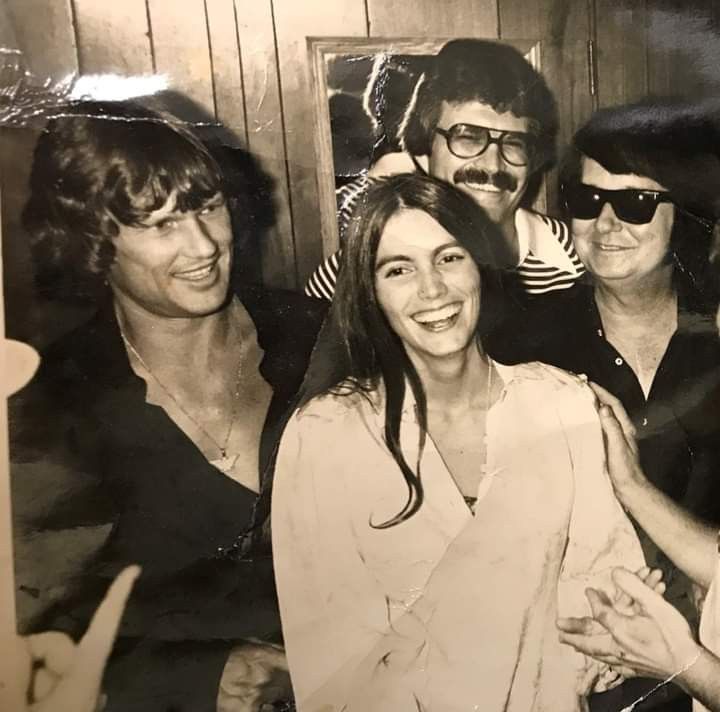
Ashes by Now is one of those rare songs that understands heartbreak does not always arrive on cue; sometimes regret comes later, slower, and far more truthfully than anyone expects.
Released by Emmylou Harris in 1981 from the album Evangeline, Ashes by Now became a notable country hit, reaching No. 12 on Billboard’s Hot Country Singles chart. That chart showing mattered, of course, but numbers only tell part of the story. What made the song endure was not simply its success on radio. It was the way Harris gave the song a bruised elegance, turning it into something that felt less like a performance and more like a realization finally spoken aloud.
The song was written by Rodney Crowell, one of the finest songwriters of his generation and an artist whose connection to Emmylou Harris runs deep through the history of modern country music. Crowell had first recorded Ashes by Now on his 1978 album Ain’t Living Long Like This. Even in its original form, the writing carried that unmistakable Crowell gift: conversational language, emotional precision, and a wisdom that never needed to raise its voice. But when Harris took hold of it, something changed. She did not overpower the song. She opened it up. She let its sadness breathe.
That has always been one of Emmylou Harris’ great strengths. She has never been merely a singer of songs; she is a listener inside the song, someone who seems to hear the ache between the lines. With Ashes by Now, she understood that the real wound is not the breakup itself. The deeper wound is the delay. It is the long, lonely moment when someone finally understands what has been lost, long after the brave face has faded and the noise has died down. In that sense, the title says everything. The fire is over. What remains is what cannot be argued away.
Evangeline was itself an unusual record in the Harris catalog, assembled from a mixture of sessions and previously unissued material at a time when her career was shifting in subtle ways. Yet that patchwork quality somehow makes Ashes by Now even more striking. Here was a song that sounded complete in an emotional sense, as if it had been waiting for exactly the right voice and exactly the right season of life. Harris gave it that season. Her phrasing is calm, but never cold. Tender, but never sentimental. She sings as if she already knows that some truths are useless until time has had its say.
Musically, the recording carries that beautiful early-1980s Emmylou blend of country grace and understated road-worn polish. The arrangement does not crowd the lyric. It supports it. You hear the spaciousness, the steady rhythm, the sense of movement without hurry. It is heartbreak with distance in it, and that distance is everything. Rather than dramatizing pain, Harris and her musicians allow the song to unfold with mature restraint. The result is devastating in the most graceful way. Nothing is forced. Nothing is oversold. That is precisely why it lasts.
There is also something deeply human in the perspective of Ashes by Now. Many breakup songs are written from the center of immediate emotion: anger, pleading, denial, longing. This one is wiser than that. It lives in the aftermath. It recognizes that love can end before its meaning does, and that understanding often arrives when there is no longer anything left to repair. That emotional timing gives the song its lingering power. It is not just about separation. It is about the strange cruelty of delayed understanding.
For listeners who came to know Emmylou Harris through her luminous work in the 1970s and early 1980s, Ashes by Now remains a shining example of why she mattered so much, and still does. She was one of the great interpreters of songwriters, a singer who could take another writer’s words and reveal dimensions that might otherwise have gone unnoticed. Her ear for material was extraordinary, but her deeper gift was emotional honesty. She never sang at the listener. She sang beside them.
That may be why Ashes by Now continues to resonate so strongly. It does not chase grand tragedy. It speaks to something quieter and perhaps more familiar: the slow settling of truth after love has already moved on. In Emmylou’s voice, that truth becomes almost tender. Not easy, not painless, but tender. She makes room for the dignity of sorrow, and in doing so, she gives the song a kind of lasting grace.
Decades later, the recording still feels uncommonly fresh because its emotional insight has not aged. Regret still arrives late. Pride still delays understanding. Memory still has a way of reopening doors we thought had closed for good. And when Emmylou Harris sings Ashes by Now, she makes all of that sound not merely sad, but deeply, recognizably human.
