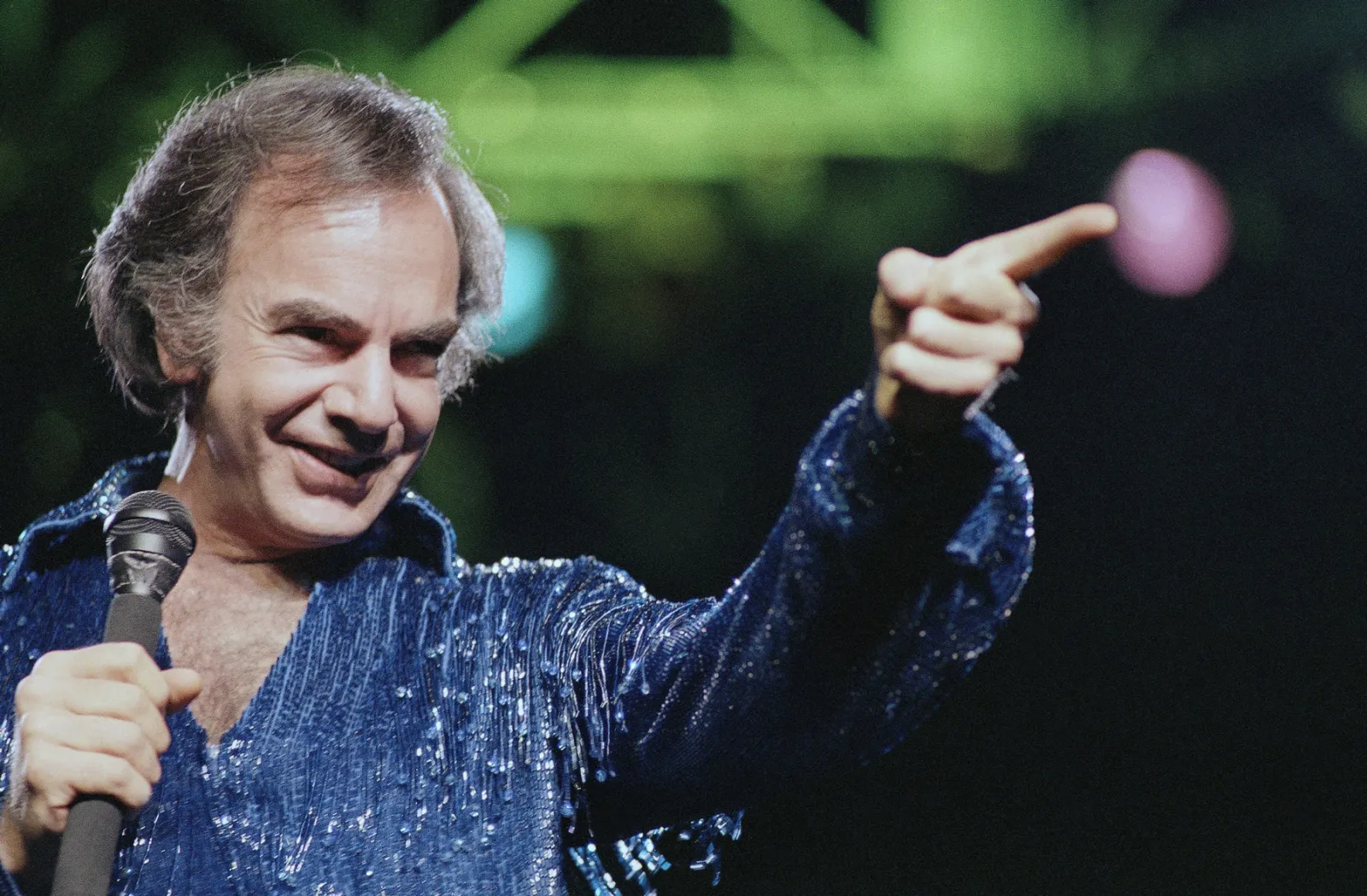
On Evermore, Neil Diamond does not chase the grand gesture; he lets a late-career promise stand in a quieter room.
Evermore appears on Neil Diamond’s 2005 album 12 Songs, the stripped-down collection produced by Rick Rubin that asked listeners to hear Diamond with less distance between the singer and the song. That context matters. This is not simply another Neil Diamond love song placed beside the sweep of his best-known work. It belongs to a particular late-career moment when one of American pop’s most recognizable voices stepped away from the polish and scale often associated with his name and returned to the basic materials of songwriting: a melody, a few carefully held words, and the sound of a man measuring feeling without trying to overpower it.
By 2005, Diamond’s public identity was already immense. He had been the Brill Building craftsman behind songs recorded by others, the singer-songwriter who turned his own material into radio landmarks, and the concert performer whose choruses could gather thousands of voices into one wave. His catalog carried romance, drama, loneliness, motion, faith, and showmanship in unusually bold colors. But 12 Songs did something different. With Rick Rubin producing, the album did not ask Diamond to become someone else. It asked him to stand closer to the source of his own writing.
Rubin’s presence is central to how Evermore is heard. By that point, Rubin was known for productions that could remove excess without making the music feel small, most famously through his work with Johnny Cash. But the task with Diamond was not the same. Cash’s late recordings often leaned into starkness and final reckoning. Diamond carried a different kind of history: the memory of big stages, generous melodies, and a voice that had long known how to fill a room before the first chorus arrived. On Evermore, the tension comes from hearing that instinct held in check. The song does not feel diminished by restraint; it feels clarified by it.
As an album track, Evermore does not need to announce itself as a career statement. Its strength lies in how naturally it fits the emotional architecture of 12 Songs. The record is full of pieces that seem to look inward without becoming self-pitying, songs that keep their language direct while allowing age, memory, and persistence to deepen the surface. In that setting, Evermore sounds like a vow examined after the easy certainty has passed. The word itself can be grand, almost ceremonial, but Diamond treats it with a more human weight. It is less a banner than a question answered quietly: what remains when affection has been stripped of performance?
The arrangement supports that feeling. Rather than surrounding Diamond with the kind of lush decoration that might push the song toward theatrical romance, Rubin’s production leaves space around the vocal. The result is not bare for the sake of being fashionable. It is bare in the way an honest room is bare, with only what is needed left in view. You can hear why this period was so meaningful for listeners who had long loved Diamond but were ready to meet him without the familiar armor of scale. The voice is still unmistakably his, with its rounded phrasing and emotional firmness, but it carries a different kind of pressure. It does not sound like a performer reaching outward. It sounds like a writer letting the line come to him.
That is what gives Evermore its late-career resonance. It is not trying to compete with the songs that made Neil Diamond a household name, and it does not need to. Instead, it opens a side door into his artistry, one that leads back to the solitary act of composition. Before the crowds, before the arrangements, before the cultural memory attached itself to the surname and the voice, there was the craft of shaping feeling into something singable. 12 Songs reminded people of that fact, and Evermore is one of the places where the reminder feels especially intimate.
He had nothing left to prove in the usual sense, which may be why the song can feel so disarming. There is no need to overwhelm, no need to decorate the promise until it becomes untouchable. Instead, Evermore lets durability sound modest. It suggests that lasting emotion is not always declared from the highest point in the room. Sometimes it is spoken close by, with the lights lowered, in a voice that knows how much life has already passed through it and still chooses to sing as if the next word matters.
