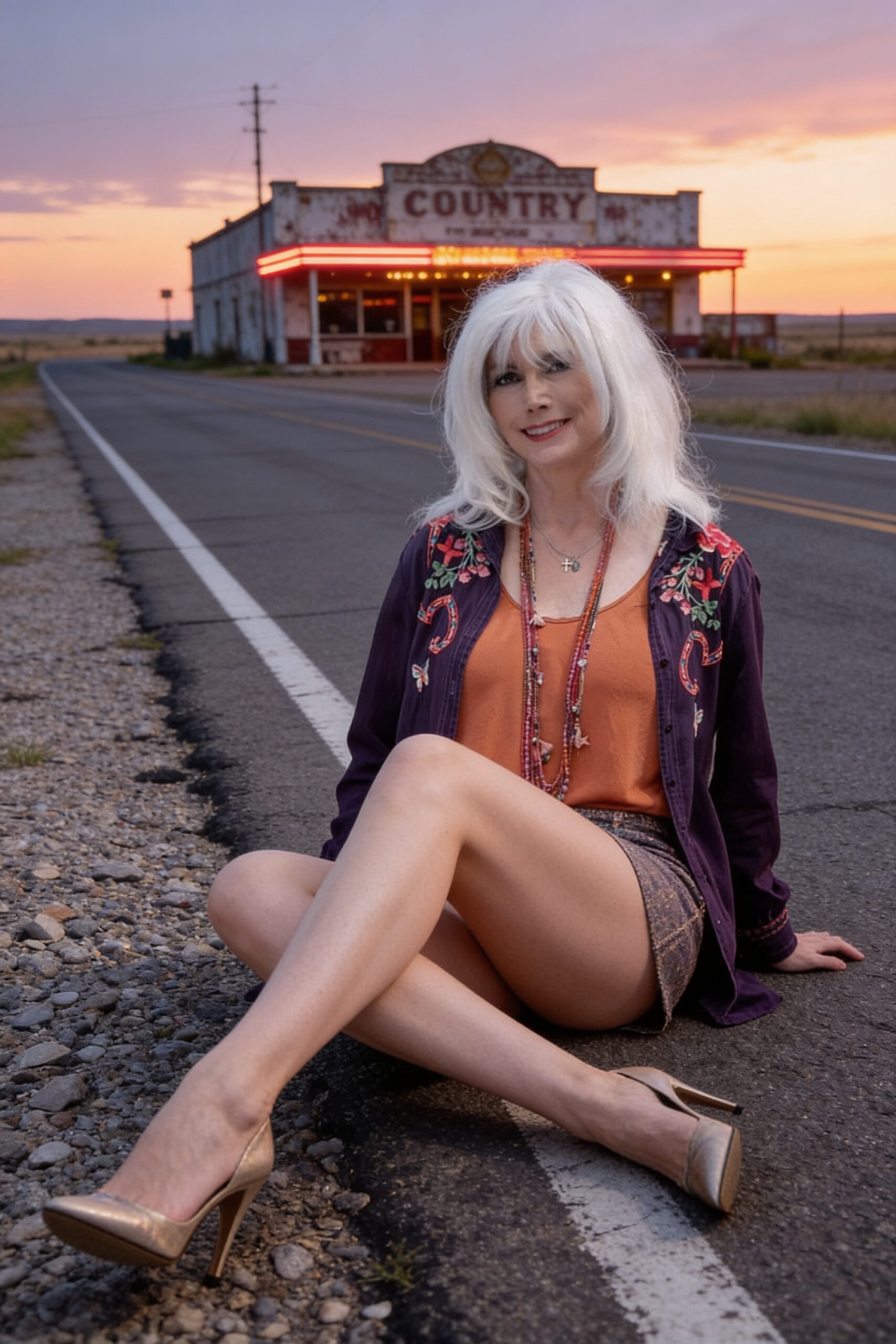
On Roses in the Snow, Emmylou Harris did not simply revisit bluegrass tradition—she stepped inside it, and “Darkest Hour Is Just Before Dawn” became one of the album’s most quietly revealing moments.
When Emmylou Harris released Roses in the Snow in 1980, the record felt like both a return and a statement. After the polished country-rock beauty of the 1970s, she moved toward a more acoustic, roots-centered sound, drawing on old-time country and bluegrass with unusual care. That shift is heard with particular clarity on “Darkest Hour Is Just Before Dawn,” a song closely associated with Ralph Stanley. On Harris’s version, the presence of Ricky Skaggs matters deeply. He was not there as decoration or heritage symbolism. He was part of the living current that carried the song from mountain tradition into a new era.
What makes this recording so moving is its refusal to oversell itself. Harris had every ability to dramatize a song, but here she chooses discipline over display. The arrangement on Roses in the Snow is spare, bright, and close to the ground. Acoustic instruments do not crowd the performance; they breathe around it. The song’s message is simple, almost plainspoken: hold on through trouble, because the deepest darkness often comes just before the break of morning. In less sensitive hands, that kind of lyric can become sentimental. Harris avoids that trap by singing it as if she trusts the song enough to leave room around the words.
That is where the bluegrass tradition comes alive. In older mountain and gospel-rooted country music, strength often arrives without spectacle. Consolation is not delivered with grand gestures. It is passed hand to hand, voice to voice. Harris understood that. Her reading of “Darkest Hour Is Just Before Dawn” does not modernize the song by pushing it into a different emotional register. Instead, she enters its original moral world—the world of endurance, shared burdens, faith tested by ordinary life—and lets her own voice find its place inside that frame.
Ricky Skaggs is central to the atmosphere. By 1980, Skaggs was already recognized as a gifted musician deeply shaped by bluegrass, and his work on Roses in the Snow helped define the album’s character. On this track, his contribution sharpens the old-country grain of the performance. The blend between Harris and Skaggs is one of the recording’s great pleasures: not flashy, not competitive, but balanced in a way that honors the communal heart of the music. Bluegrass harmony, at its best, never sounds like one singer following another. It sounds like two lives briefly sharing the same weather. That is the feeling here.
There is also something historically important about Harris choosing this material when she did. In 1980, bluegrass was hardly unknown, but it was still often treated as a separate stream from mainstream country success. Harris, already admired for her interpretive intelligence and adventurous repertoire, used her stature to draw listeners toward songs and sounds that had not always been given that kind of central spotlight. She did not approach the tradition like an outsider collecting old artifacts. She approached it with reverence, musical literacy, and the instinct to collaborate with artists who knew the language from the inside.
That is why “Darkest Hour Is Just Before Dawn” on Roses in the Snow feels so durable. It is not merely a cover of a respected song. It is a meeting place. Ralph Stanley’s influence remains in the bones of the piece, but Harris brings a different light to it—clearer, gentler, and in some ways more exposed. Where Stanley’s world could feel stark and mountain-bound, Harris gives the song a slightly wider horizon without taking away its plain truth. The result is not less bluegrass. In some ways, it is bluegrass translated with unusual tenderness for listeners who may have arrived from country, folk, or singer-songwriter records and suddenly found themselves standing in older musical ground.
The whole of Roses in the Snow carries that spirit. It is one of those albums where artistic taste and emotional timing meet perfectly. Harris did not abandon elegance when she leaned into acoustic tradition; she refined it. The record has the chill, brightness, and uncluttered beauty its title suggests. Within that setting, “Darkest Hour Is Just Before Dawn” becomes more than a song of comfort. It becomes a quiet thesis for the album itself. Tradition is not presented as museum glass. It is presented as something that still works when life becomes uncertain.
And that may be why the recording continues to resonate. The performance does not ask for attention through novelty. It earns attention through balance: old song, modern listener; mountain-rooted feeling, wide open production; private solace, shared harmony. Harris and Skaggs never force the emotion. They let the melody carry it in the old way, with patience. By the time the song ends, what stays with you is not only its promise of morning, but the sound of musicians treating inherited music as a living responsibility. In that sense, Emmylou Harris’s version preserves more than a composition. It preserves a way of listening—humble, alert, and willing to believe that plain songs can still tell the deepest truths.
