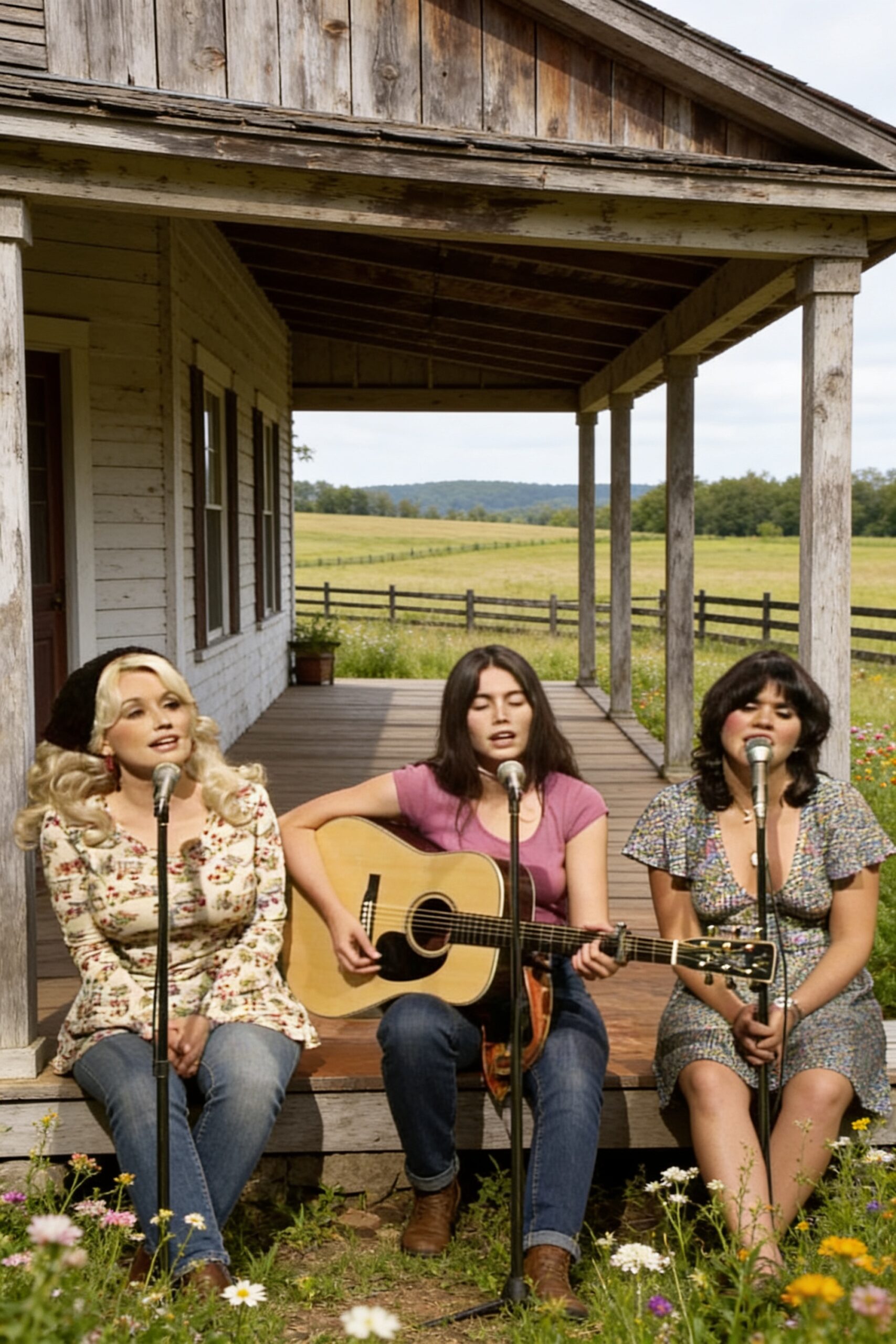
On Lover’s Return, Linda Ronstadt, Dolly Parton, and Emmylou Harris do something rarer than showing off: they let an old song breathe until it feels like shared memory.
When Trio II finally arrived in 1999, it carried more than the promise of a sequel. It carried the quiet weight of time. The first Trio album had already fixed Linda Ronstadt, Dolly Parton, and Emmylou Harris in the public imagination as a once-in-a-generation vocal combination, three unmistakable artists finding a sound that felt older and deeper than any one career. On the long-awaited follow-up, one of the most affecting moments comes through their reading of the traditional Lover’s Return, a song that seems to arrive from somewhere beyond the usual boundaries of authorship and era.
That matters, because a traditional song changes the stakes. It is not attached to one famous songwriter or one fixed cultural moment. It belongs to the older stream of folk and country music, the kind of material that survives because it can be carried from voice to voice without losing its human shape. In the hands of lesser singers, that can mean respectable reverence and little more. But on Lover’s Return, these three women hear something else inside the song: patience, ache, distance, and the strange calm that sometimes settles over longing after it has been lived with for a long time.
The beauty of the performance is in its restraint. Ronstadt gives the center line a clear emotional spine, singing with the directness that always made her seem both precise and exposed at once. Parton brings brightness, but not in a showy way; her voice catches the light of the melody and gives it a tender lift. Harris, with that airy, weathered grace that has long made her one of the great harmony singers in American music, turns the edges of the song translucent. Together they do not simply stack notes. They create depth. The harmonies move like conversation, then like recollection, then like something even less tangible, as if the song were remembering itself through them.
What makes Lover’s Return especially moving on Trio II is the stage of life and artistry these singers had reached by the time the album was released. This was not the sound of artists trying to prove chemistry. That part had already been settled. By 1999, each of them had traveled through major chapters of American popular music: Ronstadt through rock, pop, country, and standards; Parton through country songwriting, crossover success, and a public persona so vivid it often overshadowed how subtle a singer she could be; Harris through folk, country-rock, and one of the most discerning repertoires in modern roots music. When they meet inside a song like this, they bring not just technique, but history.
The arrangement never crowds that history. Lover’s Return is allowed to stay close to the ground. The accompaniment is gentle and supportive, leaving wide spaces around the voices rather than trying to decorate every feeling. That spaciousness is crucial. It lets the listener hear how carefully the trio calibrates each phrase, how no one voice needs to dominate for the performance to feel full. There is an elegance in that choice. Many records ask to be admired for their production. This one asks to be listened to closely.
It also says something essential about what made the Trio project special in the first place. These were not interchangeable singers gathered for a marketing idea. They had profoundly different vocal identities, and the fascination was in hearing those differences held in balance. Lover’s Return may be one of the clearest examples of that balance on Trio II. The song does not erase personality; it gathers personality into a common purpose. The result is not a compromise but a kind of trust. Each singer knows when to lead, when to blend, when to leave a little air in the line.
There is also something quietly defiant in choosing a song like this for a 1999 release. Popular country and adult contemporary music at the end of the century often leaned toward polish, emphasis, and immediate emotional signals. Lover’s Return moves in another direction. It does not hurry to announce its feelings. It lets them accumulate. It trusts old materials, old phrasing, and the simple force of three women who understand that maturity in singing often means knowing what not to push. The song becomes not a museum piece, but a living example of how tradition survives: not by staying frozen, but by finding new voices willing to enter it with humility.
That is why the track lingers. Long after the melody settles, what remains is the sense of three major artists standing inside something older than fame and treating it with uncommon care. Lover’s Return on Trio II is not built around dramatic climax or theatrical revelation. Its power comes from steadiness, from blend, from the feeling that sorrow and grace can occupy the same room without raising their voices. In a catalog full of memorable performances, this one keeps drawing listeners back for a simple reason: it reminds us that harmony, at its finest, is not about perfection. It is about listening so deeply that separate lives begin to sound like one story.
