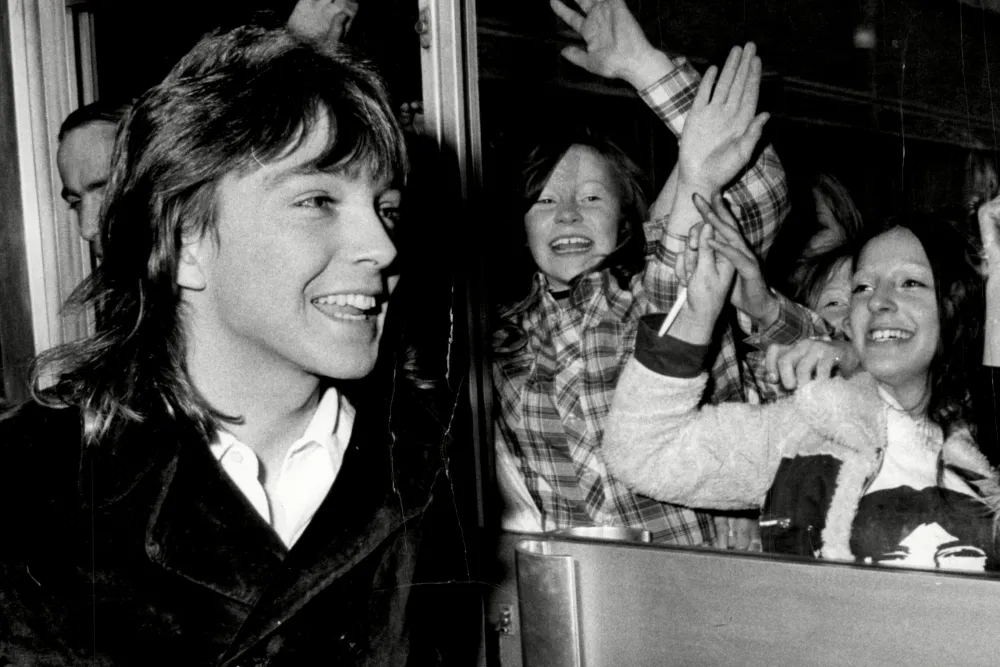
In 1972, Two Time Loser revealed a tougher, wiser side of David Cassidy that many listeners never fully heard.
There is something especially moving about an overlooked song from an artist the whole world once thought it knew. That is part of what makes David Cassidy‘s Two Time Loser, from the 1972 Rock Me Baby era, so memorable once you return to it with older ears. It was not one of the big signature hits that came to define his public image, and that matters. At the time of release, Two Time Loser was an album cut rather than a major stand-alone chart single, so it did not carve out its own chart position the way his best-known 45s did. But sometimes that very absence from the singles race is what allows a song to keep its dignity. It does not arrive with fanfare. It stays because of feeling.
By 1972, David Cassidy was already living inside a strange contradiction. To millions, he was the beautiful young face from The Partridge Family, a pop phenomenon surrounded by magazine covers, sold-out concerts, and a level of adoration few artists ever experience. Yet behind that image was a singer trying, more and more insistently, to be heard as a serious recording artist. The Rock Me Baby period captures that tension beautifully. Even when the production remained accessible and radio-friendly, there were moments in the material that hinted at more grit, more self-awareness, and more emotional weather than the teen-idol label allowed.
Two Time Loser is one of those moments. The title alone carries a little sting. It is not just about romantic disappointment; it suggests humiliation, repetition, and the bitter clarity that comes after trusting the wrong person one time too many. What gives the song its staying power is the way it balances hurt with backbone. This is not a collapse. It is a reckoning. The lyric lives in that uneasy space where charm has worn off, excuses no longer work, and the heart begins to understand what pride has known for a while.
Musically, the song fits the early-1970s pop-rock landscape while still carrying a sharper edge than casual listeners may expect from David Cassidy. The arrangement has movement, but underneath that momentum there is tension. The melody is catchy without becoming lightweight, and Cassidy’s vocal does much of the emotional lifting. He does not oversing it. That is one of the reasons the performance works. There is enough restraint in his voice to suggest experience, and enough ache to remind you that the wound is still fresh. On songs like this, you can hear him pushing against the limits of packaging and expectation.
The story behind the song is really part of the larger story behind David Cassidy‘s solo work in this period. Much of his early-1970s recording career was shaped by commercial demands, fast-moving release schedules, and the machinery of pop stardom. But within that system, he and his producers still found room for songs that gave him a more mature emotional frame. Two Time Loser may not have been marketed as a statement piece, yet it feels like one in retrospect. It lets him sound less like an idol being presented and more like a young man reacting.
That is why the song’s meaning deepens with time. Heard now, Two Time Loser is not simply a song of romantic frustration. It feels like a quiet turning point in attitude. There is disappointment in it, yes, but also dawning self-respect. The narrator has been misled, but he is no longer blind. That emotional shift gives the track a particular maturity. In a catalog often remembered for sweetness, longing, and polished pop appeal, this song leaves a slightly rougher texture in the hand. It is one of those recordings that reminds us how much was happening beneath the surface of Cassidy’s fame.
And that may be the deepest reason it remains so appealing to devoted listeners. We often return to famous artists looking for the biggest songs, the chart landmarks, the records everybody agrees on. Yet the real intimacy of a catalog is often found elsewhere, in the tracks that were never overplayed into familiarity. Two Time Loser belongs to that category. It stands as an overlooked gem from Rock Me Baby, a song that did not dominate the charts on its own but still reveals something valuable about David Cassidy in 1972: his instinct for emotional nuance, his ability to bring shape to disappointment, and his quiet determination to be more than the image surrounding him.
For listeners who only know the biggest moments, this song can come as a surprise. For those who have lived with his records for years, it can feel like a reminder of what was always there. Beneath the hysteria, beneath the headlines, beneath the bright machinery of pop success, David Cassidy left behind performances that carried bruises, doubts, and shades of hard-won understanding. Two Time Loser is one of them. It may not be the song history books mention first, but it is exactly the kind of song that keeps an artist human long after the noise has faded.
