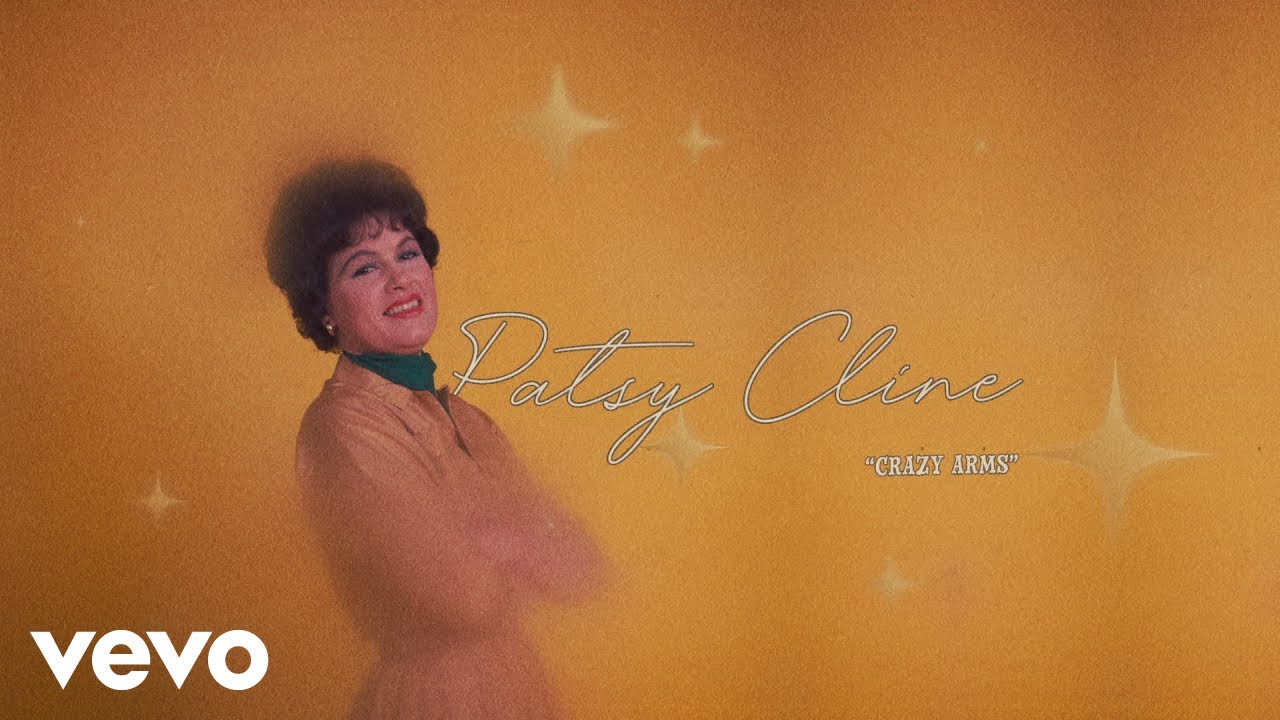
In 1961, Patsy Cline gave Willie Nelson’s winding ballad the calm ache that made it her signature.
In 1961, Patsy Cline recorded Crazy in Nashville for Decca, with Owen Bradley producing and a young Willie Nelson as its songwriter. Those plain facts carry a quiet surprise. Nelson’s composition did not behave like an ordinary country lament built from square corners and predictable phrases. Its melody bends, pauses, and resumes as if following a thought that cannot quite decide whether to confess or protect itself. Cline took that unease and made it sound poised.
Part of the song’s power begins with Nelson’s writing. The lyric is simple on the surface, almost conversational: the singer calls herself crazy for feeling lonely, for feeling blue, for loving someone who may not return that devotion. But the melody complicates the confession. It rises and turns in ways that feel closer to a late-night standard than to a direct honky-tonk cry. The song asks for a singer who can understand not only heartbreak, but the embarrassment of admitting heartbreak too clearly.
Cline’s vocal performance answers that request with remarkable discipline. She does not rush toward pain. She approaches it as if every phrase must be measured before it is allowed into the room. On the title word, she gives the line a rounded fullness, but she does not overstate it. The feeling is there, unmistakable, yet it remains controlled. That restraint is what makes the record so moving. The listener hears not a collapse, but a person trying to remain composed while the truth keeps pressing against the melody.
The arrangement places that voice in a setting shaped by the Nashville Sound, the smooth country-pop language that Bradley helped define. A piano opens the space, the rhythm section keeps the movement unhurried, guitar lines add gentle shading, and the backing voices appear like a soft frame rather than a competing presence. Nothing in the production fights for attention. It is polished, but not cold. Its elegance allows Cline’s phrasing to carry the emotional weight without needing to prove itself.
The timing of Crazy also matters. Cline had already reached listeners beyond country radio with I Fall to Pieces, and she was working in an era when Nashville records were increasingly finding a place beside pop ballads. She was also still recovering from a serious automobile accident earlier that summer, a fact often remembered because the finished record sounds so physically assured. The performance does not ask the listener to hear struggle in the background. Instead, it offers evidence of professionalism, focus, and a singer’s ability to turn limitation into grace.
When Crazy became a major hit, reaching near the top of the country chart and entering the pop Top 10, it did more than extend Cline’s success. It showed how country feeling could travel through a sophisticated arrangement without losing its plainspoken center. The record was neither rural in a narrow sense nor pop in a way that erased its roots. It stood at the crossing, with Cline’s voice as the bridge. She made Nelson’s wandering melody feel inevitable, as though the song had been waiting for her particular balance of strength and ache.
It is tempting now to hear Crazy only through the glow of everything that followed: Cline’s lasting stature, Nelson’s later emergence as one of American music’s defining voices, and the song’s long life in popular memory. But the recording still works because it remains small at its center. It is a confession delivered without spectacle. The singer names loneliness, pride, and devotion, yet she never turns them into display. Her control gives the sadness dignity, and that dignity gives the record its emotional reach.
As a signature song, Crazy does not contain every side of Patsy Cline. No single recording could. What it preserves is something essential about her art: the ability to make a carefully produced record feel intimate, to make technical command sound human, and to let a familiar word open into a lifetime of feeling. Willie Nelson wrote a song with an unusual heart. Patsy Cline sang it as if she understood that the deepest country-pop crossover was not a market category, but a voice carrying private hurt into a place where almost anyone could recognize it.
