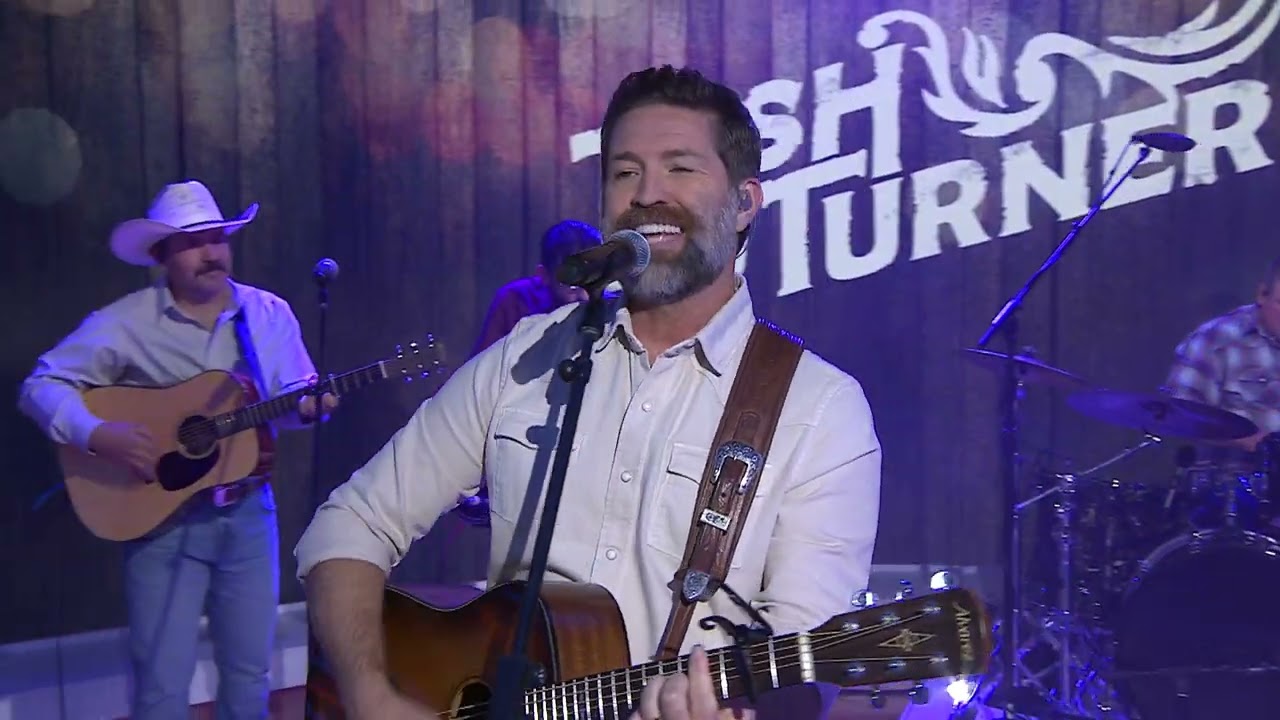
A quiet country promise at the heart of Josh Turner’s 2012 album, Left Hand Man is the kind of overlooked song that says something lasting without ever raising its voice.
When Josh Turner released Punching Bag on June 12, 2012, the album entered a country landscape that was already moving faster, louder, and more polished than the music he had built his name on. Even so, the record debuted impressively at No. 4 on Billboard’s Top Country Albums chart and No. 12 on the Billboard 200, proof that his audience still trusted that unmistakable baritone and the grounded, traditional values in his songs. Yet Left Hand Man, one of the album’s most quietly affecting tracks, was never released as an official single, so it did not earn a separate Billboard country singles chart entry of its own. That may be exactly why it remains one of the hidden treasures in the Josh Turner catalog.
There is something especially moving about a song that does not arrive with fanfare, but slowly reveals its strength over time. Left Hand Man belongs to that kind of company. On an album that was inevitably defined in public by the huge success of Time Is Love—the lead single that became Billboard’s year-end No. 1 country song of 2012—this deep cut lived in the shadows. But shadows are often where country music keeps its truest feelings. If the big singles are the songs that wave from the radio, album tracks like this one are the songs that sit down beside you and speak more plainly.
The genius of Left Hand Man is in its title. It turns a familiar phrase on its head. Everybody knows what a right-hand man is: the dependable one, the trusted one, the person standing close when it matters. But a left-hand man suggests something more intimate and more deeply rooted in country tradition. The phrase calls to mind the left hand that wears a wedding band, the left hand that marks commitment, steadiness, and chosen devotion. That simple twist gives the song its emotional center. It is not a flashy concept, and that is exactly why it works. In the hands of Josh Turner, it becomes a tender declaration of being more than useful, more than loyal in the everyday sense. It becomes a promise of staying, building, and belonging.
This is where Josh Turner has always been strongest. From Long Black Train onward, he has never needed vocal acrobatics or fashionable production tricks to command attention. His gift has always been gravity. His voice carries the texture of certainty, and on Left Hand Man that quality matters more than ever. He sings the song with a calm conviction that makes the message feel lived in rather than performed. There is no strain for effect, no overstatement, no theatrical push. Instead, the song leans into the old country virtues of restraint, sincerity, and emotional clarity. It sounds like a man meaning what he says.
That is also part of what makes the track feel overlooked in the best and saddest sense. Songs about devotion do not always get treated as dramatic enough in the modern marketplace, especially when they are not wrapped in heartbreak or spectacle. But country music has always had room for songs that honor constancy. Left Hand Man feels cut from that older cloth. It speaks to the world of porch lights, quiet kitchens, wedding bands worn smooth with time, and the kind of love that proves itself in ordinary days. In other words, it understands that lasting affection often sounds less like thunder and more like a steady door opening at the end of a long day.
Within Punching Bag, the song helps explain the album’s deeper personality. The record itself was not only about romantic love, but about endurance, identity, and the push-and-pull between toughness and tenderness. Even the album title suggested resilience. Against that backdrop, Left Hand Man feels like one of the album’s emotional anchors. It softens the harder edges and reminds us that strength in country music has never only meant ruggedness. Sometimes it means faithfulness. Sometimes it means showing up. Sometimes it means offering your whole life, not in grand speeches, but in a plainspoken line that carries real weight.
There is also a broader reason the song still resonates. By 2012, Josh Turner had already carved out a place as one of mainstream country’s most reliable traditionalists. He was not chasing every trend, and Punching Bag did not sound like an artist trying to outrun his own roots. Left Hand Man benefits from that steadiness. It fits naturally into the long line of songs where Turner’s artistry is less about surprise than about depth. He knows how to make familiar themes feel honest again. That is harder than it sounds. In country music, a simple sentiment can become either timeless or forgettable depending on whether the singer believes it. Here, he clearly does.
What makes the song linger, finally, is its humility. It does not beg to be called a classic. It simply does its work, line by line. That may be why listeners who discover it later often feel a quiet jolt of recognition, as if they have stumbled onto a page of an artist’s heart that was never meant for the spotlight. Not every meaningful song becomes a hit, and not every worthy performance gets its due when the album is new. But some songs age into their value. Left Hand Man is one of those songs. It stands today as a reminder that Josh Turner’s finest moments were never limited to the tracks that dominated radio. Sometimes they were tucked deeper inside an album like Punching Bag, waiting patiently for the right listener to hear what was there all along.
And that may be the most beautiful thing about this song: it trusts quiet truth. In an era that often rewarded noise, Left Hand Man chose warmth, loyalty, and emotional steadiness. It may have been overlooked in 2012, but it never sounded small. It sounded lasting. And in country music, lasting still means something.
