
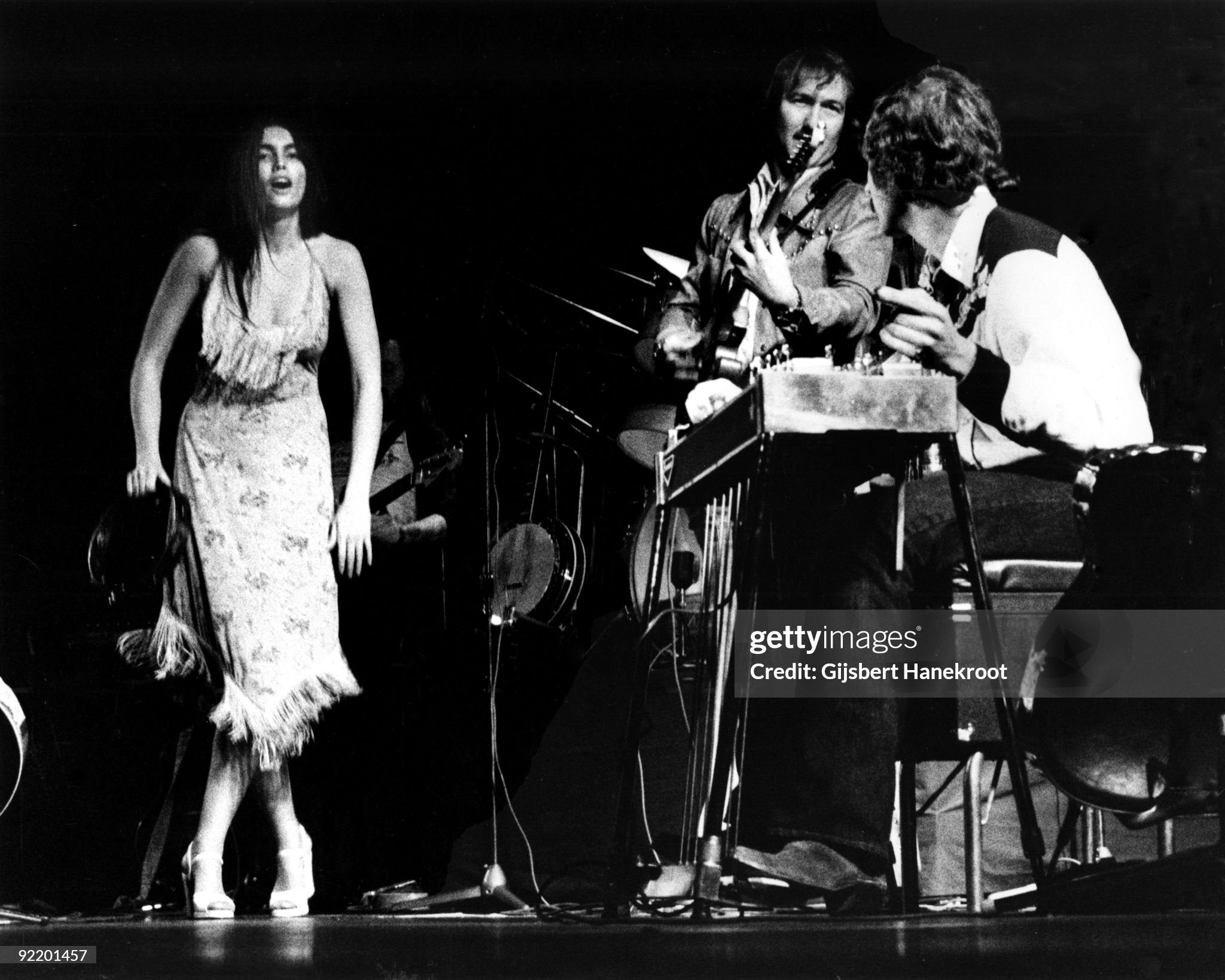
New Orleans is less a destination than a state of longing in Emmylou Harris’ hands, turning place, memory, and ache into one slow-burning mood.
There are songs that arrive with fanfare, and there are songs that stay because they understand something quieter about the human heart. Emmylou Harris’ New Orleans belongs to the second kind. It was not one of the towering chart records that defined her commercial peak, and it did not become a major Billboard country hit at the time of release. But that is part of its power. This is the kind of performance that lives beyond chart positions, beyond radio cycles, beyond the quick noise of the moment. It settles in slowly, the way certain cities do, the way certain memories do, and after enough years you realize it never really left you.
That has always been one of Harris’ deepest gifts as an artist. She has never sung a song as if she were merely passing through it. She enters it, inhabits it, and lets the emotional weather gather around every line. With New Orleans, that instinct matters enormously, because the title itself carries so much American feeling. New Orleans is not just a city name in the song’s atmosphere; it is a symbol of distance, romance, faded light, river water, music drifting out of doorways, and the old ache of wanting to go back to something that may no longer exist in the same form. Harris understands that kind of emotional geography better than almost anyone in country-folk music.
By the time listeners encountered songs like this in her catalog, Emmylou Harris had already become one of the most elegant interpreters in modern American music. She had built her reputation on taste, intelligence, and a rare emotional clarity. Whether singing traditional country, folk ballads, roots material, or songs that slipped between genres, she carried a voice that could sound both intimate and unreachable at once. That tension is exactly what gives New Orleans its special weight. She does not oversing it. She does not decorate it too heavily. Instead, she gives the song room to breathe, and in that space the listener can feel what the place represents: desire, history, loss, mystery, and the strange pull of places we keep inside us long after we have gone.
Musically, the appeal of New Orleans lies in its restraint. Harris was always wise enough to know that mood can be stronger than display. The arrangement, in the finest tradition of her best work, supports the song without crowding it. You hear the roots-world elegance that defined so much of her artistry: country phrasing, folk sensitivity, a hint of Southern dusk, and the sense that every instrument is there to frame the voice rather than challenge it. Nothing feels rushed. Nothing feels pushed. The result is a performance that moves like a slow river, reflective and haunted, but never heavy-handed.
The meaning of New Orleans becomes richer the longer one sits with it. On the surface, it may seem to be about a place, a route, a return, or a romantic geography. But songs like this endure because they are really about emotional dislocation. They are about what happens when a city becomes a stand-in for a former self, a lost love, a vanished time, or an unfinished longing. In Harris’ voice, New Orleans becomes a song about yearning for more than a location. It becomes a song about the version of life we thought we might still catch if we could only make our way back down that road, back toward those lights, back toward that music in the distance.
And that is why the song feels so intimate. Emmylou Harris has always been drawn to material where the surface story opens into something larger. She sings as though she knows that the listener brings a private history to the song. One person hears travel. Another hears regret. Another hears romance. Another hears a home that exists now only in memory. Harris never traps the song inside one meaning. She leaves the doors open, and that generosity is part of what has made her recordings last.
If there is a story behind New Orleans, it is inseparable from Harris’ larger artistic mission. She has long been one of the great preservers and renewers of American song, someone who could take material that might have been overlooked and give it grace, weight, and permanence. She understood that songs about places are rarely just about places. They are about identity. They are about distance. They are about what the road took from us and what it left behind. In her hands, New Orleans is not a postcard song. It is a lived-in one.
That may be the deepest reason the performance still lingers. It carries no need to prove itself. It simply opens a mood and trusts the listener to recognize it. Many artists can sing about a city. Very few can make that city feel like a room in the heart. Emmylou Harris does exactly that on New Orleans. And once you hear it that way, the song stops being about a name on a map. It becomes something older, sadder, warmer, and far more enduring: the sound of memory calling from far away.
