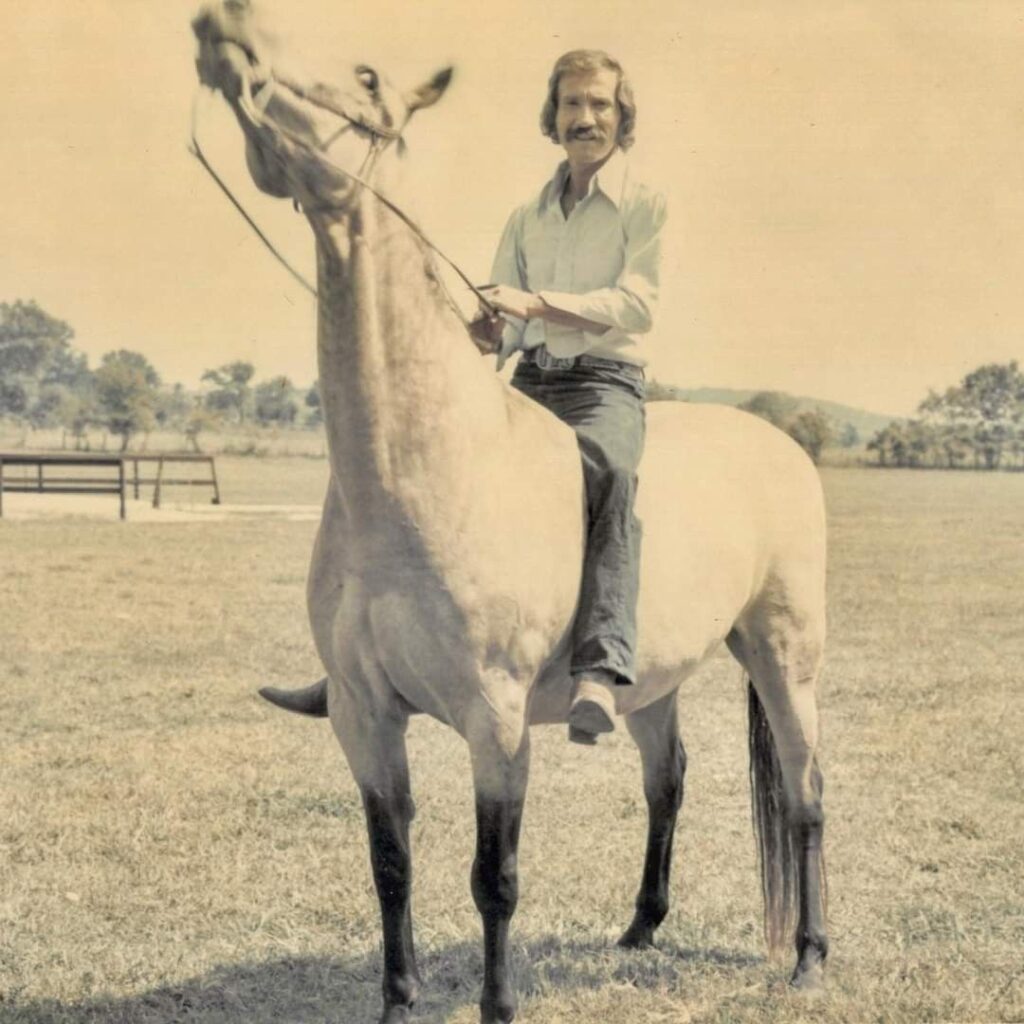
A Nomad’s Lament: The Timeless Yearning in Marty Robbins’ Saddle Tramp
In 1966, Marty Robbins released the poignant ballad “Saddle Tramp” on his album The Drifter, a collection that dwells in the wide, open spaces of the American West, capturing the essence of the wanderer’s heart. Nestled among tracks that explore themes of isolation and relentless travel, “Saddle Tramp” stands out as a visceral ode to the restless spirit of a cowboy who cannot find solace in stillness. This song, like many from Robbins’ illustrious career, finds its strength in the evocative storytelling for which he is so revered.
By the mid-1960s, Robbins was already a staple in country music, known for his ability to paint vivid landscapes with his words and melodies. His narrative style had earlier been immortalized with hits like “El Paso,” which climbed to the top of the charts in 1959. While “Saddle Tramp” did not reach such lofty commercial heights, it remains a profound piece within Robbins’ body of work, revealing much about his artistic soul and the era’s cultural tapestry.
At its core, “Saddle Tramp” unfolds as a meditation on transience and yearning, encapsulated within the persona of a lone cowboy perpetually moving from one horizon to another. Robbins’ voice, rich with emotion and tinged with melancholy, guides listeners through this journey. The lyrical landscape is sparse yet potent: “Saddle tramp, how many memories can you hold?” This line resonates with anyone who has ever felt both free and burdened by their own memories.
The song captures an essence of longing and rootlessness that defines not only the cowboy’s life but also speaks to broader human experiences. In Robbins’ portrayal, the cowboy is more than just a figure traversing dusty trails; he becomes a symbol of anyone who has ever wandered in search of meaning or redemption. This timeless narrative is underscored by Robbins’ musical composition—traditional country with a nod to folk elements—melding guitar strains that mirror the endless horizons described in his lyrics.
Within Robbins’ career, “Saddle Tramp” represents an artistic continuity; it is a part of his ongoing exploration into Western motifs and characters that shaped much of his discography. While his most famous works often spotlight dramatic narratives filled with romance or danger, this track delves deeper into introspective themes. The song’s quiet power lies in its ability to convey emotion without grandiosity—just a simple tale of a man and his journey through life.
Culturally, “Saddle Tramp” fits within an era when America was grappling with its own identity amid social upheavals and shifting paradigms. The 1960s saw an increased fascination with authenticity and roots—themes that country music epitomizes through its stories of real people facing genuine challenges. Robbins tapped into this zeitgeist by offering songs that were both reflections and escapist fantasies for listeners seeking solace or understanding in tumultuous times.
The lasting appeal of “Saddle Tramp” is found not only in its beautiful construction but also in its universal themes. It evokes a sense of nostalgia for a past that perhaps never truly existed—a romanticized vision of freedom on horseback against panoramic sunsets. Yet it remains relevant because it addresses something deeply human: our unending quest for purpose amid life’s uncertainties.
In reflecting upon Marty Robbins’ legacy, one finds that “Saddle Tramp,” while perhaps overshadowed by more commercially successful hits, remains integral to understanding his impact on country music and storytelling. It is a testament to his unparalleled ability to weave narrative tapestries that resonate across generations—a quiet but enduring echo from the heartland’s open plains.
Thus, “Saddle Tramp” endures as both an artifact of its time and an evergreen anthem for those drawn to paths less traveled—a melodic companion for all who wander without destination but with hope in their hearts.
