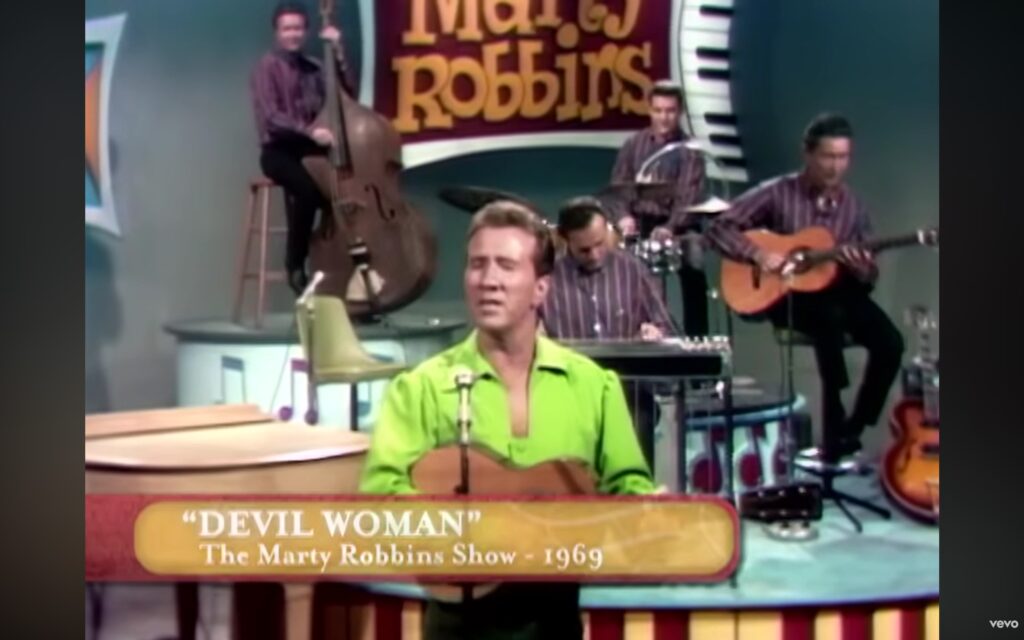
The Haunting Melody of Lost Love and Regret
In 1962, Marty Robbins released a song that would etch itself into the annals of country music history: “Devil Woman.” Featured on the album ‘Devil Woman,’ this single soared to No. 1 on the Billboard Hot Country Singles chart, marking a pivotal moment in Robbins’ illustrious career. Known for his versatility and rich narrative style, Robbins’ voice captured an era where country music was weaving complex stories of human emotion and moral quandaries into its fabric.
As the American landscape shifted with post-war optimism, country music became a reflection of both aspiration and heartache. “Devil Woman” emerged during this era, encapsulating the internal conflict between desire and repentance. This song is emblematic of Robbins’ ability to blend traditional country sounds with storytelling that resonates deeply with listeners. The track’s driving rhythm and poignant lyrics paint a vivid picture of a man tormented by his own infidelity—a universal theme presented through Robbins’ distinctive narrative voice.
The creative origins of “Devil Woman” find their roots in Robbins’ unique songwriting approach. Known for his storytelling prowess, Robbins often drew from his own experiences and observations to craft songs that were both relatable and profound. The narrative in “Devil Woman” unfolds with lyrical precision, telling the story of a man ensnared by temptation and wrestling with his conscience. The titular “devil woman” symbolizes the allure of forbidden love, while the protagonist’s inner turmoil echoes the timeless battle between virtue and vice.
Robbins’ voice carries the listener through this emotional landscape, imbued with a sense of regret and yearning. His vocal delivery is both plaintive and powerful, imbuing each line with an emotional weight that lingers long after the song ends. Musically, the arrangement complements this sentiment, blending traditional country instrumentation with elements of rockabilly—a testament to Robbins’ ability to transcend genre boundaries while maintaining an authentic country sound.
The impact of “Devil Woman” on Robbins’ career cannot be overstated. Already a celebrated figure in country music thanks to hits like “El Paso,” this single solidified his reputation as one of the genre’s most compelling storytellers. It demonstrated his skill at weaving narratives that were not only entertaining but also emotionally resonant. The song’s success contributed to Robbins’ enduring legacy, influencing future generations of artists who sought to marry narrative depth with musical craftsmanship.
Culturally, “Devil Woman” stands as a significant piece in the tapestry of American songwriting. At a time when societal norms were being questioned and redefined, Robbins’ exploration of personal accountability and moral struggle struck a chord with audiences across the nation. It served as a reminder that behind every public facade lay private battles fought in the hearts of individuals.
The emotional resonance of “Devil Woman” lies in its universal themes—love, temptation, guilt—which transcend time and place. It evokes an atmosphere steeped in introspection, prompting listeners to reflect on their own experiences and choices. The song’s enduring appeal can be attributed to its honest portrayal of human frailty, wrapped in a melody that is as haunting as it is beautiful.
In reflecting upon Marty Robbins and “Devil Woman,” we are reminded of the power of music to illuminate the darkest corners of the human soul. Through his eloquent storytelling and emotive performance, Robbins crafted a song that continues to resonate with listeners today—a testament to his artistry and insight into the complexities of love and regret. As we listen to those haunting chords and vivid lyrics, we are transported back to a time when country music was not just entertainment but an exploration of life’s deepest truths.
