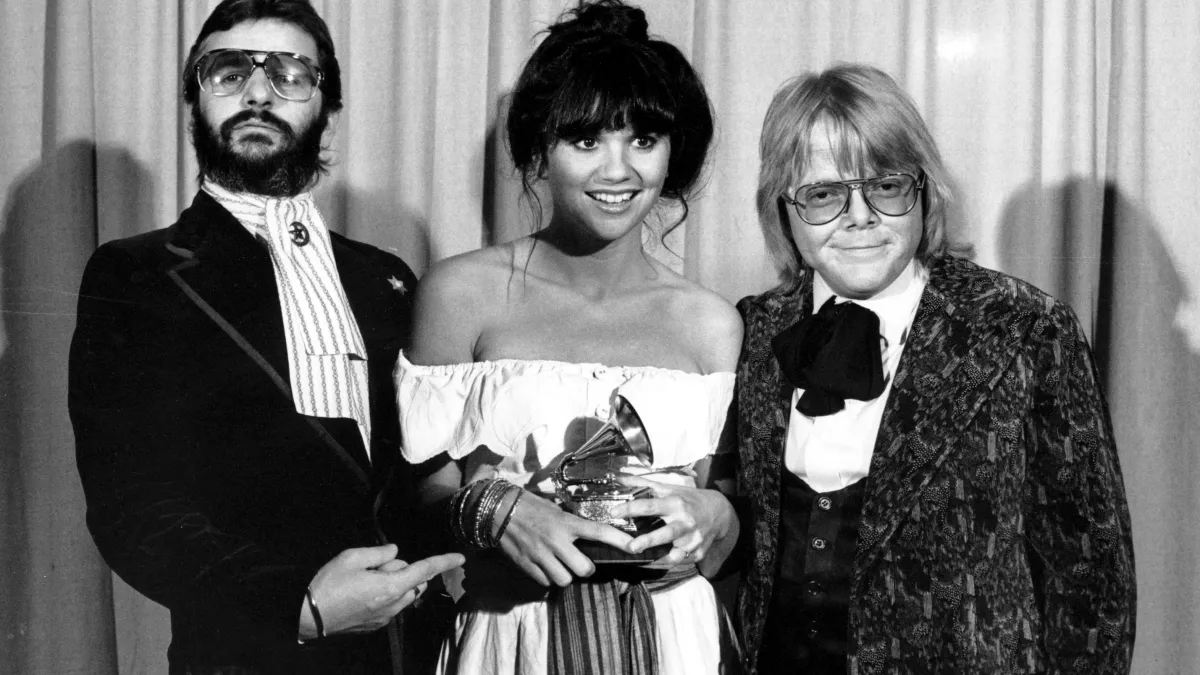
“Ooh Baby Baby” in Linda Ronstadt’s hands is an apology you can’t rush—softened by velvet tone, yet still trembling with the fear of being left behind.
The key facts land first, because they frame everything you’re about to feel. Linda Ronstadt released “Ooh Baby Baby” as a single in November 1978, drawn from her album Living in the USA (released September 19, 1978)—a record that became her third and final No. 1 on the Billboard 200. The single went on to become a major pop hit: it reached No. 7 on the Billboard Hot 100, with its peak date on January 20, 1979, and it climbed to No. 2 on the U.S. “Contemporary” (Adult Contemporary) chart. Those numbers matter—not as trophies, but as proof that a quiet, sorrowing ballad about regret could still cut through the glitter of late-’70s radio and find the center of the room.
Of course, the song’s heart is older than 1978. “Ooo Baby Baby” (often spelled with three “o”s in the original) was written by Smokey Robinson and Pete Moore, and first made famous by The Miracles in 1965—a slow-burning confession of cheating, shame, and the desperate hope that love might forgive what pride cannot undo. Ronstadt doesn’t change the emotional equation; she changes the lighting. Where Motown’s version feels like candlelight and close harmonies, Ronstadt’s feels like the after-hours neon of Los Angeles—same sorrow, different streets.
Listen to her opening: it arrives with a saxophone prelude by David Sanborn, a choice that instantly places the listener in a more contemporary soundscape—adult, late-night, a little bruised, but elegantly dressed. And behind it all is the steady guiding hand of producer Peter Asher, who understood how to let Ronstadt’s voice carry both polish and vulnerability at once. This is not heartbreak performed for spectacle; it’s heartbreak arranged to be lived with.
That’s the story behind why the song worked so widely. Living in the USA was a collection built on interpretations—Ronstadt as curator, not just vocalist—placing classic songwriting beside contemporary material with the confidence of someone who knew the American songbook was bigger than genre lines. In that context, “Ooh Baby Baby” isn’t “just” a cover. It’s a bridge: Motown’s emotional directness carried into the late-’70s studio sheen, without losing the ache that made the original immortal.
And what does it mean, when Ronstadt sings it? It means you can hear remorse without melodrama—an admission that some mistakes don’t come with excuses, only with the hope that tenderness might still be possible. The narrator isn’t bargaining with cleverness; the plea is plain, almost childlike in its need: please don’t let this be the end. Ronstadt’s voice—clear, centered, famously luminous—makes that plea feel all the more human. She doesn’t sound like someone trying to win an argument. She sounds like someone who knows the verdict could be silence.
Maybe that’s why the song still lingers in memory long after chart positions blur. A No. 7 pop hit can easily become a period piece, pinned to its year like a corsage. But “Ooh Baby Baby” refuses to stay decorative. It’s too honest for that. Even in its smoothest moments, it carries the weight of a simple truth: love can be wounded by a single act, and healing begins not with grand gestures, but with the courage to say I was wrong—and to wait, trembling, for the answer.
