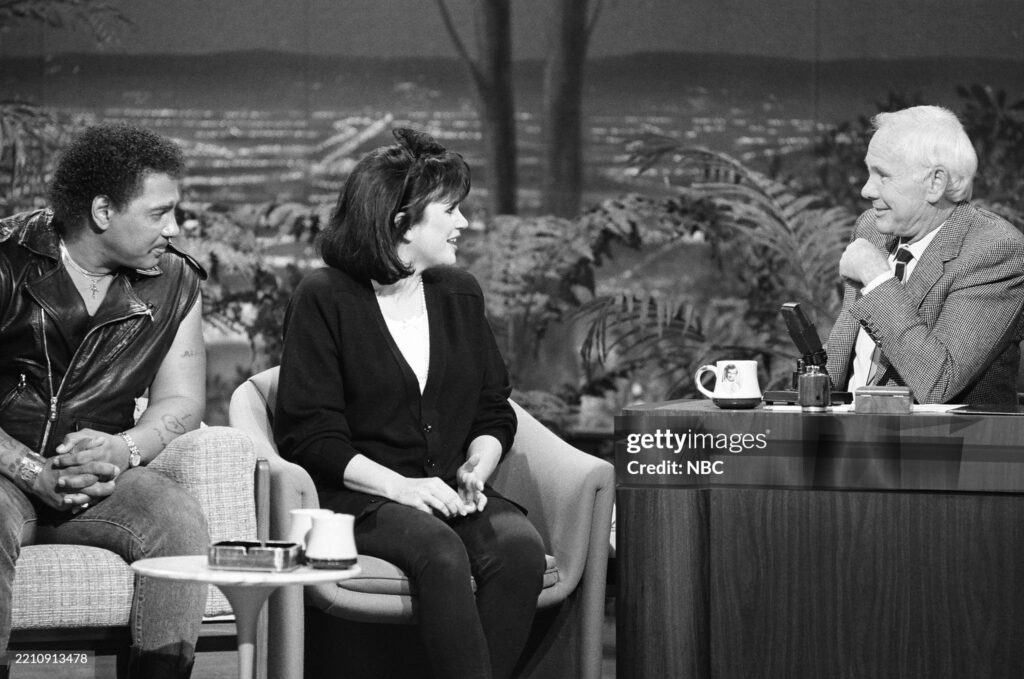
“Don’t Know Much” is a love song for grown-up hearts—two voices admitting their ignorance with such tenderness that not knowing becomes its own kind of wisdom.
Linda Ronstadt and Aaron Neville turned “Don’t Know Much” into one of pop’s most unforgettable late-’80s duets when they released it as a single on September 12, 1989, from Ronstadt’s album Cry Like a Rainstorm, Howl Like the Wind. The record’s commercial impact was immediate and deep: it rose to No. 2 on the Billboard Hot 100 and reached No. 1 on Billboard’s Adult Contemporary chart, becoming a rare crossover that felt equally at home on soft-pop stations and mainstream Top 40. And then came the industry’s seal of recognition—a 1990 Grammy Award for Best Pop Performance by a Duo or Group with Vocal, alongside a Song of the Year nomination, confirming what listeners already knew: this wasn’t just a hit; it was a moment.
The story behind the song is quietly elegant. “Don’t Know Much” wasn’t written for Ronstadt and Neville; it was penned by the classic songwriting team Barry Mann, Cynthia Weil, and Tom Snow, first recorded by Mann in 1980. But some songs are like letters that don’t reach their true recipient until years later. When it found Ronstadt and Neville, it finally sounded like what it always wanted to be: an adult vow, shy of grand speeches, honest about its own imperfections. The lyric’s central confession—I don’t know much—could have been a gimmick in lesser hands. Here, it becomes disarmingly human: the recognition that love isn’t a math problem you solve, but a feeling you return to, day after day, even when you can’t fully explain it.
That honesty is the song’s emotional engine. It doesn’t pretend the singers have mastered life, romance, or the reasons people hurt each other. Instead, it offers a gentler kind of authority: the authority of humility. What they do know—what they’re willing to stake their voices on—is that love matters, and that devotion is real even when certainty isn’t. In a decade often remembered for polish and spectacle, “Don’t Know Much” feels almost radical in how softly it insists on sincerity.
A huge part of the magic is the contrast—and the way that contrast melts into harmony. Linda Ronstadt brings that familiar clarity: a voice that can shine without showing off, emotionally direct yet never sloppy. Aaron Neville, meanwhile, sings with a kind of soul-and-gospel delicacy—his tone feathered with vulnerability, as if every line is both a promise and a prayer. Together, their voices don’t compete; they interlock, like two hands finding the same grip on a difficult day. The production credits tell you how carefully that atmosphere was built: the single was produced by Peter Asher and Steve Tyrell, and recorded at Skywalker Ranch, wrapped in orchestral warmth that feels cinematic without drowning the intimacy.
The album context deepens the nostalgia. Cry Like a Rainstorm, Howl Like the Wind was released October 2, 1989, and it’s almost a time capsule of late-’80s high craft: big arrangements, immaculate session playing, and duets designed not as stunts but as emotional conversations. Yet “Don’t Know Much” remains the heart-stopper, because it doesn’t rely on era-specific tricks. It relies on a feeling most people recognize sooner or later: the realization that the longer you live, the more you understand how little you truly control—except, perhaps, the choice to love well.
And maybe that’s why the song still lands with such force today. It isn’t the romance of first fireworks; it’s the romance of staying. It’s the sound of two people saying, in essence: I can’t explain everything, but I can stand beside you. In the end, “Don’t Know Much” endures not because it claims knowledge, but because it dares to cherish love in the middle of uncertainty—and in doing so, it becomes a quiet anthem for anyone who has ever found comfort in a voice that admits, softly and beautifully, that the heart often understands what the mind cannot.
