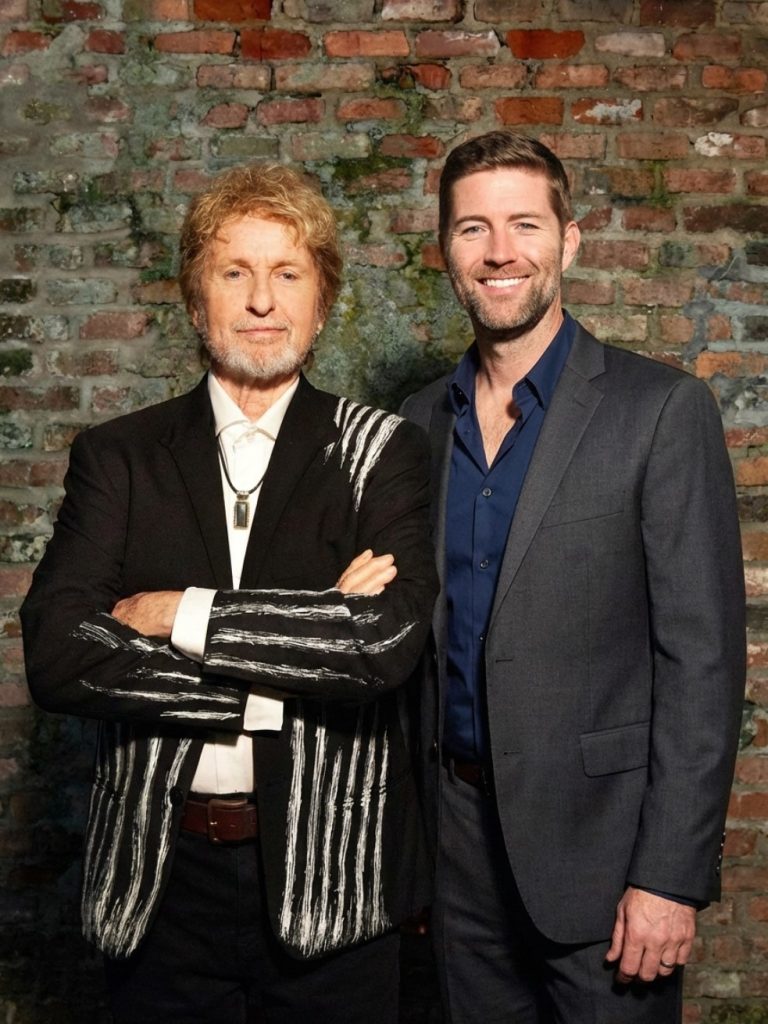
White Noise lets Josh Turner and John Anderson do something country music has always done at its best: cut through distraction, slow the heart down, and make plain truth sound unforgettable.
Released in 2024 as part of Josh Turner‘s album This Country Music Thing, White Noise stands out immediately because it brings together two of the most recognizable baritone voices in modern country. The guest appearance by John Anderson is not a novelty credit and not a casual duet added for attention. It feels earned. It feels natural. And that matters. At the time of its release, White Noise was appreciated more as a meaningful album track and artist-to-artist collaboration than as a heavily pushed radio single, and it did not become a major standalone hit on the main Billboard country singles charts. In some ways, that only adds to its charm. Songs like this often live longer in memory than in weekly chart numbers.
There is a special kind of pleasure in hearing Josh Turner sing beside John Anderson. Turner, whose rich low voice helped make Long Black Train and Your Man such lasting records, has always carried himself with a deep respect for traditional country phrasing. Anderson, of course, is one of the great originals, the same unmistakable singer who gave country music classics like Swingin’ and Seminole Wind. Put those two voices together and something more than harmony happens. The song begins to feel like a bridge between eras, between influences, between the country music that came through AM radios and the country music still made by artists who believe a human voice should sound human.
The story behind White Noise is compelling precisely because it does not feel manufactured. Josh Turner has long spoken through his work about his love for older forms of country music, and featuring John Anderson fits that artistic instinct beautifully. This is not an attempt to borrow credibility. It is a gesture of kinship. Turner has always sounded like an artist who understands lineage, and Anderson’s presence deepens that sense of lineage even further. When they sing together, the record carries the warmth of mutual admiration. One hears not only a duet, but a conversation between two singers who understand restraint, grain, texture, and the emotional power of a voice that never has to oversell itself.
As for the meaning of White Noise, the title itself is a powerful metaphor. White noise is the sound that fills a room without saying anything. It is the static in the background, the blur of distraction, the endless hum of things demanding attention but offering little comfort. In that sense, the song can be heard as a quiet protest against a world that has become too crowded with empty sound. What gives the track its resonance is the way Josh Turner and John Anderson seem to answer that chaos with steadiness. Their delivery suggests that not everything loud is important, and not everything old is fading away. Some voices still cut through. Some truths still arrive slowly. Some songs still know how to sit with a listener instead of chasing one.
That is why the song feels larger than its running time. Beneath the surface, White Noise speaks to anyone who has ever grown tired of clutter, of speed, of all the things that make life feel noisier but not fuller. There is a reflective quality in the performance that recalls the best kind of country music: songs that do not merely entertain, but settle into the spirit. The emotional effect is not dramatic in a flashy way. It is gentler than that. It feels like a front porch after the day has finally gone quiet. It feels like driving at dusk with the radio low and the mind drifting backward. It feels like remembering that calm has its own sound.
Musically, the song benefits from the fact that both singers trust space. Neither Josh Turner nor John Anderson crowds the line. They let the phrasing breathe, and that breathing room gives White Noise much of its emotional character. The performance carries the grain of lived experience. Turner brings his familiar gravity and smooth control; Anderson brings that weathered, unmistakable edge that has always made him sound like he has seen a little more and decided to sing only what matters. Together, they create something textured and grounded, the kind of country performance that does not need theatrics because the voices themselves already carry history.
There is also something quietly moving about where this song sits in Josh Turner‘s career. By the time he released This Country Music Thing, he was no longer simply the young singer with the startlingly deep voice. He had become an artist with his own history, his own catalog, and his own role in carrying traditional country values forward. Bringing in John Anderson for White Noise feels like an acknowledgment of where he came from and what he still believes in. The song reminds listeners that country music is not only about trend or timing. It is about character. It is about voice. It is about whether a song still sounds true when the room gets quiet.
In the end, White Noise is memorable because it gives so much without forcing anything. It offers reverence without stiffness, tradition without imitation, and feeling without melodrama. For listeners who still respond to the deep grain of a real country voice, this duet feels like a small gift. It may not be the loudest song in Josh Turner‘s catalog, and it was not defined by chart fireworks, but that is almost beside the point. Its real strength lies elsewhere. It lies in the calm confidence of two artists who know that the best country songs do not compete with the noise of the age. They outlast it.
