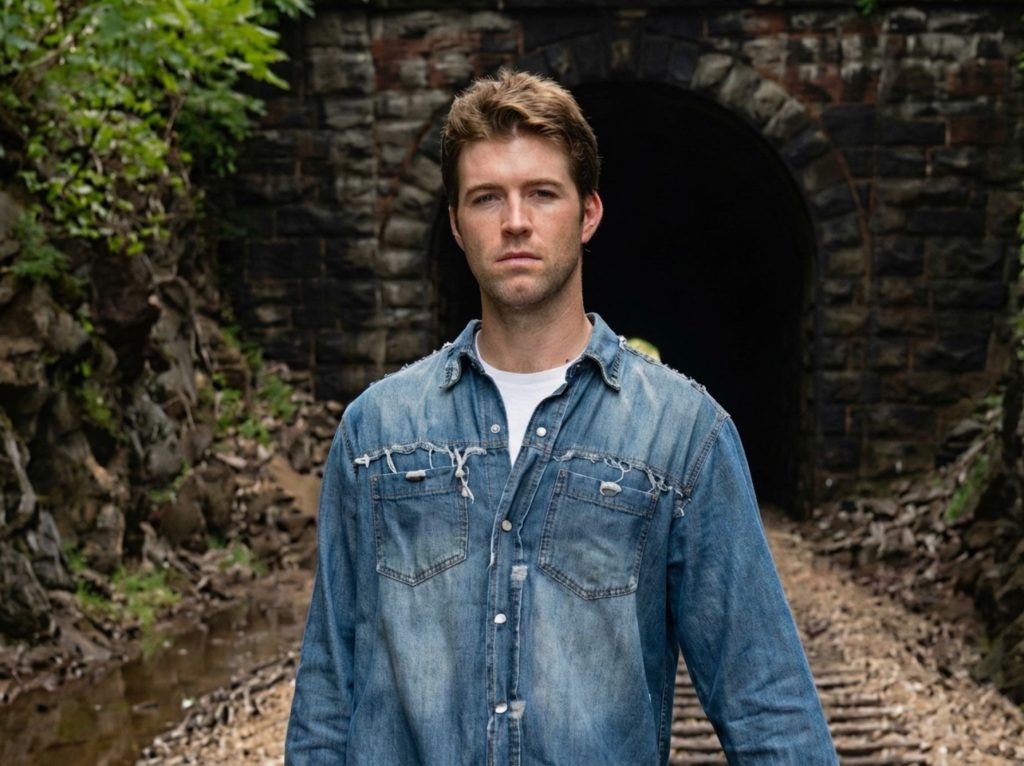
“In My Dreams” is a soft-spoken promise set to a country waltz—one of those deep cuts that doesn’t chase applause, but lingers like a warm light left on in a quiet house.
Let’s put the key facts where they belong—right at the top. “In My Dreams” is a song recorded by Josh Turner for his debut album Long Black Train, released on October 14, 2003. The track is credited to songwriters Casey Beathard and Tony Martin, with Mark Wright listed among the production credits (as shown in widely used track-credit databases). Unlike the title track “Long Black Train” (which was released as a single and charted), “In My Dreams” itself is best known as an album track, not a major chart single—so it does not have a standard “debut chart position” on Billboard singles charts in the way Turner’s radio-released singles do.
That “non-single” status actually explains a lot about why the song feels the way it does. “In My Dreams” doesn’t sound engineered for radio’s bright lights. It sounds written for the hours when the world goes quiet—when a person stops performing strength and admits what they truly want. The lyric opens with that familiar, slightly weathered country idea: other men may dream of big horizons—oceans crossed, fortunes built, names remembered—but the narrator’s dream narrows to something far more intimate. Not smaller—just more honest. A life measured not by distance traveled, but by love returned.
There’s a particular tenderness in how Josh Turner delivers songs like this early in his career. On Long Black Train, his voice already carries that rare combination of gravity and gentleness—an instrument that can sound like a front porch at dusk: sturdy, grounded, and quietly inviting. The band doesn’t crowd him. The arrangement holds back on purpose, letting the words land with the unforced clarity of someone who isn’t trying to impress you—only trying to tell you the truth.
And the truth at the center of “In My Dreams” is beautifully plain: your happiness becomes my compass. It’s not the dramatic love of grand gestures. It’s the steadier kind—the kind that shows up in the ordinary, the kind that learns a person’s smile and starts living for it. There’s something almost old-fashioned in that devotion, not in a naïve way, but in a remembered way—like finding a handwritten note in a drawer and realizing how carefully people once chose their words.
Knowing the song was written by Casey Beathard and Tony Martin helps, too—both writers known for bringing emotional directness to mainstream country without sanding away the edges. The songwriting here isn’t flashy; it’s crafted to feel like a vow said under one’s breath. In other words, it’s built for replay. Songs like this don’t announce themselves once and vanish. They return—quietly—at different ages, in different seasons, revealing new meanings depending on what you’ve lived through since the last listen.
There’s also a special kind of nostalgia that lives in early-2000s country albums—when a debut project like Long Black Train could still carry deep, reflective ballads alongside radio-minded tracks. The album itself made a strong first statement, peaking at No. 4 on Billboard’s Top Country Albums chart (and No. 29 on the Billboard 200). Yet within that larger success, “In My Dreams” remains a personal corner of the record—an unfussy love song you discover the way you discover certain memories: not because they were loudly advertised, but because they were quietly true.
If you’re listening now, years after the album’s release, you may notice how “In My Dreams” refuses to age into cliché. It doesn’t brag about love; it serves it. And that’s why it stays with you. Some songs feel like photographs—frozen, bright, and distant. “In My Dreams” feels more like a room you can still walk into: familiar air, familiar light, and the calm certainty that the best dreams were never really about escaping life… but about sharing it.
