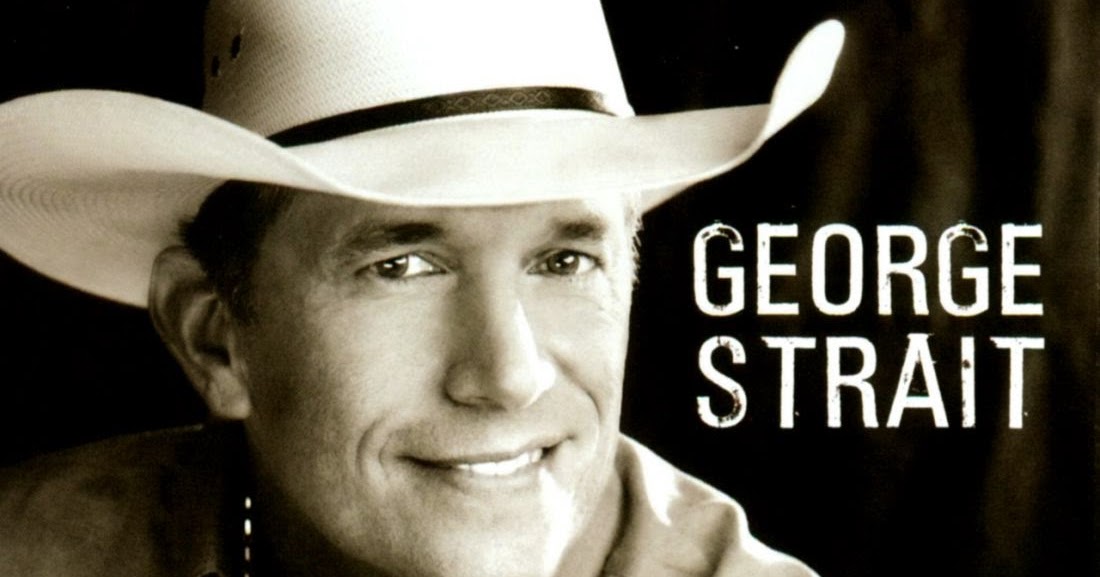
In 1983, George Strait turned a rodeo road song into a quiet emblem of country restraint.
Amarillo by Morning appeared on George Strait’s 1982 album Strait from the Heart and was released as a single in 1983, early enough in his career that the public was still learning what kind of country singer he intended to be. Written by Terry Stafford and Paul Fraser, the song had already existed before Strait recorded it; Stafford had cut it in the 1970s. But Strait’s version gave it a new stillness, a clean-lined Texas authority that helped make it one of his defining recordings.
Its power begins in what it refuses to do. The arrangement does not push the song toward spectacle. It opens with fiddle and moves with the measured patience of a rider who knows the next town is not a promise, only a destination. The band gives the vocal room to stand upright. There is no rush to explain the life being described, no attempt to turn hardship into melodrama. The track trusts country music’s older tools: melody, plain speech, the ache of strings, and a singer who understands that dignity can be stronger than display.
The lyric follows a rodeo cowboy moving toward Amarillo from San Antonio, carrying the marks of work, travel, loss, and endurance. In another singer’s hands, that story might have become theatrical: a catalog of broken chances, injuries, and stubborn pride. Strait sings it differently. His voice stays even, almost conversational, as though the burden in the song has been carried so long that it no longer needs to be announced. That restraint is not emptiness. It is the emotional center of the record.
By 1983, Strait was becoming a crucial figure in a country landscape that had spent years negotiating with pop crossover polish. He did not reject smoothness; Strait from the Heart is polished, disciplined, and radio-ready. But Amarillo by Morning showed how polish could serve tradition rather than erase it. The fiddle was not decoration. The rodeo setting was not costume. The clean vocal was not a lack of feeling. Together, they formed a sound that felt rooted without sounding frozen in the past.
That balance is one reason the song became a signature for Strait despite not being one of his No. 1 singles. Its identity is inseparable from his public image, yet it is not loud about that connection. It carries the Texas geography that would follow him through his career, but it also avoids easy regional bragging. Amarillo is not presented as a trophy city on a map. It is a point of arrival, a place reached after another stretch of uncertainty. The title itself feels like a promise made at a low volume: not victory by morning, not rescue by morning, only Amarillo.
Musically, the recording understands the difference between sadness and self-pity. The melody rises with a graceful ache, but Strait never leans so hard into it that the song collapses under its own sorrow. He allows the character to keep his posture. When the words suggest that the cowboy has little in material terms, the performance does not ask the listener to pity him. It asks something more respectful: to notice the discipline required to keep moving when there is no guarantee waiting down the road.
That is the traditional magic of Strait’s 1983 single. It does not rely on novelty, shock, or vocal acrobatics. It draws from a lineage in which country songs could hold entire lives inside a few verses, then let the chorus carry what ordinary speech could not. The track sounds simple because every element knows its place. The fiddle mourns without overstatement. The rhythm keeps time like wheels on pavement. The vocal remains clear enough that the listener can feel the story without being told how to feel it.
As a signature song, Amarillo by Morning reveals something essential about George Strait’s art: his greatest force often comes from composure. He made space for the song’s weather instead of standing in front of it. He let the cowboy’s losses remain plain, and because of that, they feel more convincing. The performance suggests that endurance is not always a dramatic gesture. Sometimes it is simply the act of pointing yourself toward the next town and arriving with your name, your work, and your quiet pride intact.
Decades later, the recording still feels fresh because it never tries to sound larger than its subject. It honors a hard road without romanticizing every bruise. It gives tradition a steady pulse rather than a museum frame. In Amarillo by Morning, Strait found a song that matched his gift for understatement, and the result became a lasting measure of what country music can do when it trusts the truth of a plain voice moving through open country.
