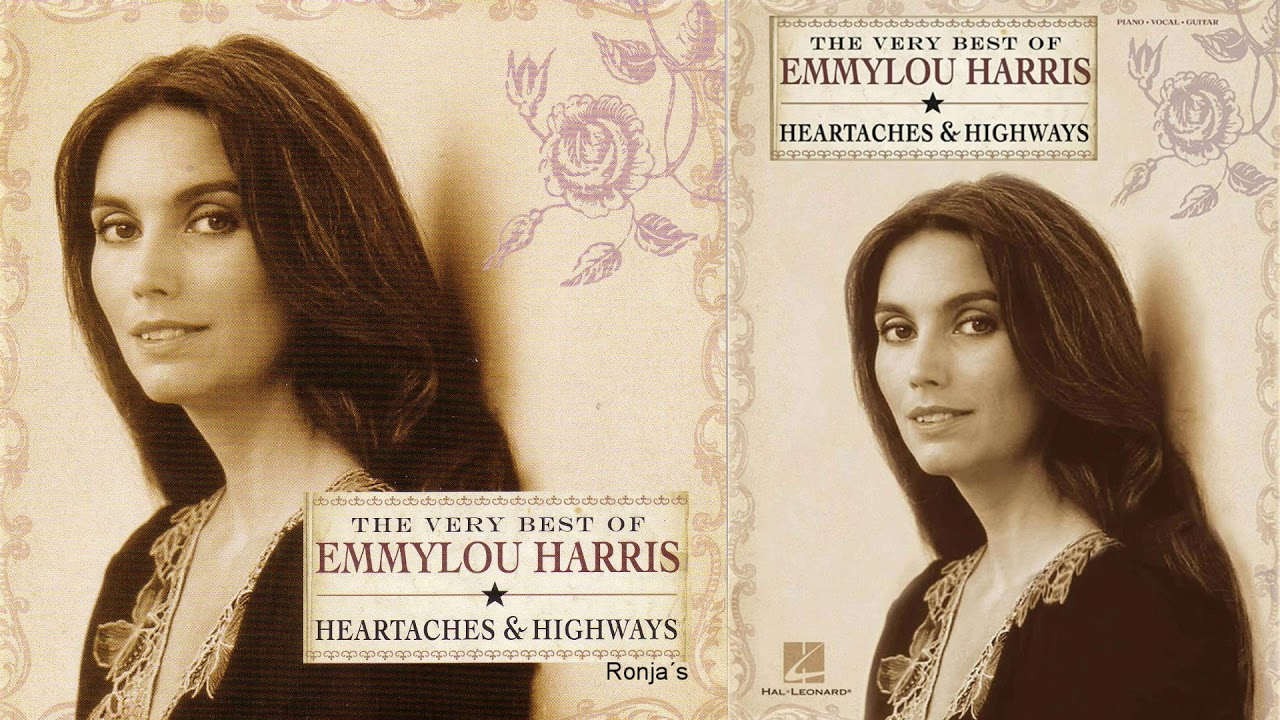
“Crescent City” is a homecoming song that doesn’t romanticize the past—Emmylou Harris sings it like a weary heart choosing the back highway, letting New Orleans hold the memories while she keeps moving.
You wrote “Crescent Cit”, and the track that matches Emmylou’s catalog is “Crescent City”—her Cajun-tinged cover of Lucinda Williams’ New Orleans anthem. Harris recorded it for Cowgirl’s Prayer (released September 28, 1993 on Asylum/Elektra, produced by Allen Reynolds and Richard Bennett). On paper, it’s “just” track 6 on a late-career album, running about 3:32–3:33 depending on the listing. But emotionally, it’s a small film you can step into: a barroom conversation, a humid streetlamp, the tug of a city that knows your name—and the decision, finally, to leave before the city leaves you.
The song’s origin story matters, because it’s one of those rare cases where the writer’s place is inseparable from the writing. “Crescent City” was written by Lucinda Williams and first recorded/released by her in 1988. Williams’ version is often understood as a New Orleans song with dust on its boots—wry, affectionate, a little bruised—built around that unforgettable refrain about heading back to the Crescent City. When Emmylou Harris chooses it in 1993, she’s not borrowing a “cool” song; she’s aligning herself with a kind of songwriting truth that doesn’t flatter anyone, least of all the narrator.
Here’s the chart reality, stated cleanly: Harris’s “Crescent City” was released as a single, and Cowgirl’s Prayer had three singles in all (with videos that received exposure on CMT), including this Cajun-themed one. But it did not chart on the standard U.S. country singles listings tracked in her singles discography—no debut peak, no neat number to frame it. The album itself, however, did chart: it reached No. 34 on Billboard Top Country Albums and No. 152 on the Billboard 200. In a way, that “non-charting single” status fits the song’s personality. “Crescent City” doesn’t behave like a radio slogan. It behaves like a confession you overhear—something too specific, too lived-in, to be reduced to a hook-and-punchline.
And then there’s the deeper “behind it” context: Cowgirl’s Prayer arrived at a moment when, as the album’s own history notes, older artists were increasingly being pushed out of mainstream country radio playlists. Harris responded the only way she ever really has—by picking the best songs she could find, commercial weather be damned. That’s why “Crescent City” feels so right in her mouth. She sings it as someone who knows what it is to be beloved and still feel lonely; to be applauded and still crave a simpler kind of belonging.
What does the song mean when Emmylou Harris sings it? It becomes less about a tourist’s New Orleans and more about the private geography of return. The lyric’s world is full of familiar human noise—people “talkin’ about who knows who,” old stories recycled for company—yet the narrator’s mind is already halfway out the door. Harris delivers that tension with exquisite restraint: affection without sentimentality, distance without cruelty. She doesn’t spit on the city; she simply admits the city can’t hold her the way it used to. That’s a grown-up sorrow: realizing that love for a place can remain true even when staying there becomes impossible.
And in Harris’s version, the Cajun shading isn’t decoration—it’s meaning. It hints at the region’s warmth, its stubborn heartbeat, the way music in Louisiana can sound like laughter and mourning in the same measure. The arrangement gently rocks, like a slow sway at the edge of a dance floor, and Harris’s voice—clear, seasoned, unforced—makes the “going back” feel less like impulse and more like fate. Not dramatic fate. The quieter one: the moment you understand you’re leaving because you’ve already stayed as long as you can.
So if you come to “Crescent City” looking for triumph, you might miss its real gift. The real gift is honesty: the way it admits that home can be beautiful and still not be enough; that memory can be sweet and still not be safe. Emmylou Harris sings it like a woman who has spent a lifetime listening for truth in other people’s songs—and who, here, found a truth that sounds like heat rising off pavement, like a city’s name spoken softly one last time, before the road takes over.
