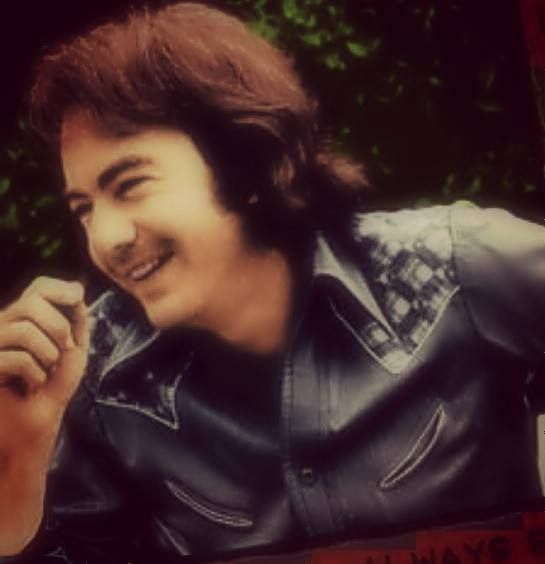
Girl, You’ll Be a Woman Soon captured the ache of young longing and helped announce Neil Diamond as far more than a promising songwriter in 1967.
Long before the arena triumphs, the sequined shirts, and the unmistakable authority of his later years, Neil Diamond had to prove he could connect as a recording artist in his own right. That is part of what makes Girl, You’ll Be a Woman Soon such an important record in his story. Released in 1967 and included on the album Just for You, the single became one of Diamond’s earliest major breakthroughs, climbing into the Billboard Hot 100 Top 10 at No. 10. For listeners hearing it at the time, this was not just another young man singing about romance. It was the sound of a writer with an old soul finding a voice that carried urgency, tenderness, and just a trace of danger.
The timing mattered. By 1967, popular music was moving quickly, and artists had to bring more than a catchy melody to stand out. Neil Diamond already had songwriting credentials, but Girl, You’ll Be a Woman Soon gave him something even more valuable: identity. It was dramatic without being theatrical, intimate without sounding fragile. His voice, still youthful yet already marked by that grainy emotional pull, gave the song a seriousness that lifted it above ordinary teen-pop fare. It sounded as if the singer understood that growing up was not a simple celebration. It was awkward, impatient, hopeful, and morally complicated all at once.
Lyrically, the song turns on a delicate emotional balance. On the surface, it is a plea from a young man speaking to a girl on the threshold of adulthood. But the reason the song has lasted is that it carries more than surface romance. There is longing in it, yes, but also social pressure, judgment from others, and a sense that love can feel both innocent and accused at the same time. The line of thought running through Girl, You’ll Be a Woman Soon is not only about desire. It is about waiting for the world to stop telling two young people how they ought to feel. That tension gave the record its charge in 1967, and it still gives the song its unease and emotional depth today.
Its arrangement deserves credit too. Like many of Diamond’s early recordings for Bang Records, the production is concise and radio-minded, yet it leaves room for atmosphere. The rhythm moves with a steady insistence, while the vocal phrasing does the real storytelling. Neil Diamond knew how to lean into a word just enough to make it sound confessional. He did not oversing the song. He inhabited it. That distinction mattered. Even in his early period, he had a way of sounding intensely personal while still aiming directly at the back row.
The song’s appearance on Just for You helped define that album’s emotional texture as well. Released during the same fertile early stretch of his career, the record presented Diamond not merely as a hitmaker but as an artist building a recognizable emotional world. Just for You contained the seeds of the storyteller he would become: direct, melodic, vulnerable, and always slightly restless. In that setting, Girl, You’ll Be a Woman Soon did more than supply chart success. It helped establish the emotional language that would carry through much of his later work.
There is also something revealing about the song’s place in Diamond’s career timeline. When people think of Neil Diamond, they often jump to the towering anthems and grand crowd-pleasers that came later. But this early hit reminds us that his foundation was built on narrative feeling. Before he became a symbol of showmanship, he was already skilled at portraying uncertainty, yearning, and emotional friction. Girl, You’ll Be a Woman Soon showed that he understood how to make a private feeling sound public and memorable.
In retrospect, the record feels like a doorway. It belongs to that special class of early hits that reveal an artist before the full weight of legend settles in. The song reached the public as a contemporary single in 1967, yet it also hinted at the deeper interpretive power Diamond would bring to his best material over the decades. Its success on the Hot 100 proved he could compete on the charts. More importantly, it proved that his voice carried emotional authority.
That may be why the song still lingers. Beneath its polished 1960s surface, it speaks to a universal and uneasy passage: the moment when innocence begins to fade, but certainty has not yet arrived. Neil Diamond turned that fragile threshold into a pop single, and in doing so, he gave his early career one of its defining statements. For many artists, a first major hit is simply a career event. For Diamond, Girl, You’ll Be a Woman Soon was a declaration that the voice behind the song was built to last.
