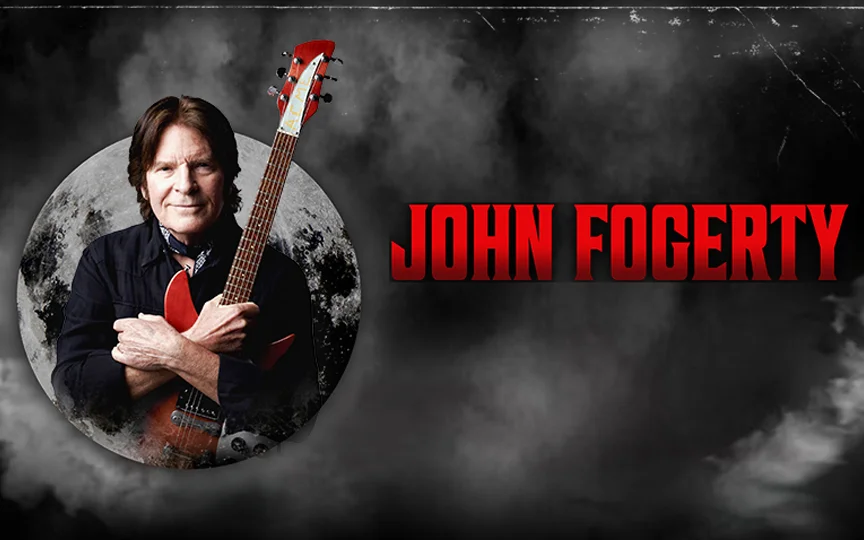
In Longshot, John Fogerty sounds like a man still willing to bet on himself, turning a late-career album track into a hard-earned statement of grit, pride, and endurance.
When John Fogerty released Revival in 2007, the larger story was already compelling: one of rock’s most unmistakable voices had returned with an album full of muscle, conviction, and a refusal to coast on old glory. The record reached No. 80 on the UK Albums Chart and also made a strong showing in America, proving there was still a real audience for Fogerty’s brand of direct, unvarnished rock. Yet among the better-known songs on Revival, Longshot stands out as one of the album’s most revealing pieces. It was not the big radio hook, not the headline single, and perhaps that is exactly why it matters so much. It feels less like a commercial move than a personal declaration.
At its heart, Longshot is about the person nobody is supposed to count on — the one seen as unlikely, underestimated, maybe even out of place — who keeps moving anyway. That idea had always suited Fogerty. By 2007, he had long since secured his place in American music history through Creedence Clearwater Revival and a strong solo career, but legacy can be a burden as much as a blessing. Once an artist becomes a legend, people often stop listening for the living, breathing present tense. They listen for memories. Longshot pushes back against that. It does not ask for reverence. It asks to be heard now.
Musically, the song carries the qualities that made Fogerty essential in the first place: a driving rhythm, sharp guitar attack, and that weathered, urgent voice which still knows how to sound both tough and human at once. There is no unnecessary decoration in Longshot. It moves with purpose. The groove has that familiar Fogerty pressure — a steady forward push that suggests motion, stubbornness, and plain old survival. Even late in his career, he understood something many artists lose: rock and roll does not need to be complicated to feel profound. Sometimes the power is in the directness, in a voice that sounds as though it has lived through every word it is singing.
That is where the deeper meaning of Longshot begins to emerge. On paper, the title suggests slim odds and difficult hopes. In performance, the song becomes something richer — a meditation on persistence. Fogerty does not sing like a dreamer waiting for rescue. He sings like somebody who knows the odds, has felt the sting of disappointment, and still refuses to surrender his sense of self. That emotional stance gives the song its weight. It is hopeful, yes, but not in a soft or naïve way. This is hope with gravel in its boots.
There is also a quiet autobiographical shadow hanging over the song, even if it is not written as a literal memoir. It is impossible to hear John Fogerty singing about long odds without thinking of the twists in his own artistic life: battles over business, years of frustration, periods when the past seemed to follow him everywhere, and the complicated task of carrying a legendary catalogue without becoming trapped inside it. Longshot does not retell those episodes directly, but it absorbs their emotional truth. That is what makes it resonate. Fogerty sounds like a man who understands what it means to be doubted, misunderstood, and still standing.
In the broader context of Revival, the song helps define what made that album more than a routine comeback statement. Revival was not merely a nostalgic exercise, nor was it a polite late-career set content to revisit old formulas. The album had bite. It had political tension, personal fire, and a rough-edged confidence that felt earned rather than staged. Longshot fits beautifully into that design because it captures Fogerty’s solo legacy at its most human. Here was an artist who no longer needed to prove he could write or sing or roar through a guitar-driven track — and yet he still sounded as if the stakes mattered.
That may be the lasting beauty of Longshot. It reminds us that the most affecting songs in an artist’s later years are often not the ones that arrive with the loudest fanfare. Sometimes they are the ones buried just a little deeper in the album, waiting for listeners to catch up. The song does not depend on myth. It does not lean entirely on the swamp-rock aura of the past, even though Fogerty’s style is unmistakably present in every chord and vocal inflection. Instead, it speaks in the language of resilience, and that language tends to age well.
For listeners returning to Revival now, Longshot can feel almost more moving than it did in 2007. Time has a way of clarifying certain songs. What once seemed like a sturdy album track begins to sound like a quiet thesis statement: that dignity is often found in continuing, that belief is most powerful when it survives disappointment, and that some artists are at their finest when they sing not from youthful certainty but from experience. John Fogerty had already written some of the defining American songs of his era long before Longshot arrived. But this track showed something just as valuable — that he could still take the old rock-and-roll engine, fill it with lived-in truth, and make it run on pure conviction.
In that sense, Longshot is more than a song title. It is almost a self-portrait in motion: wary, determined, unsentimental, and still pushing forward. That spirit is the beating heart of Revival, and it is why the song remains such a rewarding stop in Fogerty’s long and singular journey.
