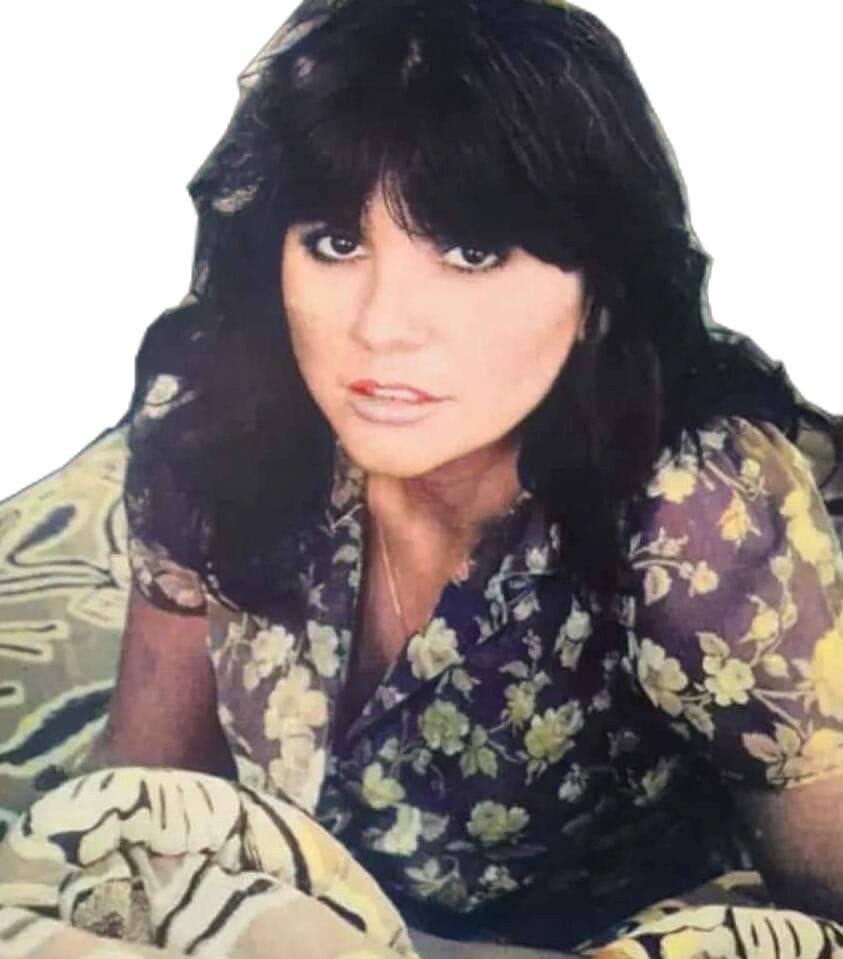
On What’s New, Linda Ronstadt did not simply borrow the old standards songbook; she stepped into its shadows and let desire sound dignified, wounded, and close.
When Linda Ronstadt released What’s New in 1983, her interpretation of I Don’t Stand a Ghost of a Chance with You became part of one of the most unexpected turns in American pop music of that decade. The album paired Ronstadt, already known for rock, country-rock, folk-pop, and radio hits, with the refined orchestral language of arranger and conductor Nelson Riddle. Produced by Peter Asher and released on Asylum Records, What’s New did more than revisit pre-rock popular song. It placed a contemporary star in direct conversation with the standards era at a time when the mainstream music world was being pulled toward synthesizers, video imagery, and sharper pop surfaces.
I Don’t Stand a Ghost of a Chance with You came from a much earlier world. Written in 1932, with music by Victor Young and lyrics credited to Ned Washington and Bing Crosby, the song had already lived many lives before Ronstadt reached it. It belonged to the great American tradition of romantic resignation: not the loud collapse of love, but the quiet knowledge that hope has almost no room left. The title itself is elegant and devastating. It does not say the singer has no chance. It says even a ghost of a chance is beyond reach. That small turn of phrase gives the song its entire emotional weather.
Ronstadt’s gift on What’s New was that she did not treat that old language as museum glass. She sang it as if the feeling were still happening in the room. By 1983, listeners knew her voice could soar, burn, and command. She had carried songs like Blue Bayou, You’re No Good, and Desperado into the center of popular memory with a sound that could be both powerful and exposed. But on I Don’t Stand a Ghost of a Chance with You, she makes a different kind of choice. She does not conquer the song. She yields to it.
That restraint is what gives the performance its weight. A lesser reading might lean too heavily into sadness, making every phrase underline the obvious. Ronstadt understands that the lyric is strongest when it is allowed to breathe. She lets the melody move with an almost conversational grace, as though the confession has been rehearsed in silence many times before finally being spoken. The phrasing carries the discipline of the standards tradition, but the emotional grain is unmistakably hers. She sounds neither like a cabaret revivalist nor a rock singer playing dress-up. She sounds like an artist discovering that another era’s musical vocabulary can hold feelings she already knew.
Nelson Riddle’s role is crucial. His arrangements had helped shape some of the most sophisticated vocal pop recordings of the mid-twentieth century, including landmark work with singers such as Frank Sinatra and Nat King Cole. On What’s New, he gives Ronstadt a setting that feels spacious rather than ornamental. The orchestra does not smother her. It surrounds her with muted color, soft tension, and a sense of late-night composure. The strings and winds seem to move around the voice like memory itself: present, fragrant, never fully still.
This is where Ronstadt’s version finds its own identity. The song’s older recordings often carry the polish and atmosphere of their time, shaped by the vocal manners and recording aesthetics of the 1930s, 1940s, or 1950s. Ronstadt approaches it from the far side of rock and country-pop, bringing a clearer, more immediate vocal presence. Her diction is precise, but not mannered. Her tone is luminous, but not untouchable. There is an ache in the performance that comes not from theatrical sorrow, but from the sense of someone trying to remain composed while admitting defeat.
The broader daring of What’s New can be easy to miss now, because the album’s success helped make the move seem natural in hindsight. At the time, it was a risk. Ronstadt was not merely recording a token standard as a novelty. She devoted an entire album to songs from an earlier popular tradition, beginning a trio of orchestral standards projects with Riddle that continued with Lush Life and For Sentimental Reasons. In doing so, she opened a door for many listeners who had grown up with rock-era radio but had not necessarily lived inside the world of classic American popular song.
Yet I Don’t Stand a Ghost of a Chance with You is not important only because of that career turn. It matters because it shows how a singer can honor the past without disappearing into it. Ronstadt does not imitate the older masters who handled the song before her. She listens to the song’s architecture, then finds a place for her own breath within it. The melody becomes less like a relic and more like a private room whose door has been left slightly open.
There is also something revealing in the way the performance handles longing. This is not the teenage heartbreak of early rock and roll, nor the narrative pain of country music, nor the grand torch-song collapse that standards can sometimes invite. It is more adult, more suspended. The singer knows the odds. She knows desire has outrun reality. Still, she sings. That tension between knowledge and feeling is what keeps the recording alive. The heart may understand the answer, but the voice asks anyway.
On What’s New, Ronstadt found a way to make the standards era feel less like an escape from modern life and more like a mirror held at a different angle. I Don’t Stand a Ghost of a Chance with You becomes a small, beautifully measured act of surrender. It is not the loudest moment on the album, and it does not need to be. Its power lies in the way it dims the room, slows the pulse, and reminds us that some songs survive because they leave space for each new singer to bring a fresh wound to an old sentence.
