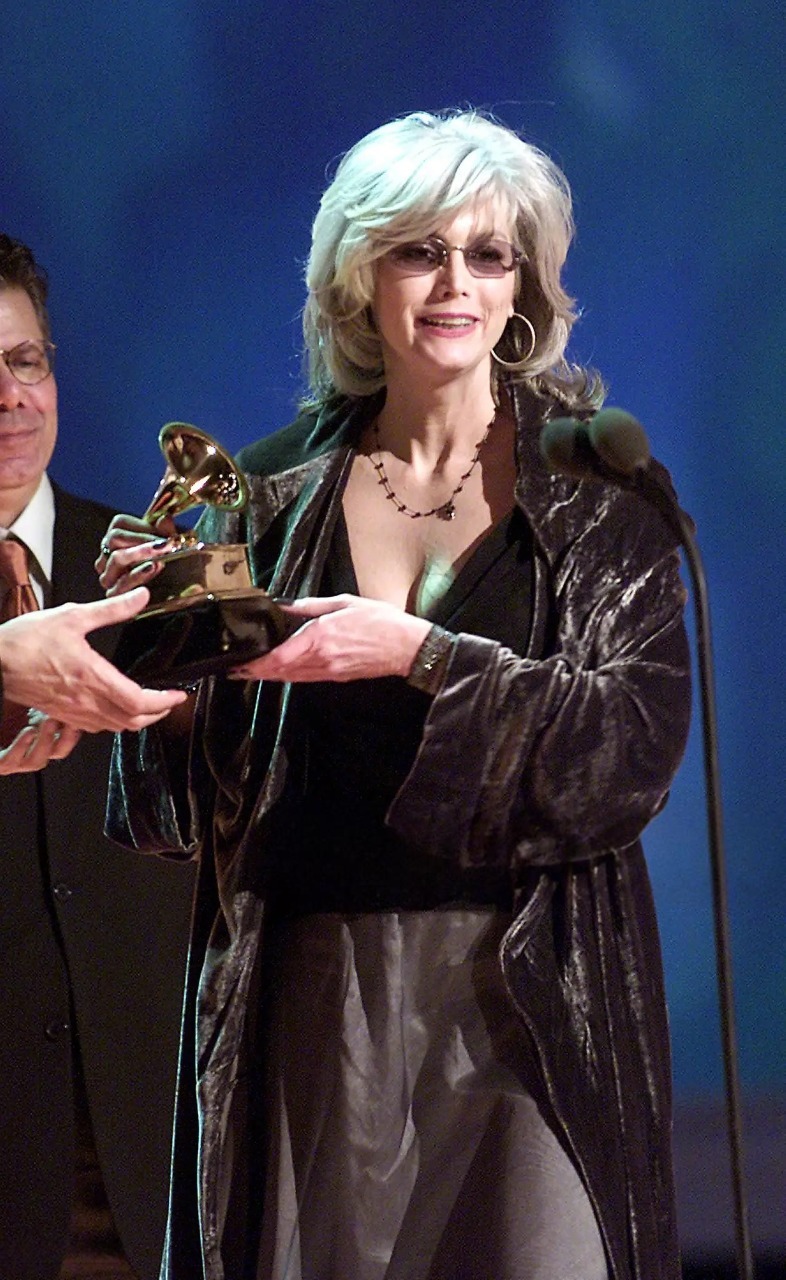
In the first bright rush of Guitar Town, Emmylou Harris turned a Steve Earle road song into the sound of the Ryman waking up.
On the 1992 live album At the Ryman, Emmylou Harris and The Nash Ramblers did not begin their acoustic set with ceremony or nostalgia. They began with motion. Their opening cover of Steve Earle’s Guitar Town arrives fast, lean, and full of road dust, taking the title track from Earle’s 1986 debut album and sending it across the wooden floor of Nashville’s Ryman Auditorium with a new kind of urgency. Recorded live in 1991 and released the following year, the performance stands at the front door of an album that became one of Harris’s most beloved live statements, and one of the recordings that helped remind listeners what that room could still hold.
That setting matters. At the Ryman was not just another concert album captured in a famous hall. The Ryman, once home to the Grand Ole Opry, had spent years in a quieter, more uncertain chapter before its major restoration in the 1990s. When Harris brought The Nash Ramblers into that space, the music did not treat the building like a museum piece. It treated it like a living instrument. The acoustics, the intimacy, the creak of history beneath the songs — all of it shaped the way the album felt. And by choosing Guitar Town as the opening spark, Harris made clear that this would not be a soft-focus trip through country memory. It would be alive, alert, and moving forward.
Steve Earle’s original Guitar Town had already carried the swagger of a working musician pushing down the highway, equal parts country grit and rock-and-roll restlessness. In Harris’s hands, the song keeps that engine running, but the texture changes. Instead of trying to copy Earle’s rough-edged delivery, she lets her voice ride above the rhythm with clarity and ease, turning the lyric’s movement into something almost communal. It is still a traveling song, but now it sounds less like one man chasing the next town and more like a band locking into the shared joy of arrival.
The brilliance of The Nash Ramblers is how much force they generate without losing air around the notes. The group Harris assembled for this period — musicians associated with bluegrass, country, folk, and roots traditions — gave her a setting that was both disciplined and loose-limbed. On Guitar Town, the acoustic drive has the snap of a road case being shut and the brightness of strings catching the room. The performance feels carefully played but never stiff. Every instrument seems to know its place, and the spaces between them are just as important as the rush.
As an opener, the song works almost like a mission statement. Harris had long been admired for her ability to gather songs from different corners of American music and make them feel emotionally related. Her catalog had already moved through country, folk, rock, gospel, and traditional material with rare grace. But At the Ryman sharpened that gift in a special way. Here, surrounded by a band that could lean into old forms without sounding trapped by them, she showed how a contemporary Steve Earle song could stand comfortably inside a historic room and still sound completely present.
There is also something quietly bold about beginning a live album this way. The Ryman carried the weight of country music memory, and Harris could easily have opened with a ballad, a standard, or a reverent nod to the past. Instead, she chose speed, wit, and travel. Guitar Town comes bounding out first, as if to say that tradition is not preserved by standing still. It survives when musicians keep testing it against the present tense — new voices, new songs, old rooms, fresh nerves.
The album would later earn broad recognition, including a Grammy Award for Best Country Performance by a Duo or Group with Vocal, but the lasting power of At the Ryman is less about trophies than atmosphere. You hear a singer in command of her taste, a band built for listening as much as playing, and a room being reintroduced to the world through sound. The opening Guitar Town is the invitation: quick footsteps on a wooden stage, bright strings in the air, and Emmylou Harris proving that a cover song can become a doorway when it is placed in exactly the right hands.
More than three decades later, that performance still feels fresh because it refuses to behave like a relic. It does not ask the listener to admire the past from a distance. It pulls the past into motion. The song rolls forward, the room answers back, and for a few minutes, the Ryman feels less like a landmark than a starting line.
