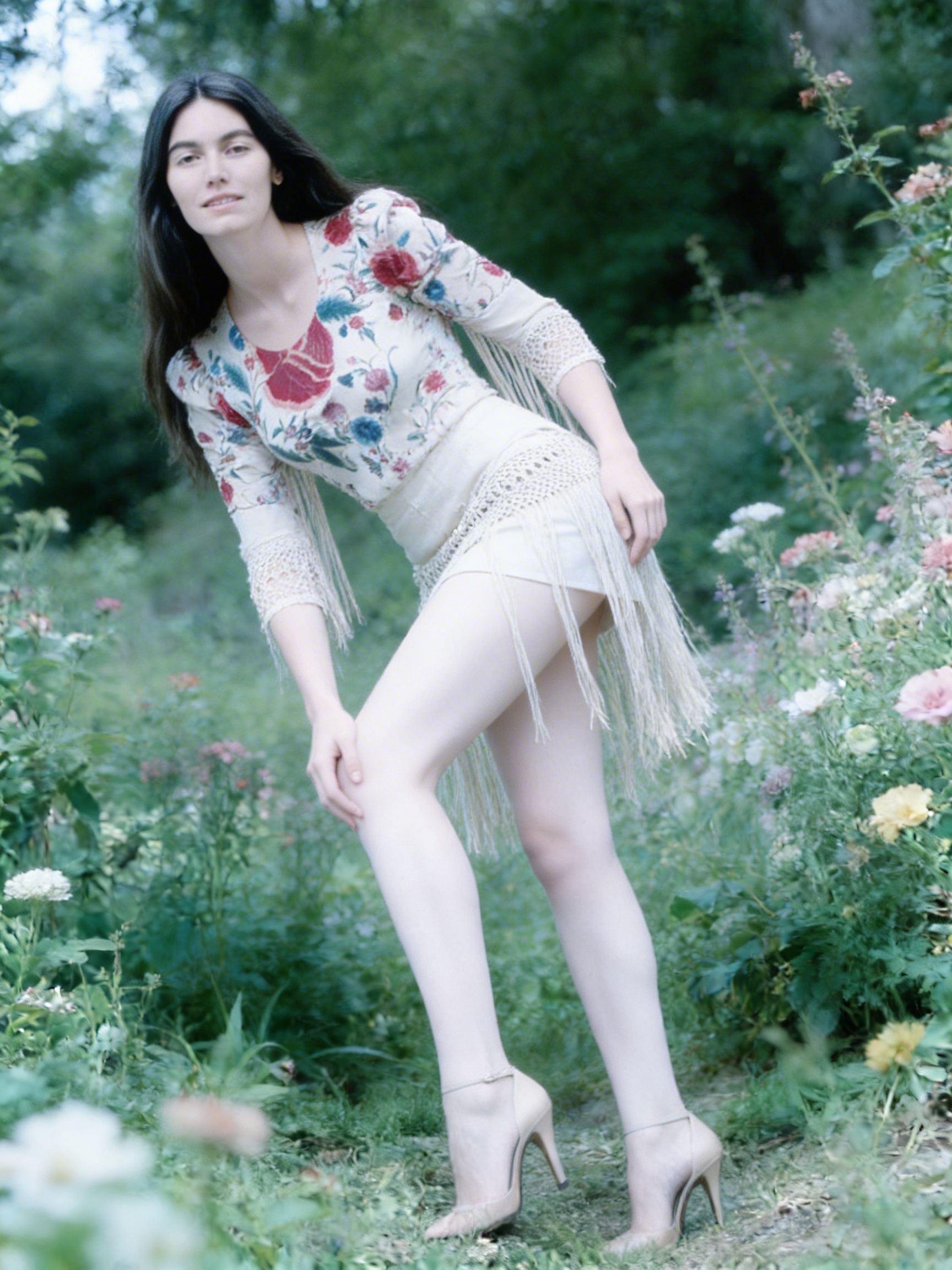
With Rhythm Guitar, Emmylou Harris gave The Ballad of Sally Rose its forward motion: a country-opera heartbeat built on travel, devotion, and self-invention.
Released in 1985, The Ballad of Sally Rose was one of the boldest turns in Emmylou Harris’s career: a country-opera concept album written with Paul Kennerley, centered on a fictional singer named Sally Rose, and shaped by the emotional weather of life on the road. Within that album, Rhythm Guitar arrives as more than a track title. It is a role, a pulse, a way of surviving inside a story that keeps moving even when the heart wants to stop and look back.
By 1985, Harris had already become one of country music’s most gifted interpreters. She could take a song by another writer and make it feel newly inhabited, as if the melody had been waiting for her particular balance of grace and ache. But The Ballad of Sally Rose asked something different of her. Rather than simply gather songs around a mood, she built an arc: a young woman drawn into music, love, ambition, loss, and the strange afterlife of memory. The album is often heard as a fictionalized echo of Harris’s connection to Gram Parsons, but its power comes from the way it refuses to be only biography. It turns private history into myth, road dust into theater, and country music into a form of narrative momentum.
Rhythm Guitar is crucial to that momentum. Placed early in the album’s movement, it helps shift the story from introduction into motion. A rhythm guitar is not usually the instrument that claims the spotlight. It does not wail like a lead break or stand in front of the band demanding attention. It keeps the song upright. It marks time. It pushes from underneath. In the world of Sally Rose, that image matters. The track suggests the working musician’s truth: sometimes the person keeping everything alive is not the one framed by the brightest light, but the one driving the beat night after night.
That idea fits Harris beautifully. Her singing has always understood restraint. She rarely needed to overpower a song; she listened her way into it. On The Ballad of Sally Rose, that listening becomes dramatic. The album does not depend on grand gestures to earn its feeling. It moves through details: a name, a line of travel, a bandstand, a memory that keeps changing shape as the miles accumulate. Rhythm Guitar catches the restless energy of that design. It sounds like the beginning of a journey that already knows there will be a cost.
The phrase itself also carries a quiet double meaning. To play rhythm guitar is to support the song, but in this album’s emotional language, it also means accepting a place inside someone else’s orbit. Sally Rose is not simply chasing fame. She is learning how to belong to a band, to a sound, to a man’s shadow, and eventually to her own hard-earned identity. The drive in Rhythm Guitar is not only musical; it is psychological. It is the sound of someone trying to keep pace with desire before she fully understands where that desire is leading.
That is one reason The Ballad of Sally Rose remains such a fascinating album era in Harris’s catalog. It did not behave like a conventional collection of country singles. It asked listeners to follow a story across songs, to hear the album as a journey rather than a sequence of separate moments. Kennerley’s background with narrative song cycles helped give the project its structure, while Harris brought the emotional authority that kept the concept from becoming stiff or theatrical in the wrong way. Her voice made Sally Rose human: ambitious, vulnerable, observant, sometimes swept along by forces larger than she expected.
In that setting, Rhythm Guitar becomes the engine room. It gives the album the sensation of forward travel, the feeling of wheels turning beneath the lyric. The song’s energy keeps the country-opera frame from becoming too solemn. It reminds us that this is not merely an album about grief or memory; it is also about the exhilarating danger of movement. Before loss becomes legend, there is speed. Before reflection, there is the rush of joining the band, learning the chords, and believing the next town might change everything.
Listening back, the track feels like a small but essential key to the whole project. It captures Harris at a moment when she was willing to risk something unusual: not just a new sound, but a new kind of authorship. Rhythm Guitar does not need to stand apart from The Ballad of Sally Rose to matter. Its strength is that it belongs so deeply to the album’s current. It keeps the story breathing. It keeps Sally Rose moving. And beneath its drive is the deeper truth of the record: sometimes the rhythm is what carries a person through the parts of life they cannot yet name.
