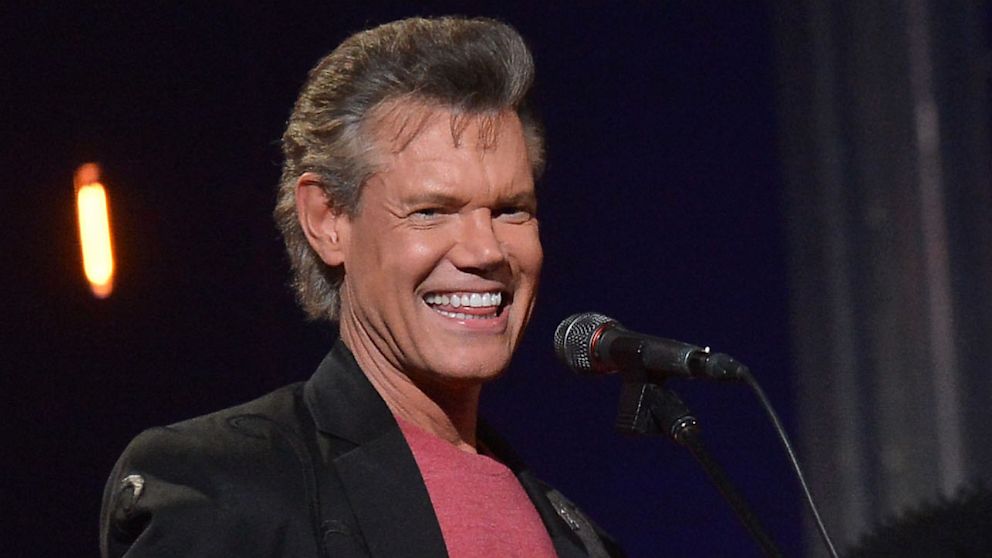
With Honky Tonk Moon, Randy Travis turned a barroom image into something gentle, precise, and unmistakably his.
Honky Tonk Moon arrived in 1988 as the lead single from Randy Travis’s album Old 8×10, and it quickly became another No. 1 country hit in a run that helped define one of the most important voices of late-1980s country music. Written by Dennis O’Rourke and produced in the polished yet roots-conscious style associated with Travis and producer Kyle Lehning, the song reached the top of the country singles chart and opened the Old 8×10 era with quiet confidence rather than spectacle.
That matters, because Travis was already more than a promising new singer by the time this record appeared. After Storms of Life in 1986 and Always & Forever in 1987, he had become a central figure in country’s neo-traditional movement, bringing baritone depth, clear phrasing, and old-school restraint back into heavy radio rotation. He did not sound like he was chasing a trend. He sounded like he had stepped out of a familiar place that country music had briefly forgotten: a room with steel guitar, clean melody, unhurried storytelling, and the belief that a singer could be powerful without raising his voice.
Honky Tonk Moon captures that belief beautifully. The title suggests neon, sawdust, late hours, and the kind of place where country songs often go to break down. But the recording does not lean into ruin. Instead, it finds warmth beneath the sign lights. The honky-tonk setting becomes less a warning than a backdrop for affection, and the moon above it feels almost protective. In Travis’s hands, the song carries the easy swing of a dance floor and the modest glow of a promise made in public but meant privately.
Musically, the record understands the value of space. The arrangement gives the voice room to settle into the groove, with country instrumentation supporting rather than crowding the story. There is a relaxed two-step feel in the way the song moves, but the performance never becomes casual. Travis’s baritone gives every line a shape: low, steady, rounded at the edges, and free of unnecessary decoration. He had a rare gift for sounding both formal and intimate, as if each word had been measured before it was sung but still arrived with natural feeling.
That is why Honky Tonk Moon belongs in any serious conversation about Travis’s signature recordings. It may not carry the wedding-song permanence of Forever and Ever, Amen, and it may not have the darker emotional pull of some of his earlier heartbreak material, but it reveals a core part of his artistry. It shows the singer as a keeper of balance: tradition without stiffness, romance without sugar, confidence without swagger. A lesser performance might have turned the song into a simple country radio charmer. Travis makes it feel lived-in.
The album Old 8×10 would go on to deepen his catalog with songs that explored devotion, regret, memory, and plainspoken truth. As its opening single, Honky Tonk Moon set the tone by reminding listeners that country music did not need to choose between commercial polish and emotional honesty. The record sounded clean enough for late-1980s radio, but its bones were old-fashioned in the best sense: melody first, story close behind, and a singer who trusted restraint as a form of strength.
Part of the song’s lasting appeal is how gently it complicates the familiar honky-tonk image. Country tradition often treats the barroom as a place where love goes wrong, where loneliness finds a jukebox, where the night gets heavier with every chorus. Here, the same setting is softened. The moon is not only watching over sorrow; it is watching over togetherness. That slight shift gives the record its personality. It feels like a country song that knows the old troubles but decides, for three minutes, to let happiness stand under the lights too.
Heard now, Honky Tonk Moon also reminds us how distinctive Travis sounded at his peak. Many singers can make a song bigger. Fewer can make it truer by keeping it contained. His performance does not plead for attention. It simply stands there, calm and certain, letting the melody do its work. That calmness became one of his signatures, and on this 1988 chart-topping single from Old 8×10, it turned a moonlit night at a honky-tonk into a small, shining statement of who Randy Travis was becoming.
