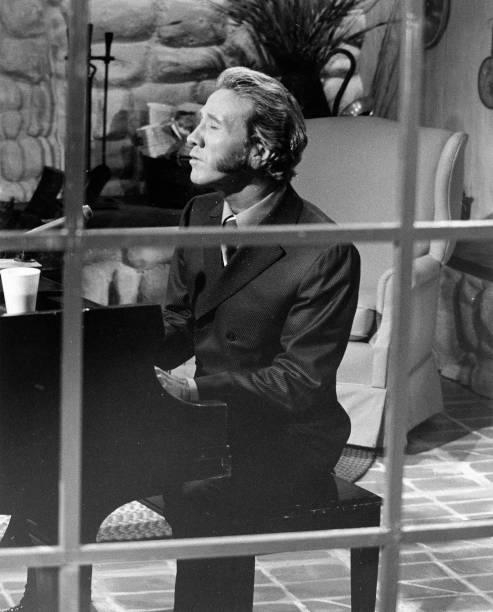
A Lone Voice in the Desert: The Haunting Elegy of Marty Robbins’ They’re Hanging Me Tonight
In the vast, rugged tapestry of country music, few voices echo with the haunting resonance of Marty Robbins. Released in 1959 as part of his seminal album, Gunfighter Ballads and Trail Songs, the song They’re Hanging Me Tonight stands as a stark testament to Robbins’ ability to weave narrative with melody, crafting stories that endure long after the final note has faded. Garnering critical acclaim and enduring popularity, the album reached number six on the Billboard charts, etching Robbins’ name into the annals of American music history.
Born in 1925, Marty Robbins emerged from Glendale, Arizona, embodying a life steeped in the frontier myths and dust-swept tales of the Old West. This cultural backdrop infused his music with an authenticity that resonated deeply with audiences seeking escapism and connection alike. By the time Robbins released Gunfighter Ballads and Trail Songs, he had already carved out a significant niche within the country genre. However, it was this album — and songs like They’re Hanging Me Tonight — that cemented his reputation as a master storyteller.
They’re Hanging Me Tonight is an aching lament narrated by a condemned man on the eve of his execution. The song unfolds as a poignant exploration of regret, love lost, and the inexorable hand of fate. It is based on a composition by composers James Low and Art Wolpert and adapted by Robbins into an evocative ballad that pierces the heart with its simplicity and emotional depth. The narrative voice is resigned yet reflective, capturing the desolate isolation of a man confronting his past decisions with brutal clarity.
The lyrics paint a vivid picture of betrayal and despair: the protagonist recounts his tragic love affair with Feleena — a character who recurs throughout Robbins’ work — and her unfaithfulness that ultimately leads him down a path of violence and ruin. The raw emotion is underscored by Robbins’ vocal delivery, which swings from subdued introspection to soaring passion, mirroring the tumultuous inner landscape of a man grappling with irreversible choices.
Musically, They’re Hanging Me Tonight embodies the quintessential elements of classic country balladry: its sparse instrumentation allows Robbins’ voice to remain front and center, while gentle guitar strums mimic the rhythm of a heartbeat steadily marching toward its inevitable conclusion. This stripped-down arrangement creates an intimate atmosphere, drawing listeners into the sorrowful contemplation at its core.
In terms of cultural impact, Robbins’ work on Gunfighter Ballads and Trail Songs revitalized interest in Western-themed narratives at a time when American culture was shifting rapidly. While rock ‘n’ roll dominated airwaves and youth culture began to redefine itself post-World War II, Robbins’ nostalgic evocations of cowboy ethos resonated as timeless tales amidst modern upheavals. His ability to capture universal themes — love, loss, justice — through specific historical lenses allowed these songs to transcend their period context.
They’re Hanging Me Tonight, alongside other tracks like El Paso, played a significant role in reinforcing this legacy. While never released as a single itself, its inclusion on an album that went Gold is testament to its enduring allure; it remains an essential piece for understanding both Robbins’ artistic vision and the broader evolution of narrative songwriting within country music.
Ultimately, what makes They’re Hanging Me Tonight resonate decades after its release is its unflinching examination of human frailty and redemption’s elusive promise. Marty Robbins crafted more than just a song; he created an emotional landscape where listeners confront their own shadows amidst haunting melodies. In doing so, he ensured that each performance was not merely an auditory experience but an emotional journey — one that continues to haunt listeners long after they have turned away from that lonesome gallows scene.
