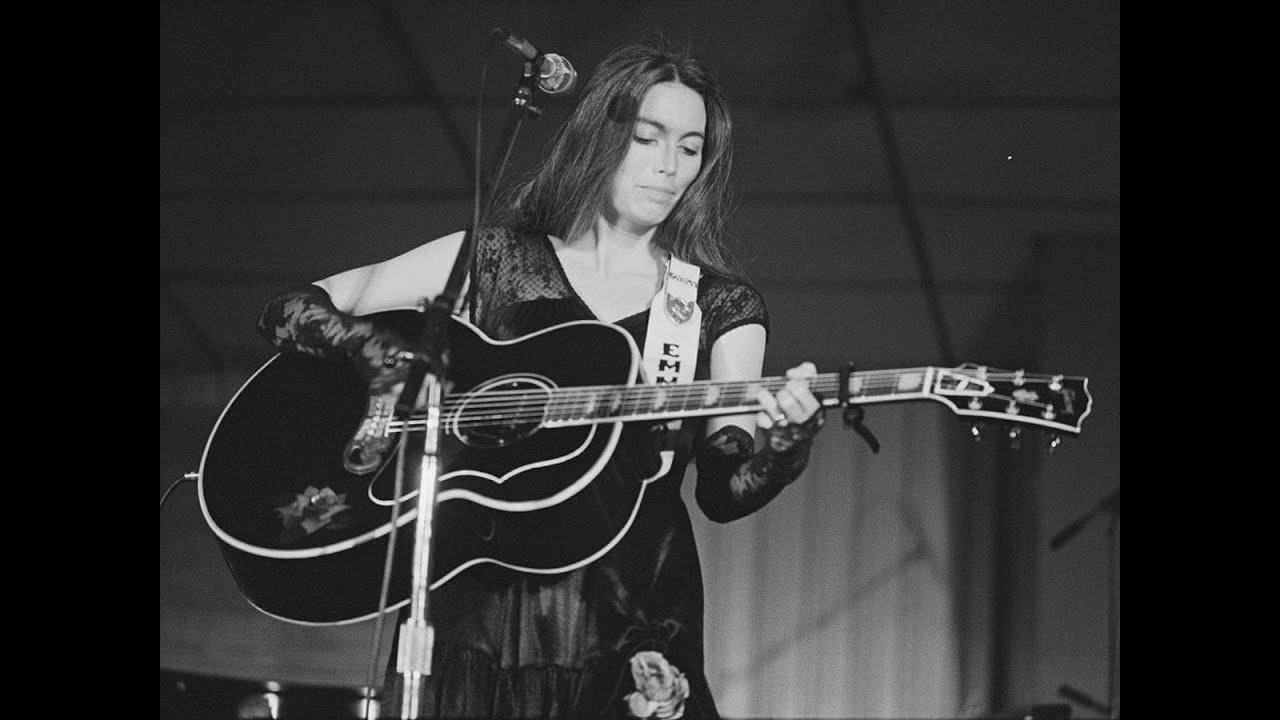
Evangeline was more than a title for Emmylou Harris in 1981; it was the river-running thread that bound her to Robbie Robertson, The Band, and a whole borderland world of memory, waiting, and wandering.
Released in 1981, Evangeline was one of the most unusual records in Emmylou Harris‘s early catalog. It was not a neatly self-contained studio statement built in one season from one set of sessions. Instead, it was assembled from recordings that had accumulated across different moments, collaborations, and unfinished album paths. Even so, the album connected strongly with listeners and reached No. 5 on Billboard’s Top Country Albums chart. Commercially, it was helped by the massive success of Mister Sandman, which became a No. 1 country hit. But emotionally and artistically, the title track Evangeline gave the album its deepest identity, and that identity leads directly back to Robbie Robertson.
That connection matters because Evangeline was never just another song tucked into the running order. Long before the 1981 album appeared, Harris had already stepped into Robertson’s world through The Last Waltz, the legendary farewell concert by The Band, recorded on Thanksgiving 1976 at Winterland Ballroom in San Francisco and later released as a film in 1978. Robertson wrote Evangeline, and Harris’s presence on that performance gave the song a grace and ache that made it unforgettable. So when her 1981 album took the same title, it felt less like a casual borrowing and more like a quiet declaration: this song, and the world inside it, belonged at the center of the record.
As a piece of writing, Robertson’s Evangeline is one of those songs that feels older than its copyright date. It moves like folklore. It carries the Mississippi, south Louisiana, riverboats, gamblers, and that old North American pull between love and leaving. The lyric tells of a woman waiting while the river and chance take her man away, and it does so with the kind of imagery that sounds half historical memory and half dream. Even the name Evangeline carries an older resonance, echoing Acadian and maritime history before drifting south toward Cajun country. That is part of what gives the song its borderland power. It does not belong to only one place. It lives between the Canadian Maritimes, Louisiana legend, Americana myth, and roots music storytelling. Robertson understood that kind of geography deeply, and Harris knew how to sing it without overplaying a single emotion.
What Emmylou Harris brought to Evangeline was not force, but atmosphere. Her voice never rushed the sadness in the song. She sang it as if she were standing inside the weather of it, not merely narrating it. That was always one of her rare gifts: she could make a lyric sound both intimate and inherited, as though she had found it and remembered it at the same time. In Evangeline, that quality is essential. The song is about longing, but it is also about distance, myth, region, and the way people become stories in the wake of the road or the river. Harris gave the song a human center. Robertson gave it the architecture; she gave it breath.
The history of the 1981 album only makes the title choice more revealing. Evangeline as an LP was built from a mix of sessions and previously circulating material, shaped into a cohesive experience by producer Brian Ahern. In lesser hands, such a project could have felt like a stopgap release, a record made from leftovers while waiting for the next fully unified studio chapter. But Harris and Ahern were too musical, and too attentive to emotional flow, to let it sound accidental. The album carries a reflective, almost twilight feeling, and the title track explains why. It sits at the crossroads of the entire record: between old and new, between collaboration and authorship, between country music and a wider roots tradition that stretches across borders and back roads.
That is why the Robbie Robertson connection is so important to the album’s history. His song gave the record a mythic spine. Without Evangeline, the album might still have been admired for its performances and its breadth. With it, the record gained a deeper narrative shadow. It suddenly felt less like a collection and more like a landscape. The title itself suggested motion, exile, return, waiting, and a woman whose story carries more than one region inside it. Harris had always been a traveler across musical boundaries, moving between country, folk, bluegrass, and rock with unusual elegance. A song like Evangeline fit her not because it was fashionable, but because it understood that American roots music is never tidy. It is always crossing rivers.
There is also something quietly moving about the way the song links Harris to The Band, and through them to a broader vision of roots music that was never narrow or museum-like. Robertson wrote from a place where history, character, and sound could mingle freely. Harris sang from a place of tenderness and discipline. Put the two together, and Evangeline becomes more than a collaboration. It becomes a meeting point between traditions. That is one reason the song still lingers. It does not ask to be remembered only as a fine album cut from 1981. It asks to be heard as part of a larger map of North American music, where stories travel from the Maritimes to Louisiana, from rock stages to country records, and from one artist’s vision into another artist’s voice.
In the end, Evangeline remains one of the most revealing titles in Emmylou Harris‘s catalog because it tells the truth about the album that bears its name. This was a record born in between things, gathered from scattered sessions, yet held together by feeling, by taste, and by a song whose roots were already deep. The album charted well, the single Mister Sandman drew wide attention, and the record has long been treasured by devoted listeners. But the title track still feels like its soul: a river song, a waiting song, and a reminder that some of the most lasting albums are not built from perfect plans, but from beautifully connected histories.
