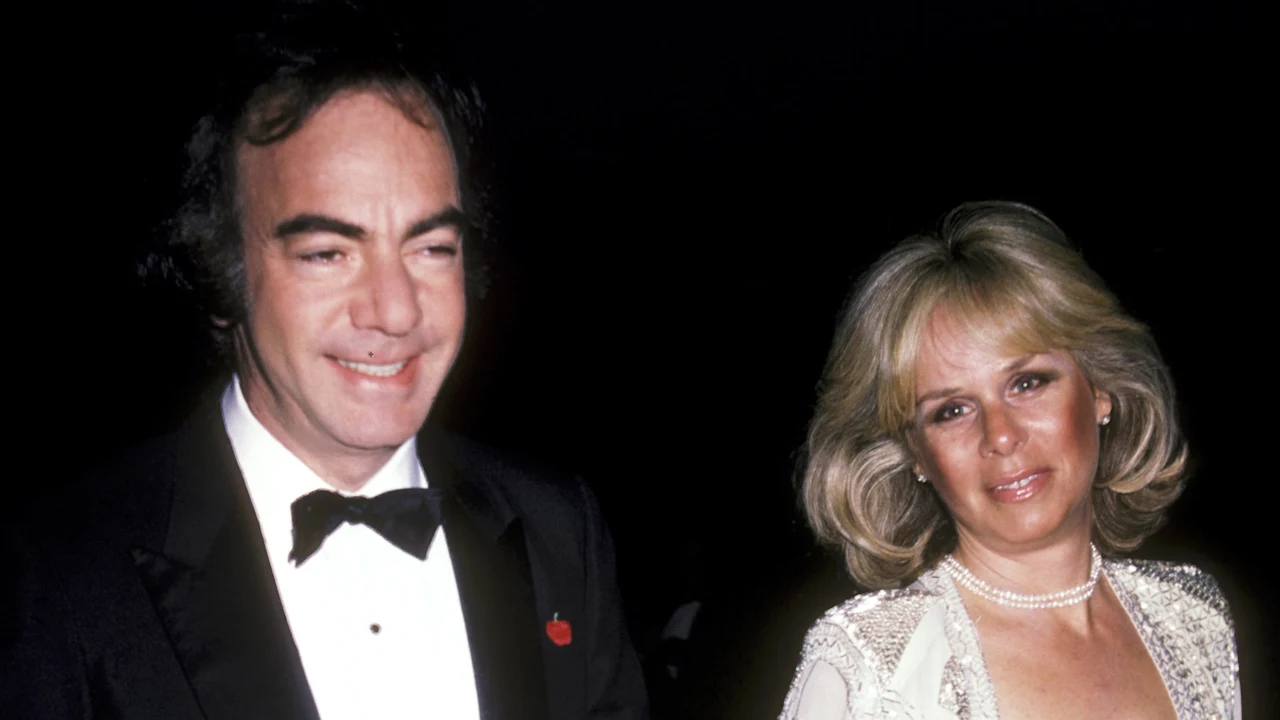
September Morn is one of Neil Diamond’s most graceful songs about time, memory, and the ache of recognizing love after life has already moved on.
Before The Jazz Singer pushed Neil Diamond into a bigger, more theatrical soundtrack spotlight, there was September Morn in 1979: warm, reflective, and quietly devastating. As the title track from his album September Morn, the song became a major adult pop success, reaching No. 1 on Billboard’s Adult Contemporary chart and climbing to No. 17 on the Billboard Hot 100. Those numbers matter because they show where Diamond stood at that exact moment. He was not fading, and he was not yet in his next phase. He was standing in a beautiful in-between place, still rooted in the emotional craftsmanship that had carried him through the 1970s, but already approaching a new era of wider, more cinematic appeal.
That is part of what makes September Morn feel so important in his catalog. It was not just another hit single. It was a statement of maturity. Long before pop music became obsessed with speed, irony, or spectacle, Neil Diamond understood how to sing directly to the complicated inner life of adults who had already lived enough to know that memory can be sweeter and sadder than youth itself. In September Morn, he does not chase drama. He lets time do the work.
The song was written by Neil Diamond with Gilbert Bécaud and lyricists Alan Bergman and Marilyn Bergman, and you can feel that blend of melodic elegance and lyrical restraint in every line. The story is simple on the surface: two former lovers meet again after many years, and for a brief moment the past seems to return with startling clarity. Yet the song never turns melodramatic. It understands something deeper and more difficult. Sometimes the most powerful reunion is not about reclaiming what was lost. Sometimes it is simply about recognizing what that love once meant, and what its memory still means now.
That is why the title matters so much. September is not spring. It is not a season of beginning. It is the edge of autumn, the soft light before the year turns colder, the hour when beauty feels inseparable from passing time. And morn, or morning, suggests a new day. Put those two words together and you get the emotional paradox at the center of the song: a new beginning colored by the knowledge that life does not move backward. The lovers can remember. They can feel. They can stand in the glow of recognition. But they cannot pretend they are untouched by the years.
Musically, September Morn is one of Diamond’s most tasteful recordings. The arrangement is gentle, polished, and spacious, allowing his voice to carry the emotional weight without strain. There is a softness in the piano and orchestration, but also a quiet certainty. Neil Diamond does not oversing it. He leans into the lyric with the calm of a man who knows that regret, tenderness, and gratitude often arrive in the same breath. That control is one reason the performance has lasted. The song trusts understatement, and understatement ages well.
Placed in the timeline of Diamond’s career, the record becomes even more fascinating. By 1979, he was already a major American recording artist with a remarkable run behind him, from Sweet Caroline to Song Sung Blue and You Don’t Bring Me Flowers. But September Morn came just before the highly visible The Jazz Singer period, which would soon bring songs such as Love on the Rocks, Hello Again, and America to a broader, more dramatic kind of fame. In that sense, September Morn feels like the last deep breath before the curtain rose on a new act. It preserves the intimate, reflective Neil Diamond in nearly perfect form.
The emotional meaning of the song has only grown with time. When listeners return to it now, they are not just hearing a late-1970s ballad that topped the adult contemporary chart. They are hearing a song about recognition itself: the recognition of a face, of a former self, of choices made long ago, of seasons that cannot be held. Very few popular songs handle that territory with such grace. It is not bitter, and it is not naïve. It does not ask us to believe that love always survives unchanged. It asks us to consider that some feelings remain true even after the life around them has changed completely.
That is why September Morn still feels so personal, even after decades of radio play. It belongs to that rare class of Neil Diamond songs that seem to gather more meaning as the years pass. Heard in 1979, it was a polished adult pop hit. Heard now, it sounds like a handwritten letter from a vanished hour: dignified, wistful, and full of emotional intelligence. Before the brighter glare of The Jazz Singer, this title track stood at the threshold and reminded everyone just how masterfully Neil Diamond could sing about the heart when it had already learned a few things about time.
