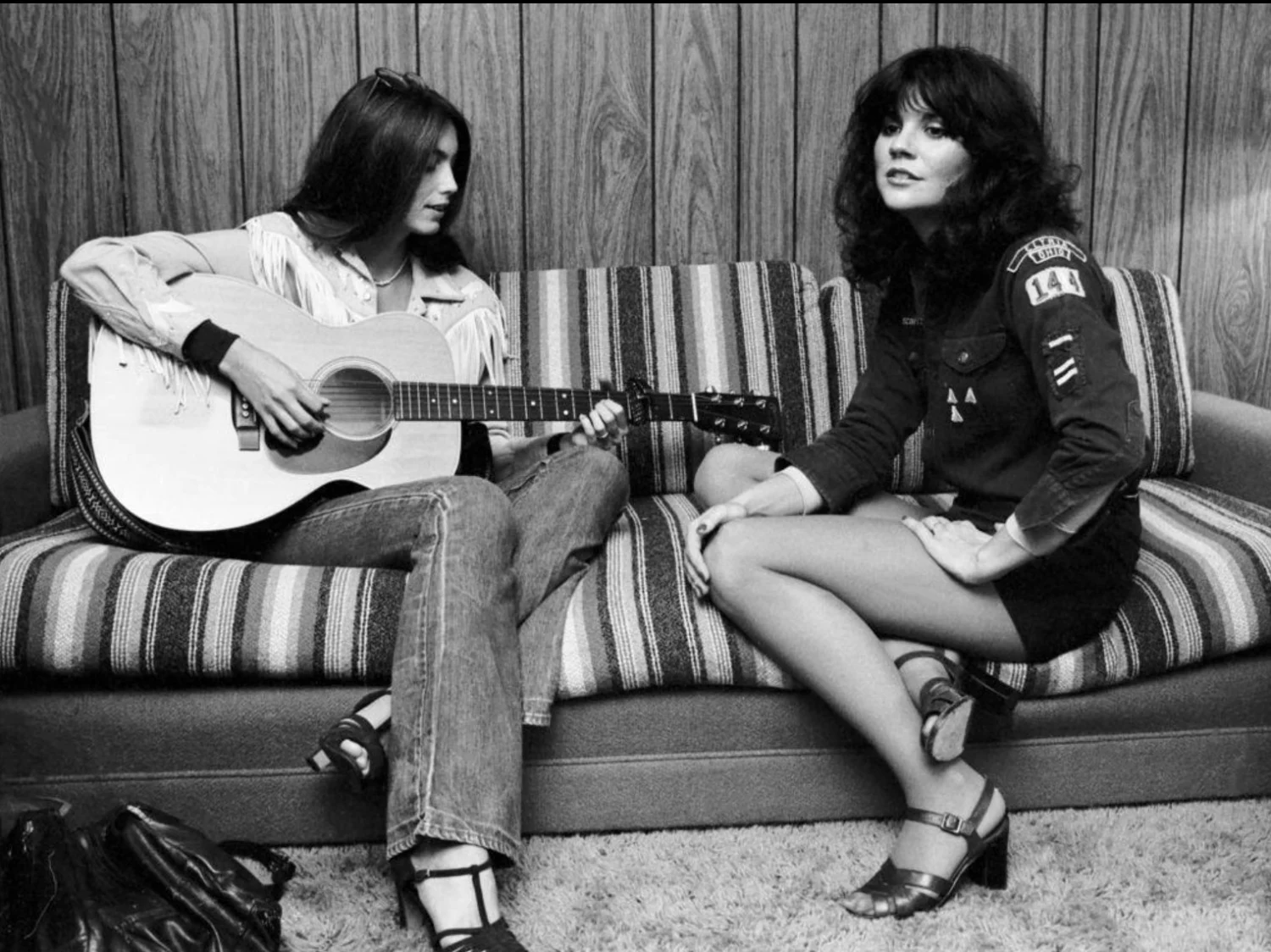
On Don’t Cry Now, Linda Ronstadt transforms “Desperado” from western allegory into a torch song about pride, distance, and the sorrow of turning away from love.
When Linda Ronstadt recorded “Desperado” for her 1973 album Don’t Cry Now, she was not reviving an old classic. She was stepping into a song that was still brand new, still finding its shape in the culture, and still far from the permanent place it would later occupy in American popular music. That timing matters. The original Eagles recording, written by Don Henley and Glenn Frey for the band’s 1973 album Desperado, was not a major hit single on the Billboard Hot 100. Its reputation grew gradually, through albums, radio, and later interpretations. Ronstadt’s reading arrived early enough to help reveal what kind of song it really was.
That same year, Don’t Cry Now rose to No. 45 on the Billboard 200, a respectable showing that hinted at how close Ronstadt was to a much larger breakthrough. In retrospect, the album feels like a crucial bridge. It came before the full commercial explosion of Heart Like a Wheel, yet it already carried the emotional authority that would make her one of the great interpreters of her era. Her version of “Desperado” is one of the clearest signs of that gift.
There was also a personal current running beneath the recording. Don Henley and Glenn Frey had recently passed through Linda Ronstadt’s musical orbit before forming the Eagles, and that connection gives her performance an added sense of closeness. But what makes the track endure is not insider history. It is the way Ronstadt hears the song. The Eagles gave “Desperado” a stately, reflective gravity, leaning into the ballad’s frontier imagery and wounded self-knowledge. Ronstadt, by contrast, brings it inward. She does not sing it as a mythic portrait of some lonely drifter out on the horizon. She sings it as if she has stepped into the same room as the wounded soul in the lyric and is trying, one last time, to reach him.
That is why calling her version a torch-song reinterpretation feels exactly right. A true torch song is not merely sad. It burns with restraint. It carries longing, disappointment, tenderness, and a trace of dignity that refuses to collapse into self-pity. Ronstadt brings all of that to “Desperado”. She softens the distance built into the song’s western metaphor and uncovers the wounded heart beneath it. In her hands, the lyric “you better let somebody love you” stops sounding like advice offered across a canyon. It sounds like a plea made in painful proximity.
Her voice is the key to that shift. In 1973, Linda Ronstadt had already developed the remarkable combination that would define so much of her best work: control without coldness, power without theatrical excess, and vulnerability without fragility. On “Desperado”, she resists the temptation to oversing. She lets the ache gather gradually. The emotional force comes not from showy display, but from phrasing, from the slight hesitations, from the way certain words seem to carry history inside them. She sounds as if she understands the cost of pride, not in an abstract way, but in the lived, human way that makes listeners remember people they once knew, and perhaps parts of themselves they had nearly forgotten.
The meaning of “Desperado” has always been richer than its surface story. Yes, the song borrows the language of outlaws, fences, freedom, and restless movement. But its real subject is emotional isolation. It is about the habits of self-protection that slowly become a prison. It is about the lonely prestige of staying unreachable. In the Eagles’ version, that meaning is present in quiet, noble form. In Linda Ronstadt’s version, it becomes more intimate and more bruising. She takes away some of the romantic distance and leaves behind the emotional truth: sometimes the hardest thing in the world is not surviving heartbreak, but allowing oneself to be loved before it is too late.
That interpretive shift also tells us something larger about Ronstadt as an artist. Few singers of her generation were better at taking a song associated with another writer or performer and discovering its hidden center. She was not interested in imitation. She was interested in revelation. That is exactly what happens on Don’t Cry Now. Her “Desperado” does not compete with the Eagles. It reframes the song. It opens a different emotional door, one that leads away from legend and toward confession.
It is worth remembering, too, that this kind of reinterpretation was central to Ronstadt’s greatness. She could move between country, rock, folk, and pop, but beneath all of those categories was something older and deeper: the instinct of a classic interpreter. She knew that a song could change completely depending on where the singer placed the emotional weight. With “Desperado”, she found the sadness inside the stoicism. She found the lonely room behind the open landscape.
That is why her 1973 recording still lingers. It stands not just as an early cover of a famous song, but as one of the performances that helped define its afterlife. Long before “Desperado” became a familiar standard, Linda Ronstadt heard its torch-song heart. And once she sang it that way, it became very difficult not to hear it too.
