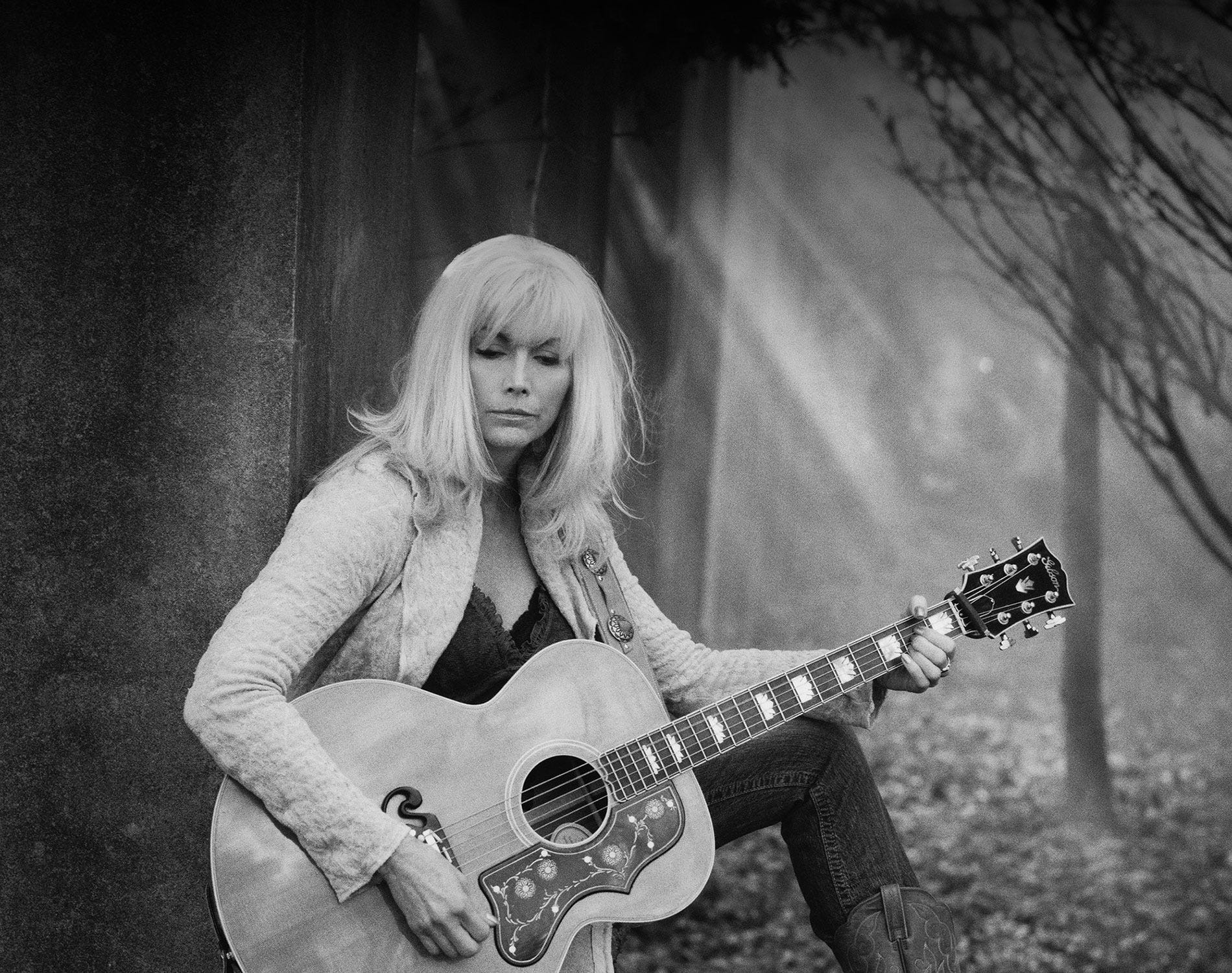
A quiet hymn at the heart of Emmylou Harris‘s 1980 acoustic rebirth, Calling My Children Home carries the old sacred language of the Carter Family into one of her most moving albums, Roses in the Snow.
When Emmylou Harris released Roses in the Snow in 1980, she was not simply changing style. She was returning to a deeper well. The album rose to No. 2 on Billboard’s Top Country Albums chart, and while bigger radio attention in that period went to singles such as Wayfaring Stranger, one of the record’s most revealing performances is Calling My Children Home. It was not a flashy centerpiece, not a hit designed for the charts, and not a grand vocal showpiece. It was something more lasting than that: a statement of musical ancestry, faith, and belonging.
By that point, Emmylou Harris had already built a remarkable reputation through records that blended country, folk, and country-rock with elegance and intelligence. But Roses in the Snow felt different from the first note. Produced by Brian Ahern, it leaned hard into acoustic textures, with musicians such as Ricky Skaggs, Tony Rice, and Jerry Douglas helping create a sound that was spare, rooted, and emotionally transparent. In a decade turning toward smoother production and commercial polish, Emmylou made an album that sounded older than its release date in the best possible way. It did not feel dated. It felt remembered.
That is exactly why Calling My Children Home matters so much on this record. The song is closely associated with the Carter Family, whose sacred and vernacular recordings helped define the moral and emotional vocabulary of early country music. Their music never separated family, hardship, faith, and home into neat categories. Those ideas lived together. In that tradition, home was not just a house, and family was not just blood relation. Home could be heavenly rest, moral return, or spiritual reunion. Family could mean the people held together by love, duty, memory, and grace. Calling My Children Home carries that entire inheritance in its title alone.
Emmylou Harris understood that lineage deeply. What makes her version so affecting is that she does not sing the song as a museum piece. She sings it as if the thread between past and present has never been broken. Her phrasing is tender but restrained. She does not crowd the lyric with dramatics. Instead, she allows the old gospel promise inside the song to breathe. That choice is everything. A lesser performance might have tried to modernize it, or enlarge it, or turn it into a statement about personality. Emmylou does the opposite. She steps inside the song’s humility, and in doing so, she reveals its strength.
The meaning of Calling My Children Home is simple on the surface and profound underneath. It speaks in the voice of a parent calling children toward reunion, peace, and final shelter. In gospel language, that call points beyond earthly distance. It imagines a gathering place where separation is over, where the wandering spirit is received, and where the ache of time softens. Yet the song also works in a more earthly way. Anyone who has known the pull of family memory, old porches, church singing, kitchen-table faith, or the sound of voices blending without performance vanity can hear that world in it. This is one reason the song endures. It offers comfort, but it does not do so cheaply. It knows that comfort matters because distance exists.
On Roses in the Snow, that message becomes even richer because of the album’s acoustic reset. The record is built from wood, wire, breath, and space. The arrangement around Calling My Children Home does not push forward; it gathers around the vocal like a small circle. That matters, because gospel in the Carter Family tradition was often communal before it was individual. The emotional force came not from a singer trying to overwhelm the room, but from voices and instruments holding the room together. Emmylou Harris brings that spirit into 1980 with extraordinary tact. She does not imitate Sara, A.P., or Maybelle Carter. She honors their grammar while speaking in her own accent.
There is also something quietly brave about the timing. In 1980, revisiting old-time gospel and mountain-rooted acoustic music in such a committed way was not a token gesture. It was an artistic decision that helped affirm how central bluegrass and early country traditions still were to the living music of the moment. Roses in the Snow helped open a new chapter in Emmylou Harris‘s career, and it also reminded listeners that progress in country music does not always mean moving away from origins. Sometimes it means going back with more wisdom than before.
That is why the song still lingers. Calling My Children Home is not merely beautiful because it is old, nor important because it is respectful. It matters because Emmylou Harris found the emotional center where inheritance becomes interpretation. Through her, the Carter Family gospel thread does not sit behind glass. It lives again inside an album that sounds stripped down, yes, but never diminished. If anything, Roses in the Snow gains its power from what it leaves out. No clutter. No strain. Just the sound of an artist trusting roots, song, and silence.
And perhaps that is the deepest reason this recording still reaches people. It reminds us that some songs are not built to conquer the room. They are built to steady it. Calling My Children Home does exactly that. In Emmylou Harris‘s hands, it becomes a hymn of continuity: between generations, between sacred tradition and modern performance, between the family we come from and the home we continue searching for. On an album as luminous as Roses in the Snow, that quiet truth may be its most lasting grace.
