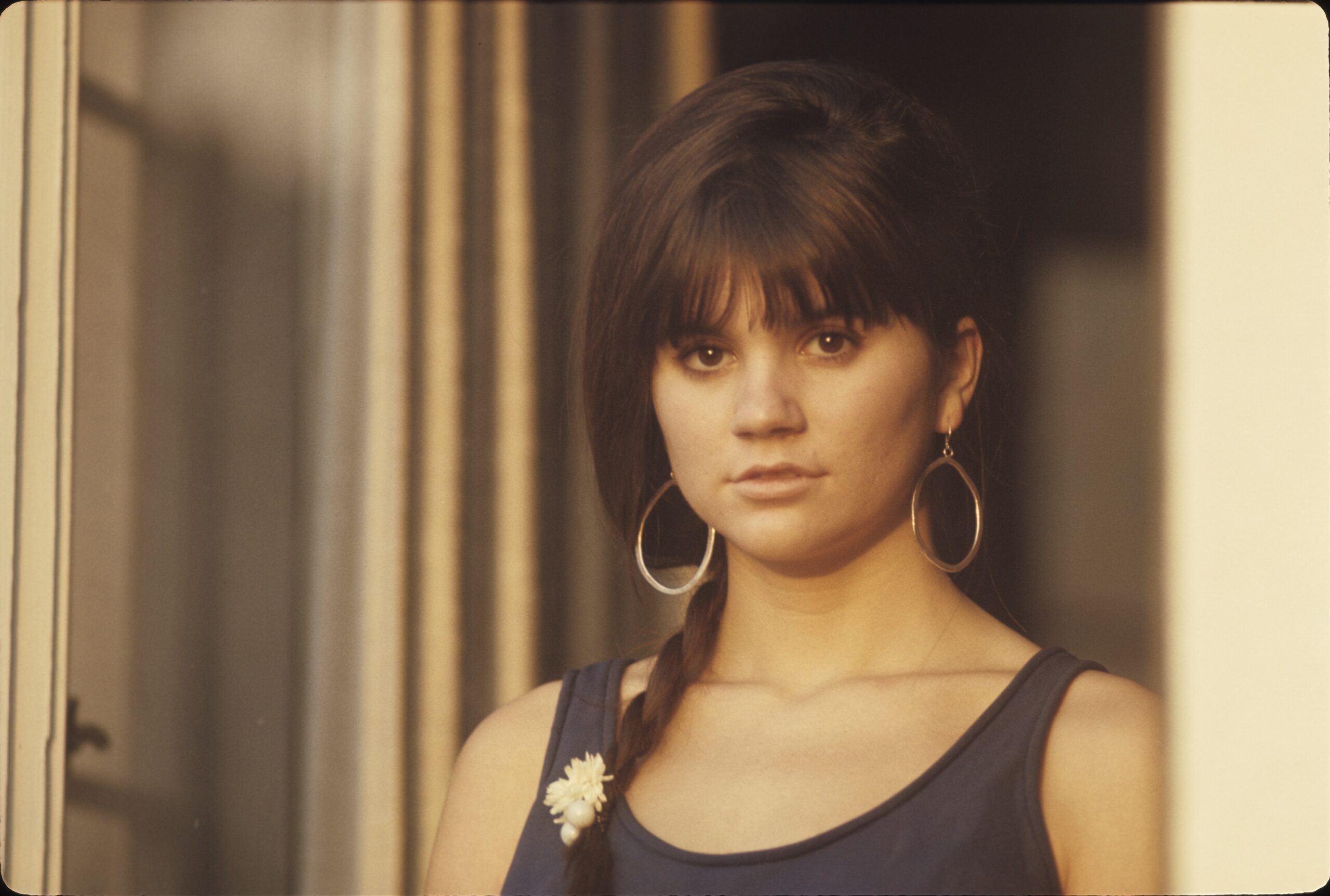
On Winter Light, Linda Ronstadt turns Don’t Talk (Put Your Head on My Shoulder) into a hush of trust and sorrow, showing how a great singer in a mature phase can make an old masterpiece feel newly human.
When Linda Ronstadt recorded Don’t Talk (Put Your Head on My Shoulder) for her 1993 album Winter Light, she was not trying to out-sing history. That may be the first reason the performance endures. The song, written by Brian Wilson and Tony Asher and first heard on The Beach Boys‘ 1966 landmark Pet Sounds, already carried a near-sacred reputation. It was one of Wilson’s most tender meditations on closeness without speech, one of those rare pop songs that seems to breathe rather than move. Ronstadt understood that. Instead of treating it as a showcase, she approached it almost like a confidence shared in the dark.
That choice mattered in 1993. Winter Light arrived during a reflective period in Ronstadt’s career, after she had already proven, again and again, that she could move across styles with uncommon grace. Rock, country, American standards, Mexican music, orchestral pop: by then, she had sung them all with conviction. Winter Light reached No. 92 on the Billboard 200, and while Don’t Talk (Put Your Head on My Shoulder) was not a major chart single of its own, the album gave Ronstadt an ideal setting for songs built on atmosphere, memory, and emotional understatement. In that company, her reading of this Wilson-Asher classic feels less like a cover than a late-career act of devotion.
The original Pet Sounds version remains one of the most intimate recordings in 1960s pop, suspended in soft orchestration and a kind of trembling stillness. Brian Wilson’s reading sounds young, inward, and almost afraid to disturb the spell. Ronstadt does not imitate that fragility. She arrives with different emotional weather. Her voice on Winter Light is steadier, warmer, and marked by lived experience. Where the original trembles with the discovery of feeling, Ronstadt’s interpretation seems to understand what it costs to hold feeling gently. That difference is the heart of the performance. She sings as if silence is not merely romantic, but necessary.
There is something deeply moving about hearing a singer so often celebrated for power choose restraint so completely. This is not the commanding Linda Ronstadt of You’re No Good or Blue Bayou, lifting a melody with bright force and emotional release. Here, she softens her attack, rounds every phrase, and lets breath become part of the meaning. The title line, Don’t Talk (Put Your Head on My Shoulder), can sound merely sweet in lesser hands. Ronstadt makes it sound like mercy. She strips away any trace of prettiness for its own sake and replaces it with mature tenderness, as though the song has moved beyond courtship into consolation.
That is why this performance stands as one of her most delicate late-career reinterpretations. Delicacy, in Ronstadt’s case, does not mean weakness or fading strength. It means discipline. It means knowing exactly how little to do. She never crowds the melody. She never leans too hard on emotion. She never pushes the listener toward tears. Instead, she makes room. Many singers approach Brian Wilson‘s work by emphasizing the myth around him, the grandeur of Pet Sounds, the legend of pop perfection. Ronstadt does something more difficult. She bypasses mythology and goes straight to feeling. She trusts the composition enough to leave air around it, and in doing so, she reveals how beautifully constructed the song really is.
The deeper meaning of Don’t Talk (Put Your Head on My Shoulder) has always lived in its paradox. It is a love song about not using language, about the idea that true closeness sometimes arrives when explanation falls away. In the world of Pet Sounds, that idea feels youthful and dreamlike, full of wonder at intimacy itself. In Ronstadt’s hands, it becomes wiser and more earthly. Her version suggests that after enough time, enough change, and enough distance traveled, comfort can be more powerful than declaration. The song no longer asks only to be admired for its beauty. It asks to be felt as shelter.
Winter Light is often remembered as one of Ronstadt’s quieter albums, and perhaps that quiet is exactly why it continues to reward careful listeners. It was not built around huge radio moments or dramatic commercial gestures. Its strength lies in atmosphere, curation, and interpretation. Within that setting, Don’t Talk (Put Your Head on My Shoulder) becomes a small masterclass in mature singing: reverent without stiffness, emotional without excess, and deeply musical without ever drawing attention away from the song itself.
For those who knew the original first, Ronstadt’s version can still arrive as a surprise. It does not compete with The Beach Boys; it stands beside them, from another season of life. And for those who come to it through Linda Ronstadt, it offers a reminder of one of her rarest gifts: the ability to enter another writer’s world without losing her own emotional signature. That is what makes this 1993 recording linger. It is soft, yes, but never slight. It is careful, but never cold. It is the sound of a great interpreter recognizing that the deepest songs are not conquered. They are approached with humility, and then, if one is lucky, gently illuminated.
