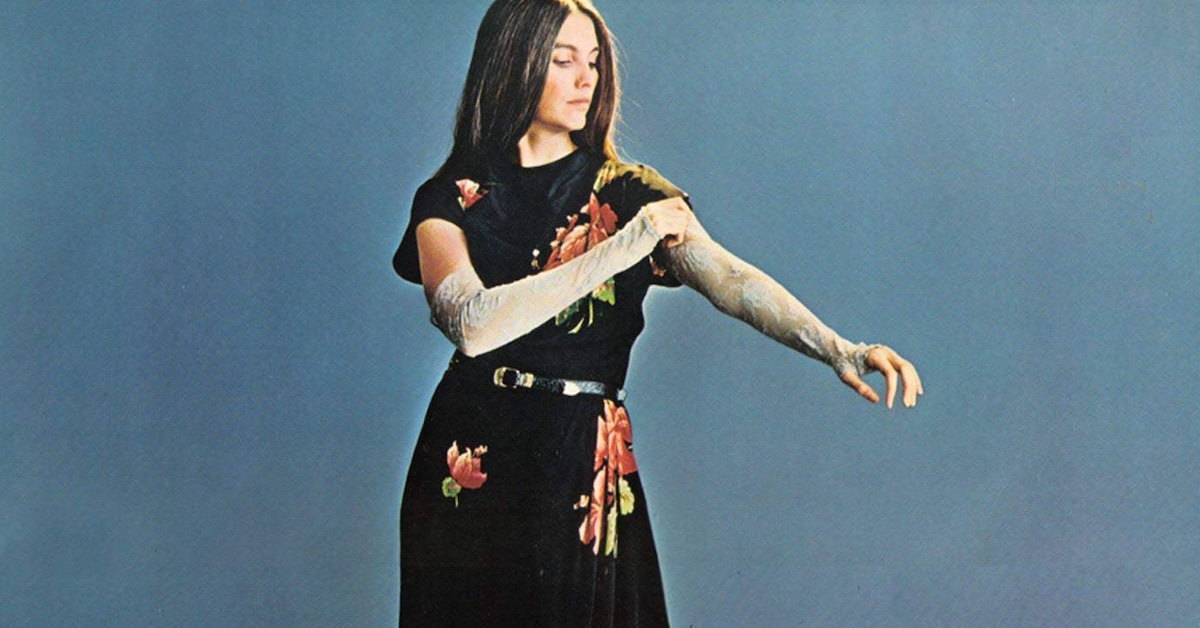
With “Prayer in Open D”, Emmylou Harris found a hushed, searching kind of grace, and Red Dirt Girl became the album where her own writing finally sounded like testimony.
There are songs that arrive with fanfare, and there are songs that enter the room as softly as a breath. “Prayer in Open D” belongs to the second kind. Tucked inside Emmylou Harris’s deeply reflective 2000 album Red Dirt Girl, it is one of those rare recordings that seems less performed than revealed. By the time it appeared, Harris had already spent decades as one of popular music’s great interpreters, giving unforgettable voice to songs by others across country, folk, rock, and Americana. But Red Dirt Girl marked a turning point: it was the first album built entirely from songs she wrote herself, a late-career flowering of authorship that gave the record a special gravity from the very first note.
That alone made the album important. It was not just another release in a distinguished catalog; it was a declaration of inner life. When Red Dirt Girl came out in September 2000 on Nonesuch Records, it reached No. 5 on Billboard’s Top Country Albums chart and No. 54 on the Billboard 200. Those were solid chart numbers, but they only tell part of the story. The larger truth is that the album felt like an artistic homecoming. “Prayer in Open D” was never the kind of song built for radio play, and it did not arrive as a charting single. Yet that quiet absence from the hit parade almost seems fitting. Some songs are meant to be found in stillness.
The title itself is revealing. “Open D” points to the guitar tuning that gives the song its suspended, resonant quality. In open-D tuning, the instrument naturally rings with a droning, spacious sonority, and Harris uses that sound not as ornament but as atmosphere. It creates the feeling of a room with high ceilings, or an empty church before the service begins, or a field so open that a whisper seems to travel forever. The prayer in this song is not loud, not doctrinal, not dressed in certainty. It is personal, earthbound, and searching. That is what makes it so moving.
What Emmylou Harris achieved on Red Dirt Girl was remarkable precisely because she did not try to write like anyone else. For years, she had been admired for the luminous care she brought to songs by writers such as Gram Parsons, Townes Van Zandt, Rodney Crowell, and the Louvin Brothers. She was often praised as a singer of uncommon taste and emotional intelligence. But on Red Dirt Girl, and especially on “Prayer in Open D”, she stepped beyond interpretation and let listeners hear the private weather of her own spirit. The result was not a dramatic reinvention. It was something subtler, and in many ways more powerful: an unveiling.
That quiet spirituality is the heart of the song. “Prayer in Open D” does not sound like a sermon, and it does not ask to be admired for its piety. Instead, it inhabits a space where longing, humility, fatigue, memory, and grace all meet. Harris has always had a voice capable of carrying sorrow without collapsing under it, and here she uses that gift with extraordinary restraint. The song suggests that faith is not always triumphant. Sometimes it is a murmured appeal, half confidence and half question. Sometimes it is simply the act of continuing to sing when no easy answer appears.
That idea runs through much of Red Dirt Girl. The album is full of wanderers, remembered figures, bruised tenderness, and landscapes that feel almost biblical in their emotional scale. Songs like “Michelangelo”, “The Pearl”, and the title track “Red Dirt Girl” carry the dust of memory on them. But “Prayer in Open D” strips things down even further. Where some of the album’s songs tell stories, this one feels like a direct line from the soul. It says a great deal with very little, which is one reason it lingers so long after it ends.
The production deserves mention as well. Malcolm Burn, who worked with Harris on the album, helped shape a sound that was intimate without becoming fragile. There is space in the arrangement, but it is not empty space. It is living space, breathing space. That matters, because songs like this can be ruined by too much polish. “Prayer in Open D” needed room for silence, and it received it. The record understands that a hush can carry as much emotion as a chorus of instruments. In that sense, the production and the writing are perfectly matched: both trust understatement.
There is also something deeply moving about where this song sits in Emmylou Harris’s larger career. By 2000, she had nothing left to prove as a singer. The great records were already there. The influence was already secure. And yet Red Dirt Girl showed that artistic life does not have to harden with experience; it can deepen. Harris did not become louder with age. She became more inward, more precise, more willing to leave space around a feeling instead of forcing it into neat explanation. “Prayer in Open D” may be one of the purest examples of that wisdom.
Its meaning, then, is larger than one song. It stands for the moment when Emmylou Harris trusted her own pen completely and discovered that her writing voice carried the same truth, elegance, and weathered beauty that listeners had always heard in her singing. The spirituality here is quiet because the song understands something essential: the deepest things are often said softly. Not every revelation arrives in thunder. Some arrive in an open tuning, a low voice, and a few words that seem to rise out of the ground itself.
That is why “Prayer in Open D” remains so affecting. It is not just beautiful. It is honest in a way that many more elaborate songs never manage to be. Heard within Red Dirt Girl, it becomes part of a larger statement about authorship, aging, self-knowledge, and mercy. Heard on its own, it feels like a private room opened for a moment. In either case, it reminds us that Emmylou Harris did something extraordinary on this album: she turned inward without becoming closed, spiritual without becoming grand, and personal without losing the universal ache that has always made her music endure.
